
Remember that charming little snowman, Olaf, from Disney’s Frozen? He was just a friendly face at NVIDIA GTC 2026, but his appearance was far from a simple cameo. It was a groundbreaking reveal, a "coming out party" for what Disney and NVIDIA are calling Physical AI, a fusion of robotics, artificial intelligence, and cutting-edge simulation that marks a significant leap in the way we interact with technology. Let’s dive into the fascinating details of how Olaf was brought to life and where he’s heading next.
1-The Showstopping Keynote Moment
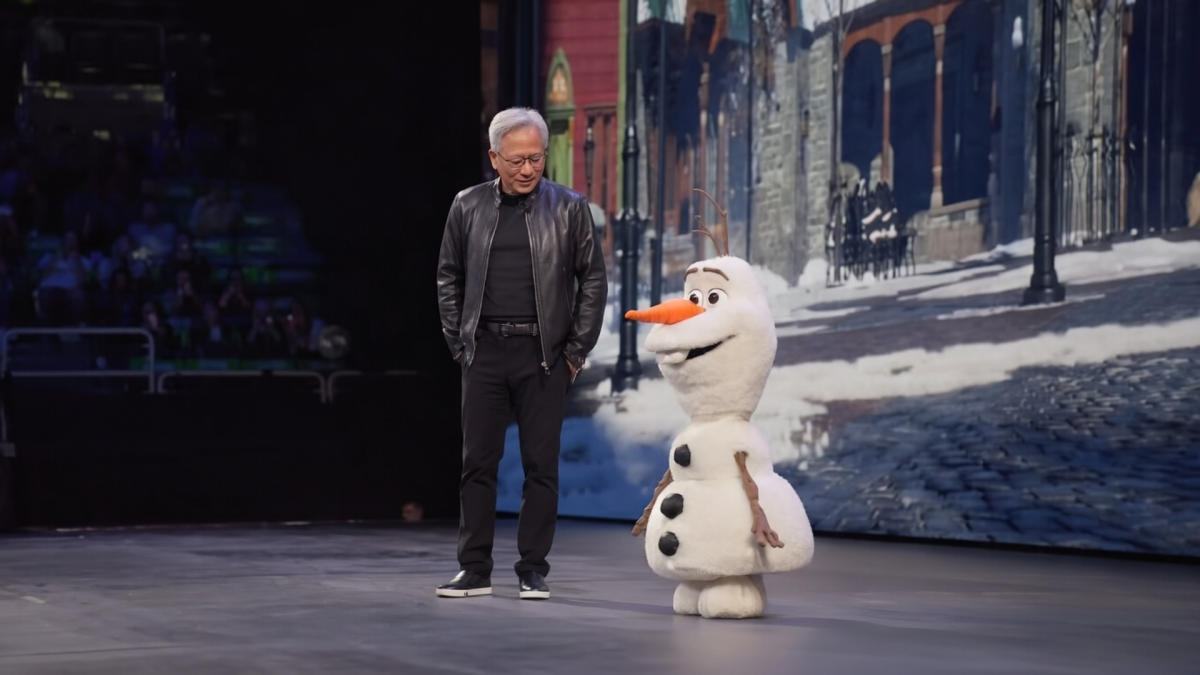
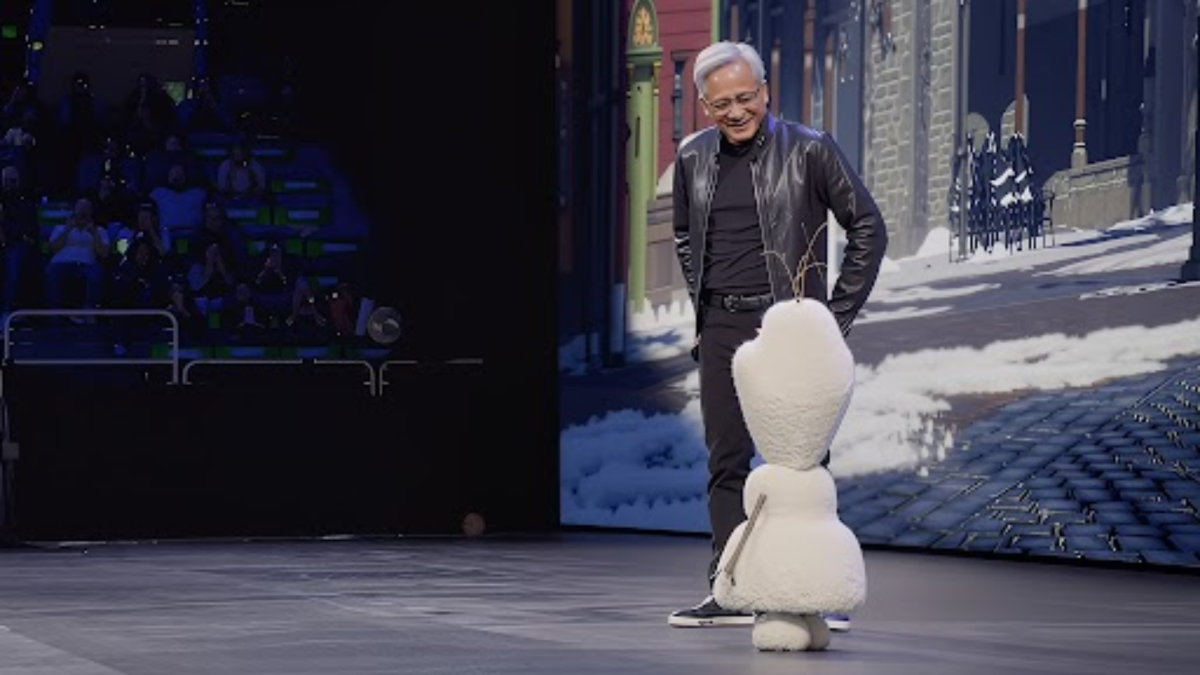
The scene at the GTC 2026 keynote on March 16 was electric. NVIDIA CEO Jensen Huang, was joined on stage by a diminutive figure. It was Olaf, waist-high and waddling, a perfect robotic replica of the beloved character. But this wasn't just a prop, it was a character in his own right, engaging Jensen in a live, animated conversation. When Jensen playfully joked, "I thought you'd be tall," Olaf retorted with a charming, slightly witty comeback, perfectly capturing the character’s essence.
The true magic, Jensen revealed, lay in the "brain" powering this snowman. Located in his "tummy," the NVIDIA Jetson platform was the core of his intelligence. But even more impressive, Olaf hadn't been taught how to walk in the real world. His entire learning process, from taking his first steps to maintaining balance, happened entirely within the virtual bounds of NVIDIA Omniverse, a powerful simulation and collaboration platform. The demo was so lifelike and unscripted that, at one point, Olaf’s microphone had to be momentarily cut after a slightly off-script moment, only adding to the sense that this was a truly intelligent character, capable of surprises.
2-Building a Brain: The Technology Behind the Magic
This Olaf isn't a puppet. It’s a complex piece of "robotic artistry," a culmination of years of development by Walt Disney Imagineering and Disney Research. Here’s a breakdown of the key technologies that make this Physical AI possible:
Kamino Simulator: Accelerating Learning with GPU Physics
A critical component of Olaf’s development was the Kamino Simulator, a GPU-accelerated physics solver built on NVIDIA Warp. This simulation powerhouse allowed Disney to run thousands of parallel simulations of Olaf learning to walk and balance. This is fundamentally how reinforcement learning works, the AI is given a goal (like "walk forward") and learns through a massive process of trial and error in a simulated environment. Because the simulation is GPU-accelerated, this process was drastically sped up. What would have typically taken months of development and training in the physical world was condensed into just a few hours.
Mastering Unstable Ground: "Sea Legs" in the Virtual World
Olaf isn't just going to be walking on stable stage floors. His main stage will be a boat in the lagoon at Disneyland Paris. This created a significant challenge: how do you train a robot to balance on an unstable, moving surface? To overcome this, Disney used deep reinforcement learning within the simulated environment. They exposed Olaf's virtual model to all sorts of challenging, shifting boat movements, allowing him to develop the necessary "sea legs" and balance responses entirely virtually. By the time the physical robot was built, it was already equipped to handle the dynamic conditions of a real-world performance.
Bringing Personality to Movement: The "Snowman Shuffle"
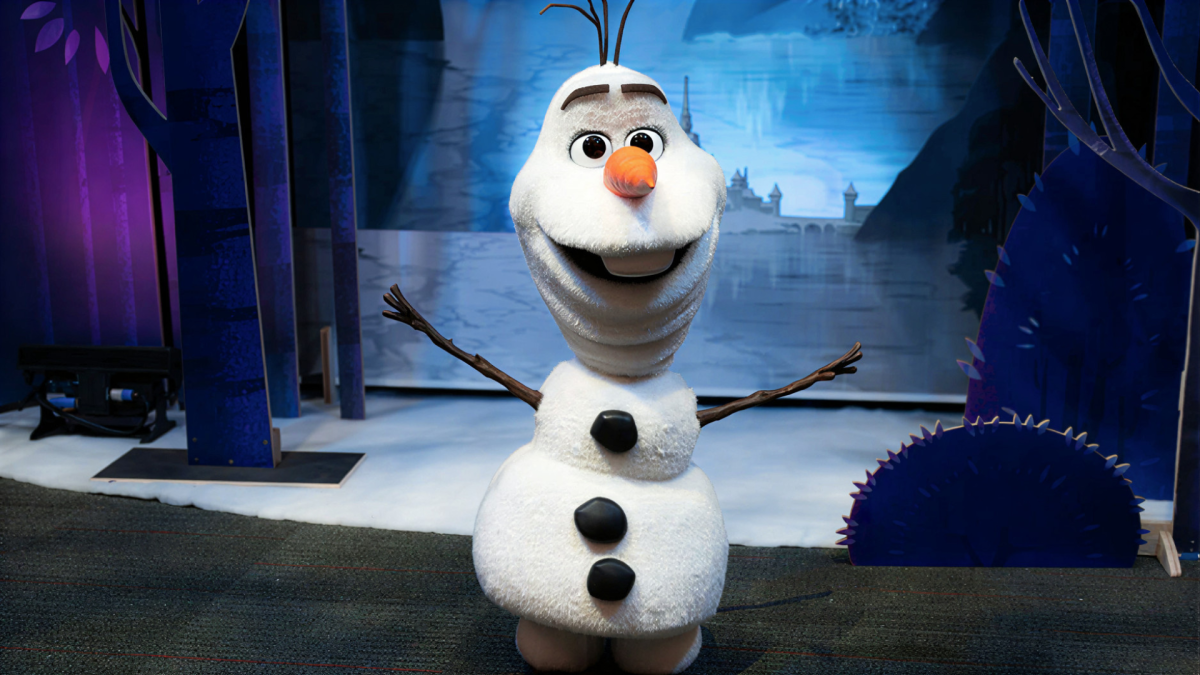
It's not just that he can walk, but how he walks that defines Olaf. Stiff, robotic movement would have immediately shattered the illusion. To prevent this, Disney animators were directly involved in the process. They provided the foundational training data, ensuring that the AI learned a "snowman shuffle" that was authentic to the character's onscreen personality. The physical design of Olaf mirrors this commitment to character: he has a fully articulated mouth and eyes, and his stick arms and carrot nose are attached with magnets, a clever design choice that allows them to "pop off" for classic Olaf gags, just like in the films.
3-The World of Frozen and the Future of Physical AI
The question on everyone's mind after the GTC reveal was: where can we see this amazing snowman?
Olaf's official premiere is on March 29, 2026, marking the grand opening of the "World of Frozen" inside the newly renamed Disney Adventure World park at Disneyland Paris. He will be a central star of the new "Celebration in Arendelle" daily show, performing for guests on that very boat for which he so diligently trained his balance. And his journey doesn't end in Paris. Disney has already confirmed that Olaf will be heading to Hong Kong Disneyland's "World of Frozen" shortly after his debut.
This breakthrough with Olaf is more than just a cool attraction. It’s a glimpse into the future of physical experiences. Jensen Huang used Olaf to illustrate what he calls the "inflection point of inference," the moment where AI can be deployed in the physical world to perform complex tasks in real-time. Disney’s ultimate goal is to move away from traditional "men in suits" character performances and static animatronics, which are inherently limited in their interactivity. They are pioneering a new era of free-roaming, expressive, and interactive robotic characters that can truly engage with guests. According to Disney, the speed and unprecedented nature of this new AI-driven character development process hint that a whole cast of new robotic friends is already in development, ready to bring more movie magic to life in the physical world.
Conclusion: A Brave New World of Animated Reality
The appearance of Olaf at NVIDIA GTC 2026 was a moment of technical brilliance that signals a significant shift in how we might experience entertainment. By blending the artistic vision of Walt Disney Imagineering with the technological prowess of NVIDIA, they have created a truly interactive, free-roaming character that feels as though he stepped directly off the screen. This convergence of deep simulation, reinforcement learning, and sophisticated robotics is more than just a tech demo, it is a bold step towards a future where our most beloved stories and characters are not just watched, but can walk right up to us, ready for a warm hug and an unscripted adventure. This is just the beginning of a new chapter in the magic of storytelling, powered by the intelligence of Physical AI.