
In an era defined by software complexity and accelerating development cycles, Anthropic has launched a formidable ally for engineering teams: Code Review. This new feature, nested within the Claude Code suite, introduces deep, automated analysis to the critical stage of software pull requests. By leveraging a innovative multi-agent architecture, Code Review aims to uncover complex bugs and security vulnerabilities that conventional tools, and even tired human eyes, might miss.
This initiative moves beyond simple style checking towards providing substantive feedback, fundamentally aiming to eliminate engineering bottlenecks and enhance the overall integrity of software projects. Let's explore the dynamic capabilities, structural advantages, and strategic controls that define this new service.
The New Analytical Standard: Multi-Agent Depth
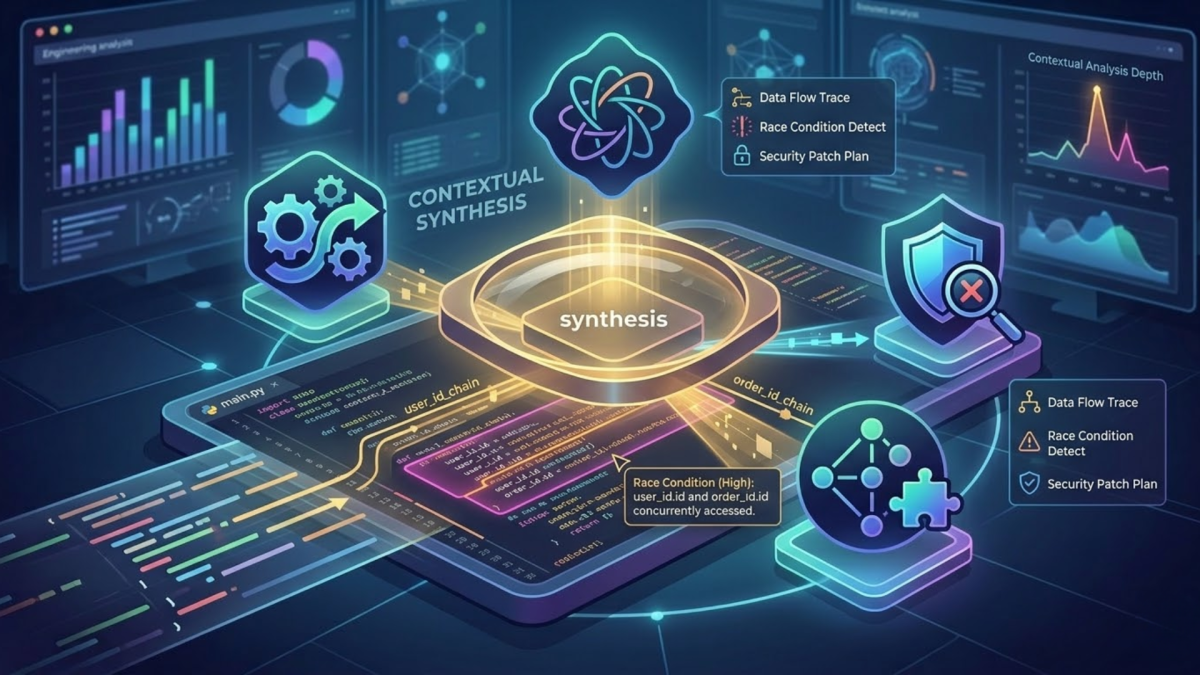
Conventional code scanners often operate as rigid pattern-matchers, excelling at spotting syntax errors or defined style violations but failing to grasp the broader context. Anthropic's Code Review challenges this paradigm by deploying a multi-agent approach. Think of it not as a single scanner, but as a dynamic virtual team. Within this system, one specialized AI agent might focus exclusively on data flow integrity, another on concurrency pitfalls (like race conditions), and a third on checking for known security vulnerability patterns (like injection risks). These agents interact and synthesize their findings, allowing Code Review to move beyond superficial checks.
The key strength lies in analyzing interaction, how a change in one module might subtly affect data processing three steps down the line. By understanding the substantive logic of the code changes, Code Review identifies complex, non-obvious bugs. This depth of analysis transforms the passive routine scan into an active, intelligent investigation, providing developers with profound insights early in the lifecycle.
Augmenting Human Oversight: Substantive Feedback Loops
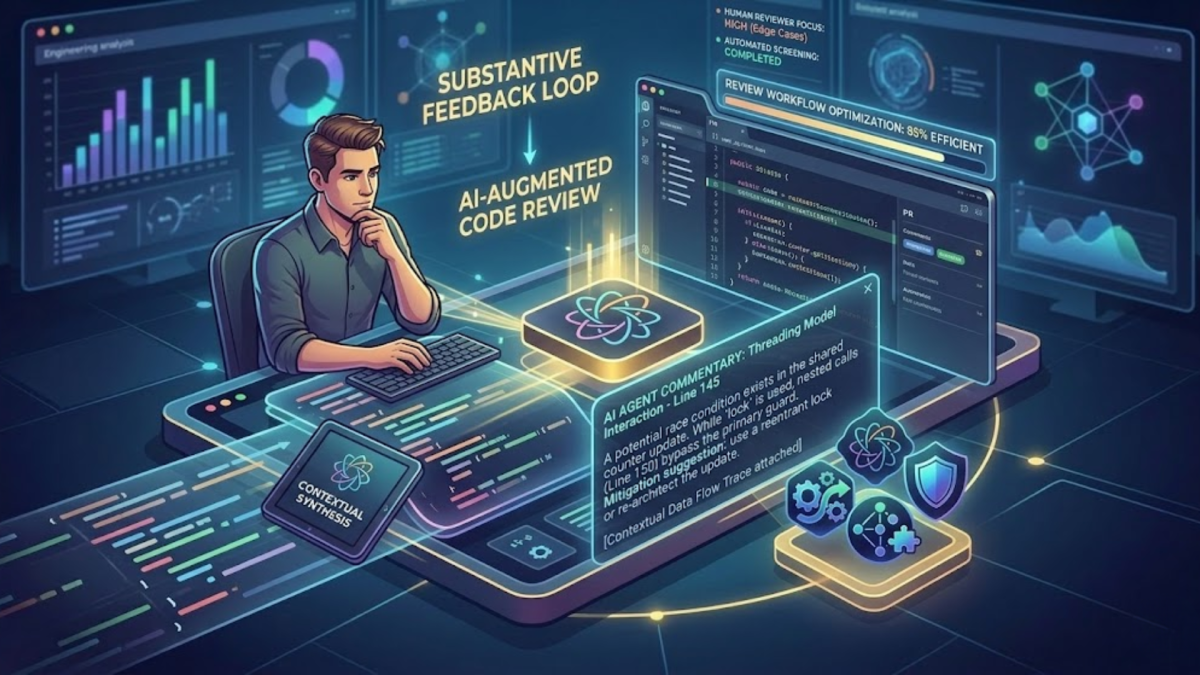
While the technical depth of multi-agent analysis is impressive, the primary value of Code Review lies in how it enhances the developer experience. It does not seek to replace the final human sign-off; instead, it is designed to supercharge the feedback loop. Human reviewers are often overwhelmed by the sheer volume of changes, leading to bottlenecks and, sometimes, perfunctory approvals. Code Review alleviates this pressure by generating substantive, automated commentary directly within the pull request interface.
These aren't generic comments; they are detailed, context-aware explanations of why something might be a bug or a vulnerability, often accompanied by suggestions for mitigation. In a large project where architectural bottlenecks are common, having an AI proactively flag a subtle threading issue on a crucial pull request saves hours of future debugging. This automated, high-quality feedback allows human developers to focus their expertise on high-level design decisions and complex edge cases, optimizing the entire review workflow for speed and thoroughness.
Strategic Deployment: Research Preview and Cost Controls
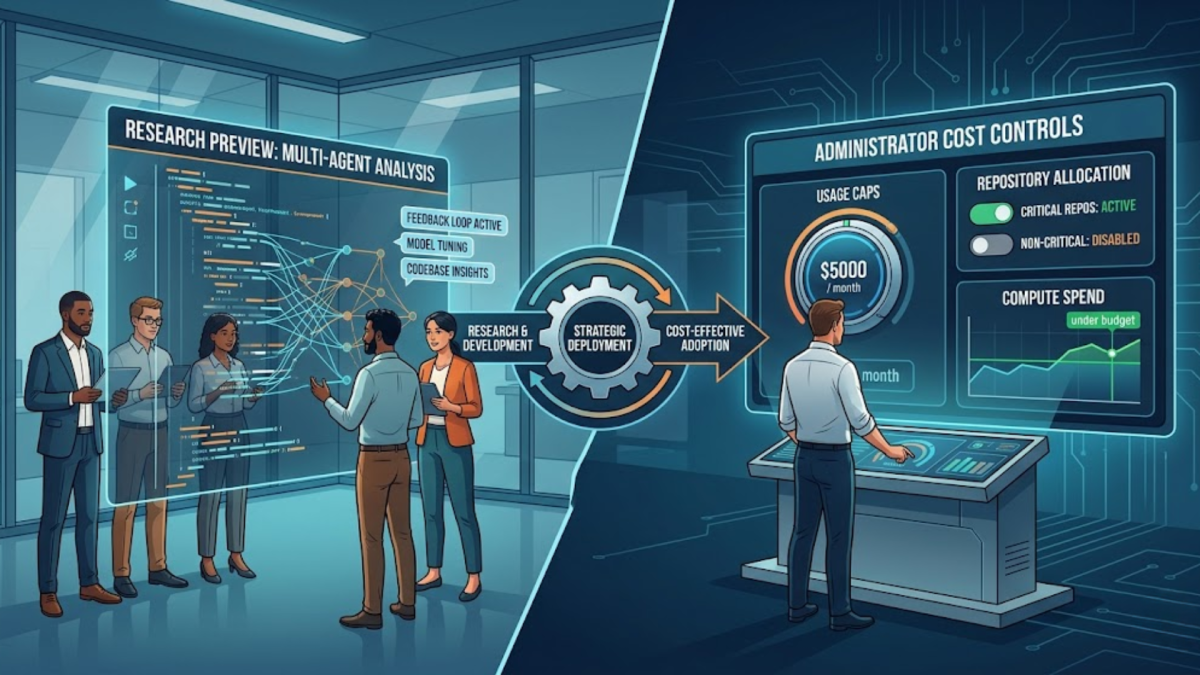
Anthropic understands that integrating advanced AI into core engineering workflows requires careful management. Currently, Code Review is available in a research preview. This allows early adopters on Team and Enterprise plans to experiment with the technology while Anthropic fine-tunes the models based on diverse real-world codebases. This phased approach highlights the experimental yet powerful nature of multi-agent analysis.
Furthermore, Anthropic addresses the economic realities of software development by providing robust cost management features. Since the processing cost scales with the size and technical complexity of the code under examination, administrator controls are essential. Admins can define specific usage caps—setting hard limits on compute spend, and enforce granular controls, deciding exactly which critical repositories utilize the full depth of Code Review. This ensures that the tool remains a cost-effective addition, delivering high-value insights where they are needed most without generating unpredictable expenses.
Conclusion: Paving the Way for Robust Software Systems
Anthropic's Code Review, introduced as a research preview within Claude Code, is a sophisticated step forward in the automated verification of software integrity. By replacing the superficial 'routine scan' with deep, substantive, and multi-agent analysis, this feature provides engineering teams with powerful, predictive insights exactly when they are needed most. Crucially, Code Review functions not as a replace-ment, but as a robust augmentation for human oversight, delivering prioritized feedback that eliminates traditional engineering bottlenecks. This focus on deep context, coupled with rigorous administrator cost controls, ensures that Code Review is not just an advanced theoretical tool but a practical, cost-effective asset. As Anthropic refines this multi-agent architecture through its research preview, Code Review is poised to become an essential component of the modern, security-conscious development lifecycle, ultimately helping organizations build more robust and resilient software systems on a global scale.