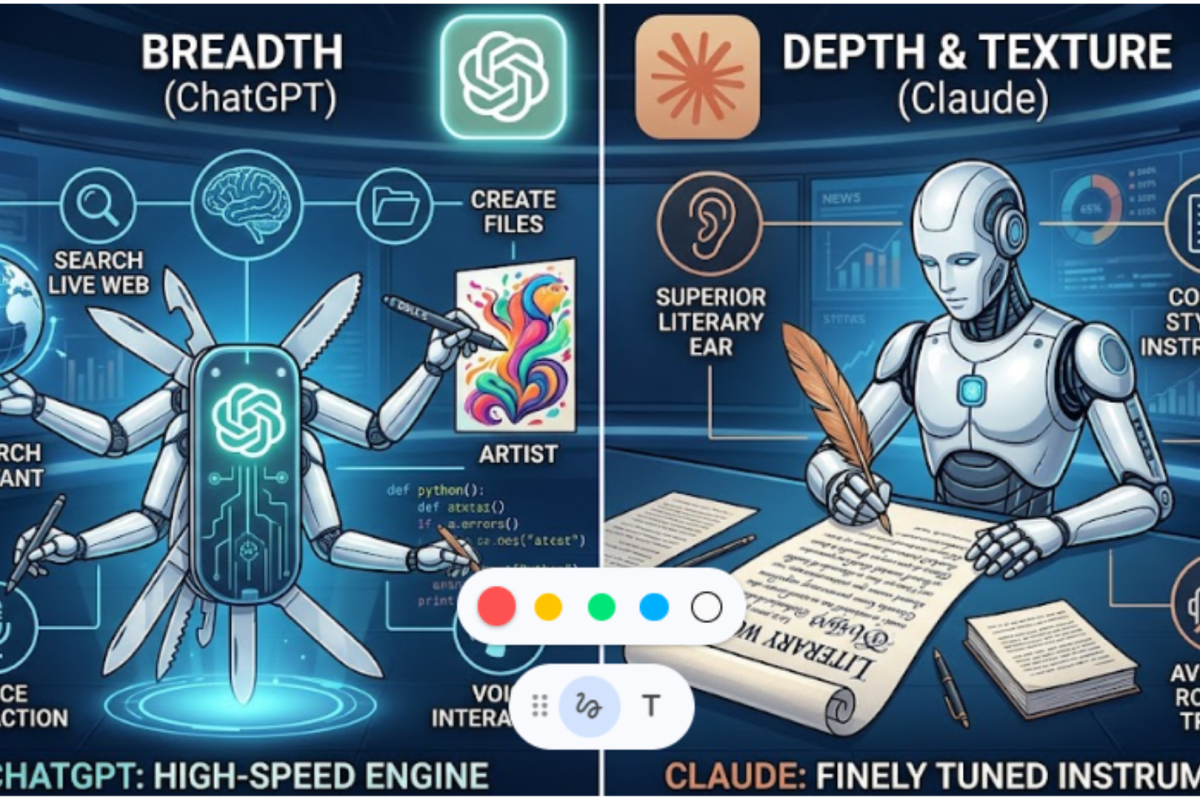

The landscape of AI-assisted development has shifted from a one-horse race to a strategic battleground. For today’s programmers and data scientists, the choice isn't just about which model is "smarter", it’s about which philosophy fits your workflow. On one side, we have Claude, the polished architect favored by enterprises; on the other, DeepSeek, the disruptive efficiency king that has proven high-end coding doesn't have to carry a high-end price tag.
1. Claude: The Architect of Reliable Systems
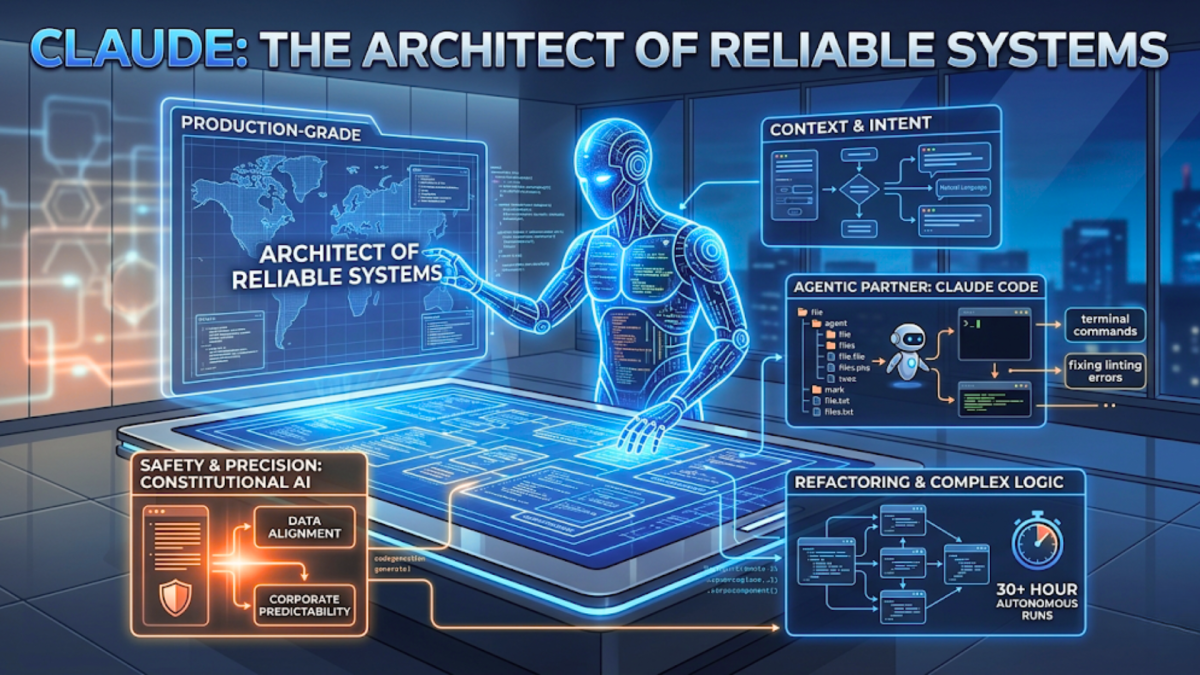
Anthropic’s Claude (specifically the Claude 3.7 and 4.0 series) has cemented itself as the industry standard for "production-grade" code. What sets Claude apart for developers isn't just its ability to write a function, but its mastery of context and intent.
-
Claude Code and Ecosystem: With specialized tools like Claude Code, Anthropic has moved beyond a simple chat interface. It functions as an agentic partner that can autonomously navigate local repositories, run terminal commands, and fix linting errors, often maintaining focus for 30+ hour autonomous runs.
-
Refactoring and Complex Logic: Claude remains the "gold standard" for refactoring legacy code. Its Extended Thinking mode allows it to deliberate over multi-file architectural changes, ensuring that a fix in the frontend doesn't silently break a dependency in the backend.
-
Safety and Precision: For data scientists handling sensitive information, Claude’s "Constitutional AI" framework offers a layer of predictability and alignment that many corporate legal teams prefer.
2. DeepSeek: The Efficiency King and Open-Source Titan
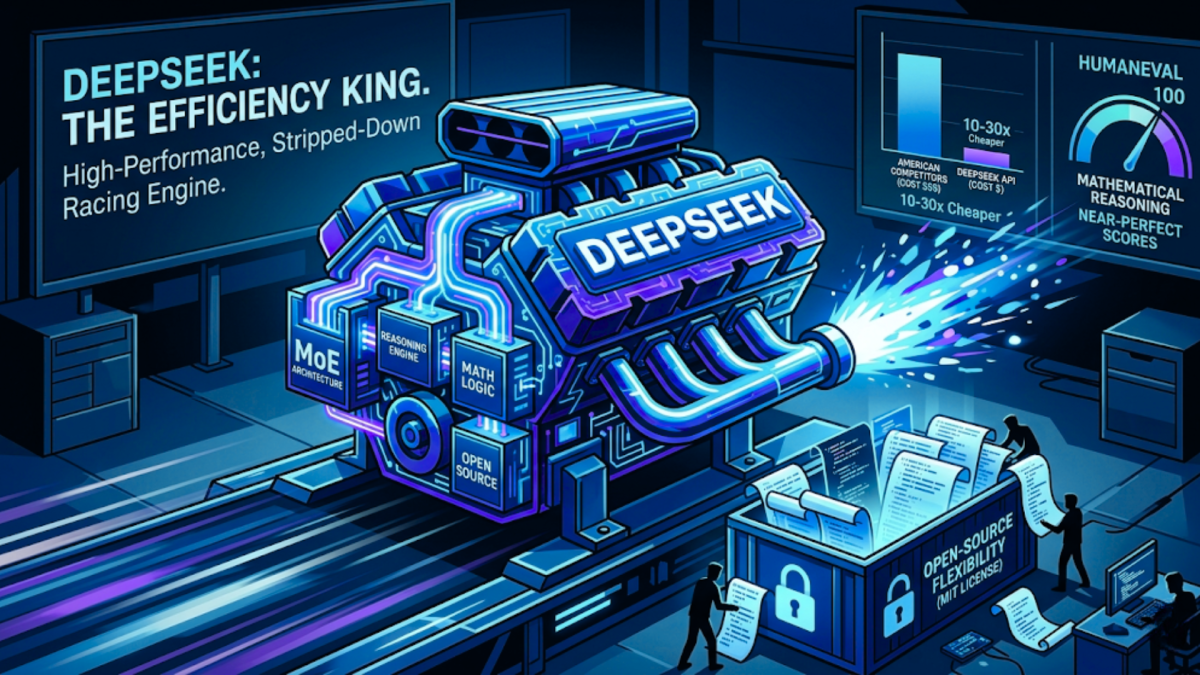
If Claude is the luxury sedan of AI coding, DeepSeek is the high-performance, stripped-down racing engine. Hailing from China, DeepSeek has shocked the tech world by matching (and sometimes exceeding) the benchmarks of models ten times its cost.
-
The "Price-to-Performance" Miracle: DeepSeek-V3 and the reasoning-focused R1/V4 models utilize a Mixture-of-Experts (MoE) architecture. This means it only activates the necessary parts of its network for a specific task, making it incredibly fast and roughly 10–30x cheaper to run via API than its American competitors.
-
Algorithmic Mastery: DeepSeek consistently punches above its weight in mathematical reasoning and competitive programming, achieving near-perfect scores on benchmarks like HumanEval. For data scientists writing complex optimization algorithms or heavy-duty Python scripts, DeepSeek’s raw logic is often indistinguishable from the top-tier models.
-
Open-Source Flexibility: Unlike Claude’s "black box" nature, DeepSeek’s commitment to open-source (MIT license) allows developers to self-host. This is a game-changer for startups that need to keep their proprietary code on-premises or for those who want to fine-tune a model on their own private libraries.
3. The Showdown: Benchmarks VS Real-World Workflows
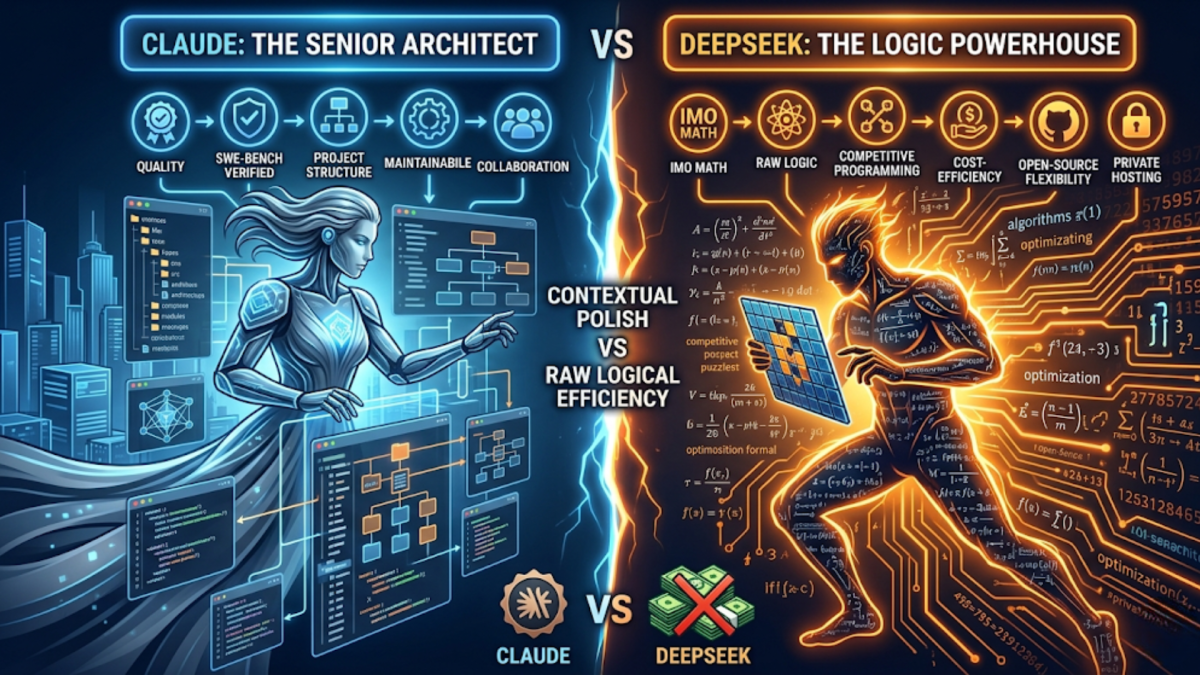
When we put Claude and DeepSeek head-to-head, the "winner" isn't decided by a single score, but by how you actually spend your day as a developer. In the current landscape, the choice between them comes down to a battle of contextual polish versus raw logical efficiency.
Where Claude Wins: The "Senior Architect" Experience
Claude remains the leader in solving real-world GitHub issues (scoring as high as 80%+ on SWE-bench Verified). Its greatest strength is its architectural reasoning. When you ask Claude to refactor a messy legacy codebase, it doesn't just swap out functions; it reasons through the entire project structure. It is significantly less likely to produce "hallucinated" bugs and more likely to follow your team’s specific style guide. If your work involves multi-file dependencies and complex app architecture, Claude acts as a highly disciplined senior developer who "gets" your intent on the first try. It is designed to produce maintainable, production-ready code that is easy for humans to read and audit.
Where DeepSeek Wins: The "Logic Powerhouse" on a Budget
DeepSeek has effectively closed the gap in raw intelligence, often outperforming its more expensive rivals in competitive programming and mathematical reasoning (notably hitting gold-medal levels in IMO math tasks). It is a "logic-first" model, incredibly precise for writing standalone algorithms, complex SQL queries, or data science scripts where performance is the priority over abstract structure.
The most disruptive factor, however, is the cost-to-performance ratio. DeepSeek is disruptively cheap, often costing cents where Claude costs dollars. For a startup or an individual developer, this means you can afford to run 50 iterations with DeepSeek for the price of just a few with Claude. Furthermore, because DeepSeek is open-source, it offers a level of privacy and flexibility that Claude cannot match; you can download the model and host it on your own servers, ensuring your proprietary code never leaves your private network.
Conclusion: Pragmatism VS Polish
The "Claude vs. DeepSeek" debate marks the end of the era where "more expensive" automatically meant "better."
If you are an enterprise developer building mission-critical systems where reliability, security, and architectural integration are paramount, Claude is worth every penny of its premium. But if you are a solo dev, an indie hacker, or a data scientist running high-volume iterations on a budget, DeepSeek is no longer just a "budget alternative", It is a legitimate powerhouse that has democratized elite-level coding.
The best strategy for 2026? Use both. Use DeepSeek for your heavy-duty data processing, algorithmic tinkering, and cost-sensitive batch tasks, and let Claude handle the final architectural assembly, technical writing, and production deployment.