
The Current Pulse: AI Enters the "Agentic" Era:
As we move through March 2026, the boundary between "tools" and "partners" is officially blurring. The release of GPT-5.4 earlier this month marked a definitive shift from passive chat to Agentic AI. For the first time, models aren't just predicting the next word, they are "using" computers, navigating software UIs, filling out forms, and managing multi-step professional workflows across spreadsheets and legal documents with 90%+ accuracy. While we haven't reached the "Holy Grail" of AGI, the rise of autonomous digital coworkers suggests we are no longer just teaching machines to speak, we are teaching them to act.
1-Natural Language Processing (NLP)
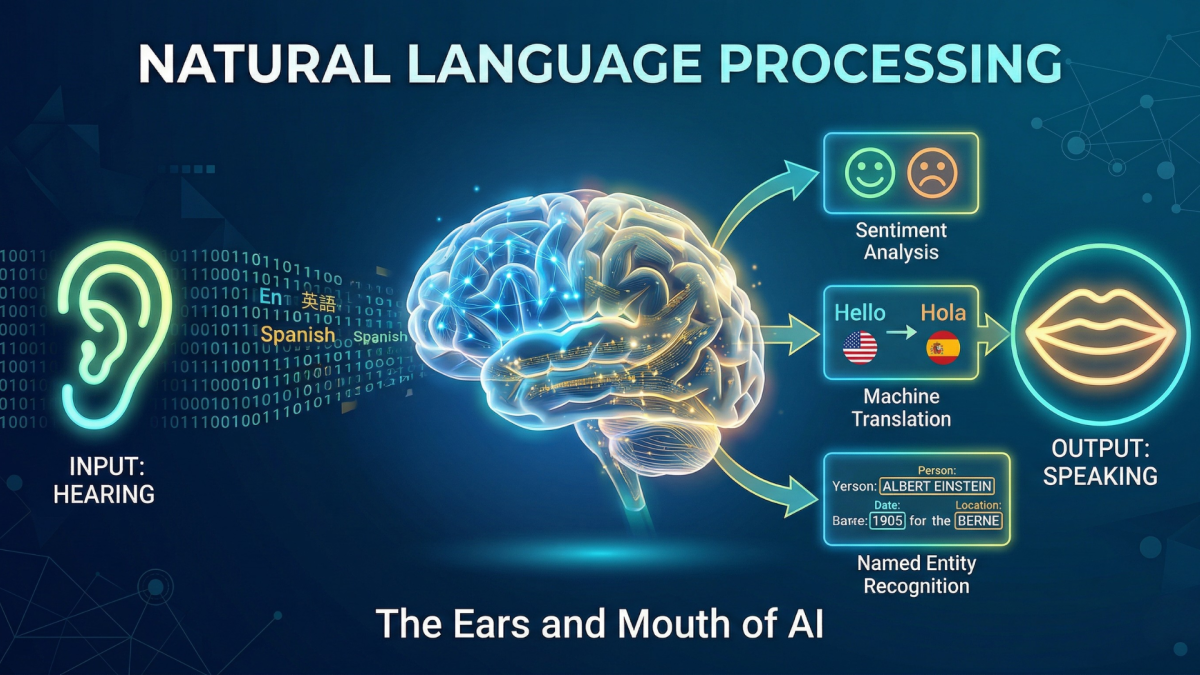
Natural Language Processing is the foundational field of Artificial Intelligence that focuses on the interaction between computers and human language. Think of NLP as the "ears" and "mouth" of AI. It involves teaching machines how to process, analyze, and understand massive amounts of natural language data.
NLP isn't a single tool, but a discipline that covers tasks like:
-
Sentiment Analysis: Determining if a text is happy or sad.
-
Translation: Converting one language to another.
- Named Entity Recognition: Identifying names, dates, and places in a sentence.
2-Generative Pre-trained Transformer (GPT)
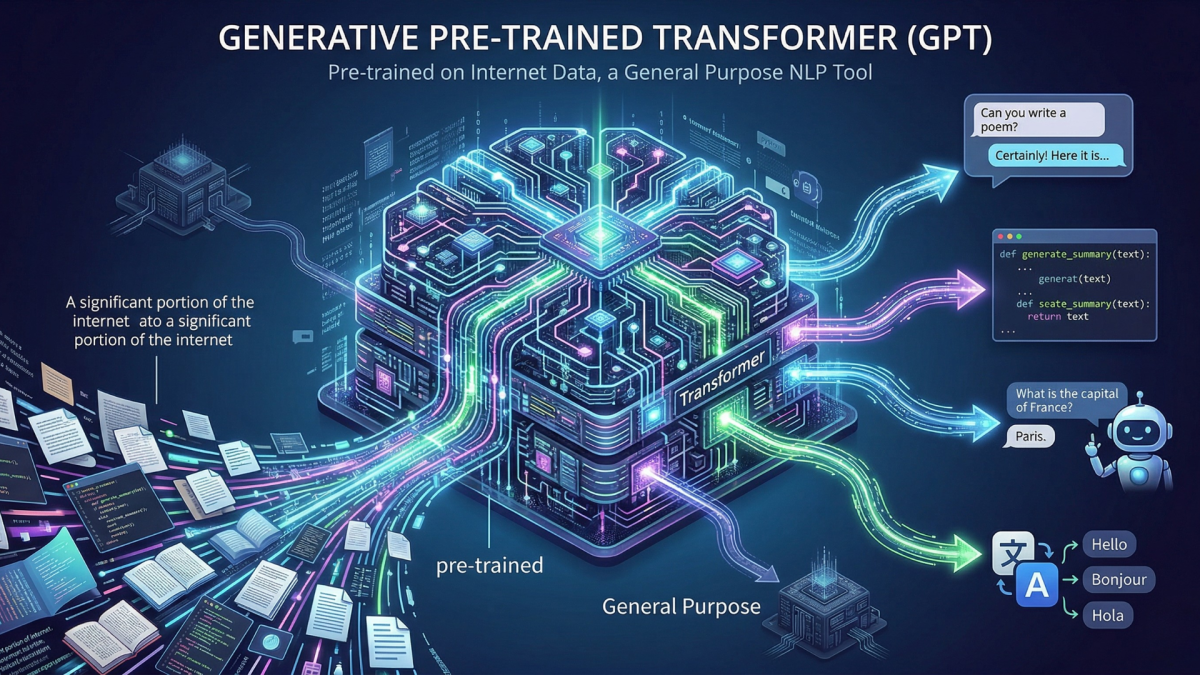
While NLP is the field, GPT is a specific, powerful architecture within that field. Developed by OpenAI, GPT models use a "Transformer" structure to predict the next word in a sequence.
The "Pre-trained" part of the name is key, it means the model has already "read" a significant portion of the internet. This allows it to generate human-like text, write code, and answer questions with remarkable fluency. Unlike traditional NLP tools that were built for one specific task (like just translating), GPT is a General Purpose tool that can do many different language tasks at once.
3-Artificial General Intelligence (AGI)
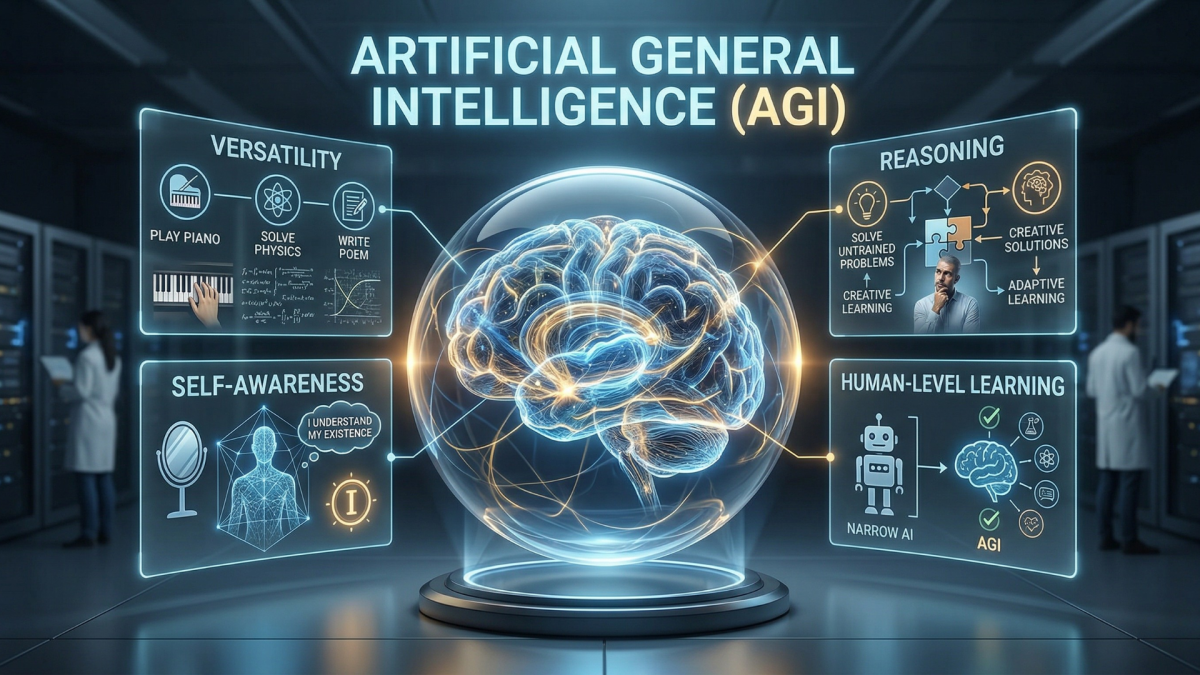
AGI is the "Holy Grail" of the AI world. While NLP and GPT are examples of Narrow AI (AI designed for specific tasks), AGI refers to a theoretical version of AI that possesses the ability to understand, learn, and apply knowledge across any intellectual task that a human can do.
An AGI wouldn't just be good at text or images, it would have:
-
Self-awareness: An understanding of its own existence.
-
Reasoning: The ability to solve problems it hasn't been specifically trained for.
- Versatility: The capacity to learn to play the piano, solve a physics equation, and write a poem all with the same "brain."
Conclusion: From Tools to Transcendence
In summary, the relationship between these three is one of scale and scope.
NLP is the broad scientific category of language study. GPT is our most advanced current tool within that category, capable of mimicking human conversation. AGI remains the future frontier, a theoretical point where AI stops being a tool used by humans and starts becoming an entity with human-level intelligence. Understanding these differences is crucial for navigating the rapidly changing landscape of modern technology.