
The era of "guessing" what an AI will generate is over. AI video production has matured from a digital novelty into a sophisticated craft, blending the precision of traditional cinematography with the raw power of generative models. Whether you are a solo creator or a professional editor, the workflow has shifted from simply typing prompts to orchestrating complex visual narratives with surgical control.
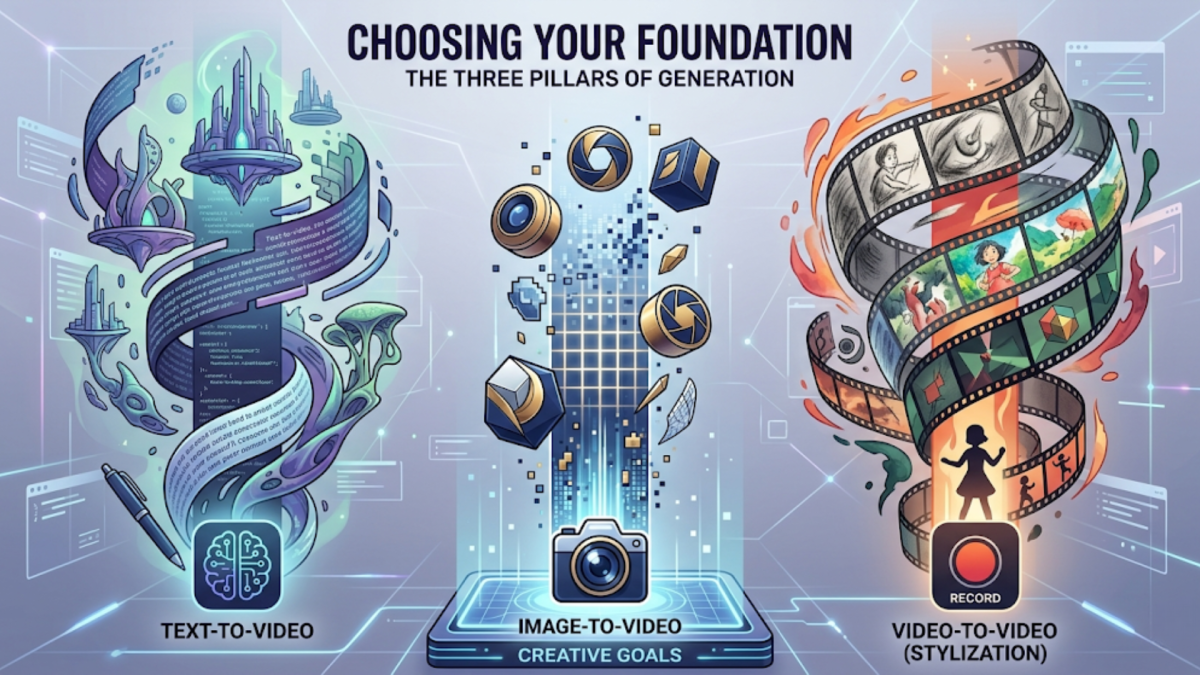
Choosing Your Foundation: The Three Pillars of Generation
Creating a video today starts with selecting the right entry point based on your creative goals. We no longer rely on a single "generate" button, instead, we choose a specific modality that dictates the DNA of the project.
Text-to-Video remains the ideal choice for pure world-building. Using tools like Google Veo, you can manifest high-concept sci-fi environments or impossible landscapes that would cost millions to build physically. If you can describe it, the AI can build it from the ground up.
Image-to-Video is the gold standard for brand consistency and product marketing. By uploading a high-resolution photo, you ensure the AI respects specific colors, textures, and geometries while adding fluid motion. This is the bridge between static photography and cinematic storytelling.
Video-to-Video (Stylization) is the ultimate tool for performance-led creators. You can record a simple performance on your smartphone and use AI to "reskin" the footage. This turns raw movement into a 3D animation, a Studio Ghibli-style masterpiece, or a charcoal sketch, all while maintaining the original timing and emotion.
The Powerhouse Arsenal: Matching Tool to Task
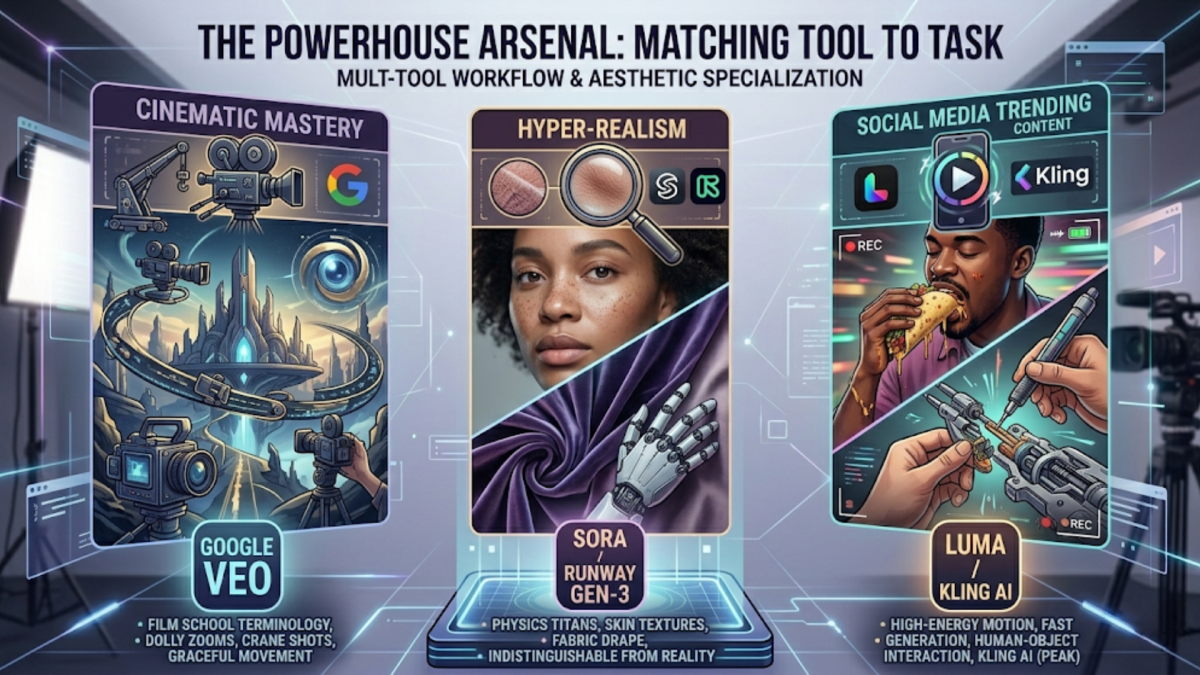
The "best" AI tool depends entirely on your specific aesthetic needs. The market has specialized, and savvy creators now use a multi-tool workflow rather than sticking to one platform.
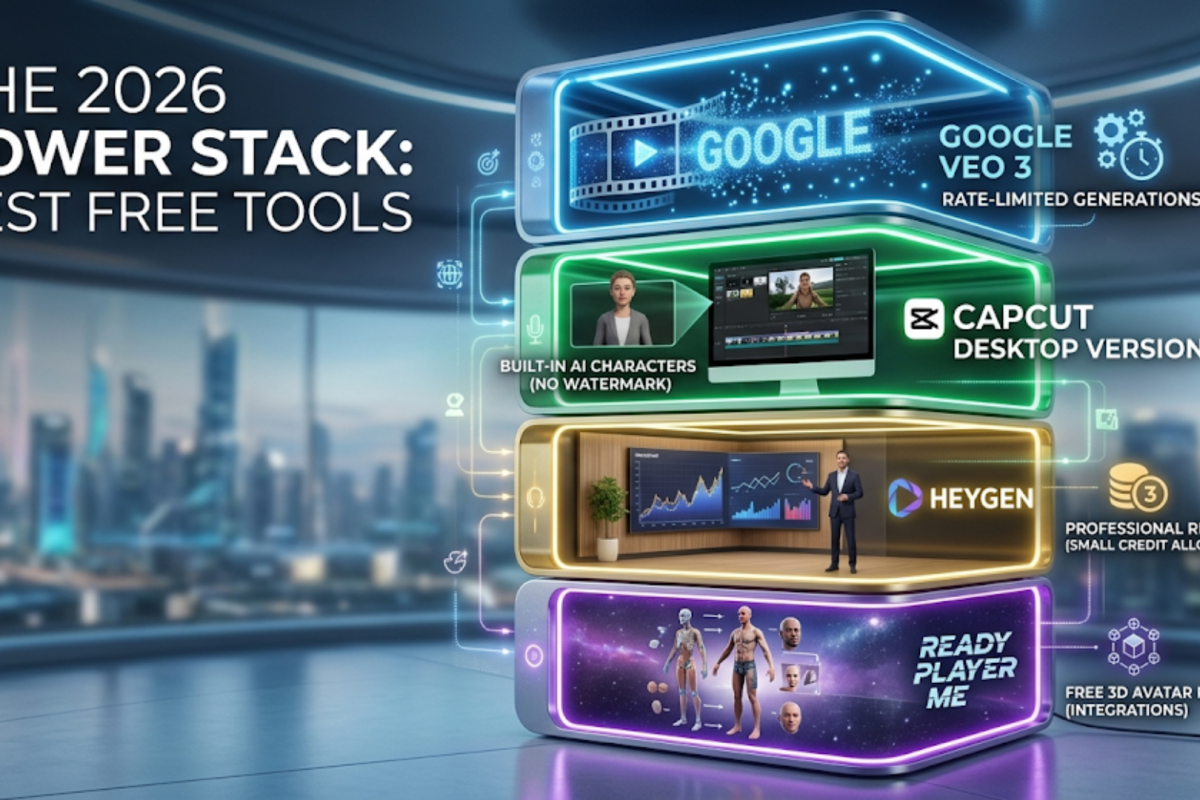
For those seeking Cinematic Mastery, Google Veo is the industry leader, specifically tuned to understand film school terminology. It handles complex camera movements like dolly zooms and crane shots with the grace of a professional operator. If your goal is Hyper-Realism, Sora and Runway Gen-3 remain the titans of physics, ensuring that human skin textures and the way fabric drapes over a moving body look indistinguishable from reality.
For creators focused on social media, Luma Dream Machine and Kling AI offer the high-energy motion and fast generation speeds required for trending content. Kling, in particular, has become a favorite for its ability to render realistic human-object interactions, such as someone eating or handling intricate tools, which were once the "uncanny valley" of AI video.
The Professional Workflow: Beyond the Initial Click
The secret to a "pro" look isn't the first generation, it’s the refinement. A professional workflow now involves three critical steps that elevate a clip from an experiment to a masterpiece.
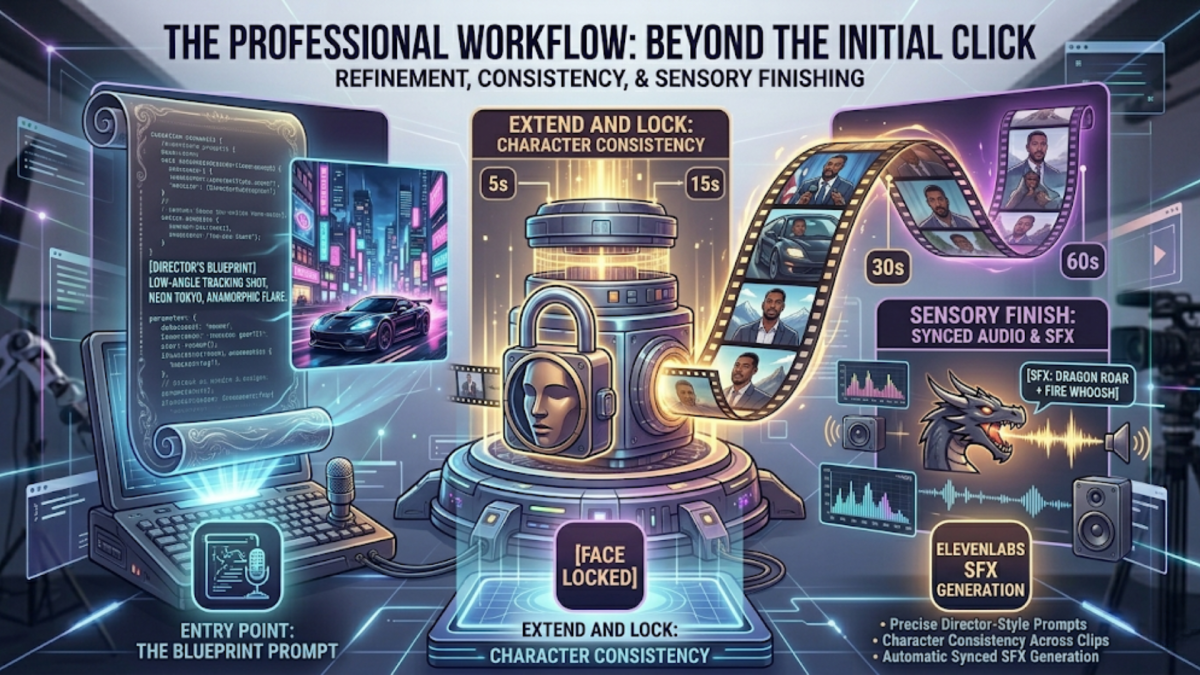
First is The Blueprint Prompt. You must speak like a Director. Instead of "a car driving," a pro uses specific descriptors: "A low-angle tracking shot of a black sports car speeding through a neon-lit Tokyo street, cinematic lighting, anamorphic lens flare." This precision tells the AI exactly how to light the scene.
Next is the Extend and Lock technique. The biggest breakthrough of 2026 is "Character Consistency." You can now "lock" a character's face so they look identical across dozens of different clips. By using the Extend Video feature, you can take a successful 5-second "hero shot" and build out a full minute of footage without the environment or the actors shifting mid-scene.
Finally, there is the Sensory Finish. An AI video with no sound feels empty. Tools like ElevenLabs now generate synchronized Sound Effects (SFX) automatically. If you have a video of a dragon breathing fire, the AI analyzes the pixels and generates the perfectly timed "whoosh" and "roar," creating a complete sensory experience.
Conclusion: The New Era of Personal Cinema
The "Secret Sauce" of 2026 is no longer just the technology, it is the human ability to maintain Consistency. The capability to lock characters and environments across multiple clips has finally turned AI into a true filmmaking tool rather than a random clip generator. As we move forward, the barrier between a grand vision and a finished film continues to vanish. In this new landscape, your only limit is your ability to describe what you see in your mind's eye. The camera is now digital, the lighting is algorithmic, but the soul of the story remains entirely yours.