

Imagine a world where complex mathematical equations aren't just strings of symbols on a page, but dynamic, manipulatable entities that you can interact with. A world where scientific concepts aren't just abstract theories, but tangible processes that you can explore and experiment with. This is the future of education, and OpenAI's new interactive visual tools in ChatGPT are bringing us closer to it than ever before. This ground-breaking update aims to revolutionize the way students master STEM subjects, moving beyond rote memorization towards a deep conceptual understanding.
Let's delve into the details of these new features and explore how they are poised to transform the educational landscape.
The New Educational Reality: From Formulas to Tangible Concepts
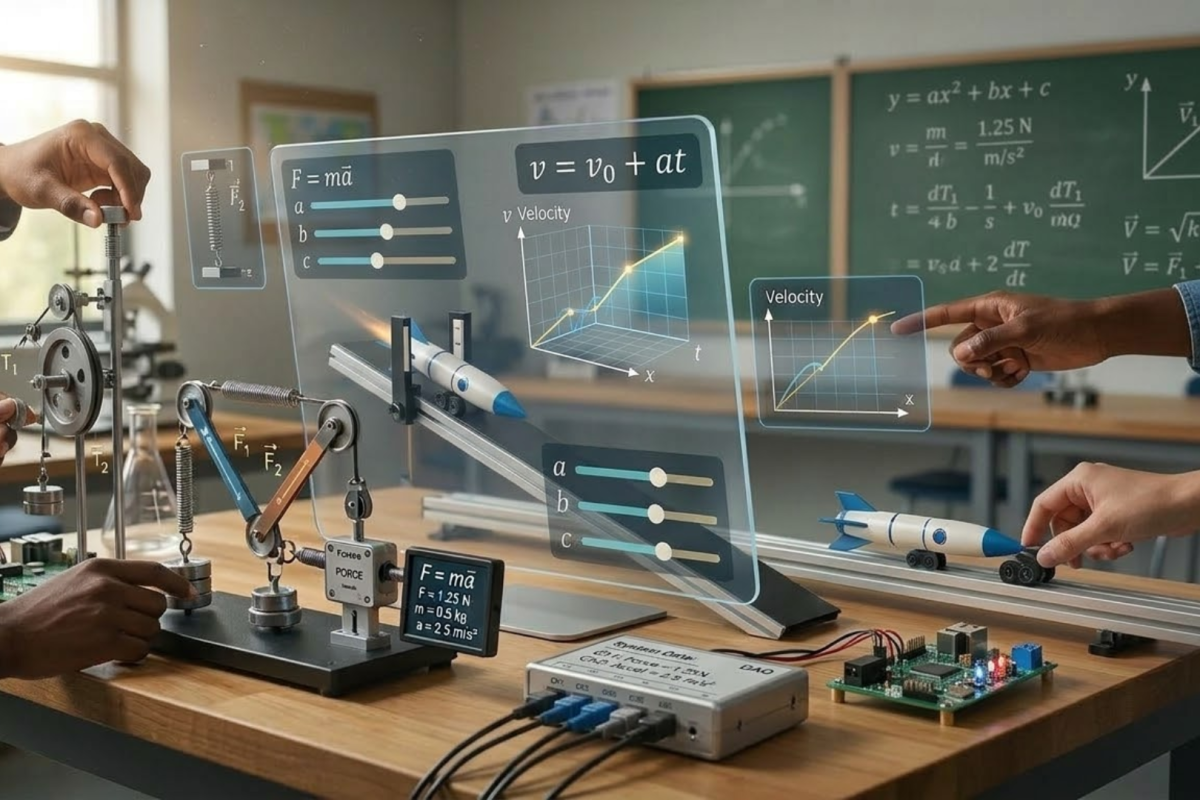
For years, students have struggled with the abstract nature of many mathematical and scientific concepts. Formulas like the quadratic equation or Newton's second law can often feel like arbitrary rules, disconnected from reality. This can lead to a sense of frustration and disengagement, hindering student learning and achievement. OpenAI's new interactive visual tools seek to address this challenge by transforming these abstract equations into dynamic, visual representations.
These tools allow students to directly manipulate variables within formulas and see the real-time effects on a corresponding graph or simulation. For example, in a physics problem involving motion, students could adjust the initial velocity, acceleration, and time variables to see how the object's position and velocity change over time. In a calculus problem, they could manipulate the parameters of a function to visualize its slope, concavity, and roots. This hands-on approach provides students with a visceral understanding of the relationships between different variables, making the learning process more intuitive and engaging.
Mastering STEM: From Simple Memorization to Deep Understanding
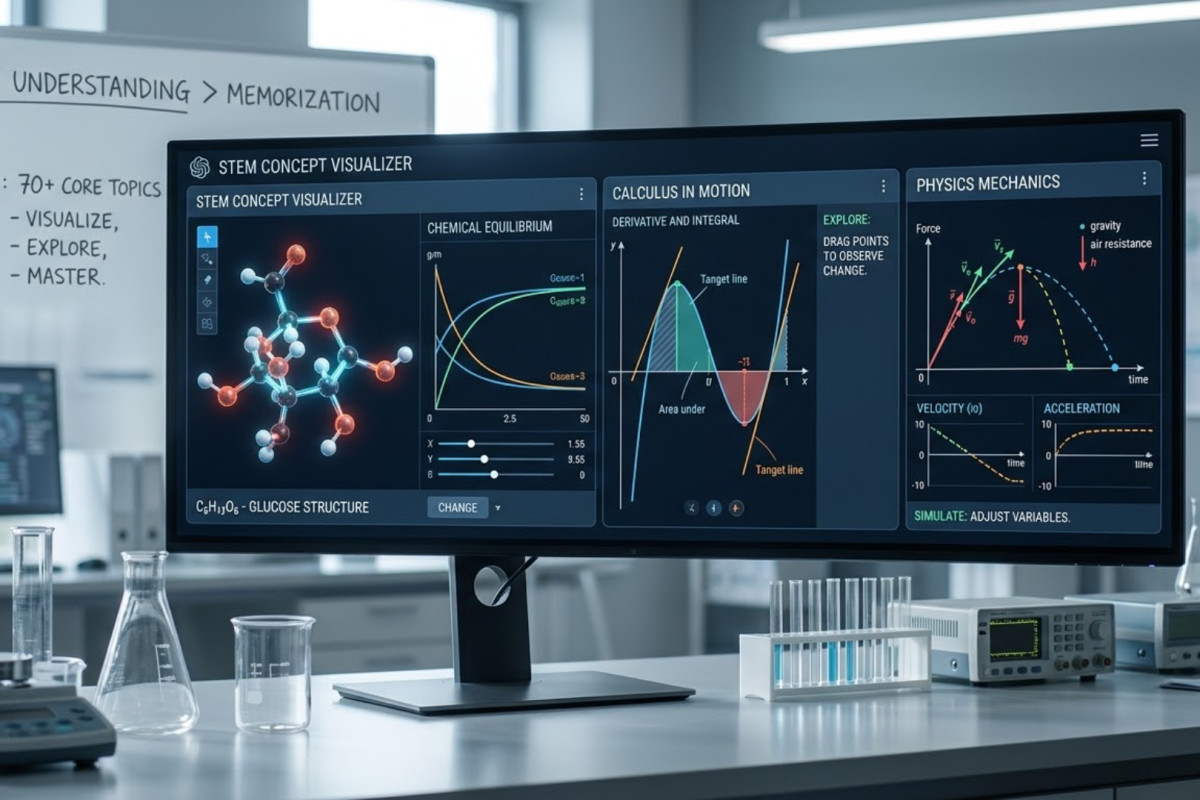
The introduction of these interactive visual tools is a crucial step towards fostering a deeper conceptual understanding of STEM subjects. Traditionally, many students rely on memorization to pass exams and complete assignments. While this approach may yield short-term results, it often fails to build a solid foundation of knowledge that can be applied to new problems and contexts. OpenAI's new features aim to change this dynamic by encouraging students to actively explore and experiment with concepts, rather than simply memorizing facts and formulas.
The platform launches with over 70 core topics spanning various high school and college-level subjects, including calculus, statistics, physics, and chemistry. This wide-ranging coverage ensures that students can use these tools to master fundamental concepts across multiple disciplines. By providing a dynamic environment for experimentation, students can test hypotheses, visualize concepts in real-time, and gain a more nuanced understanding of the underlying principles. This move beyond simple memorization empowers students to develop critical thinking and problem-solving skills that are essential for success in STEM fields.
The Global Classroom: Advanced AI as an Essential Educational Ally
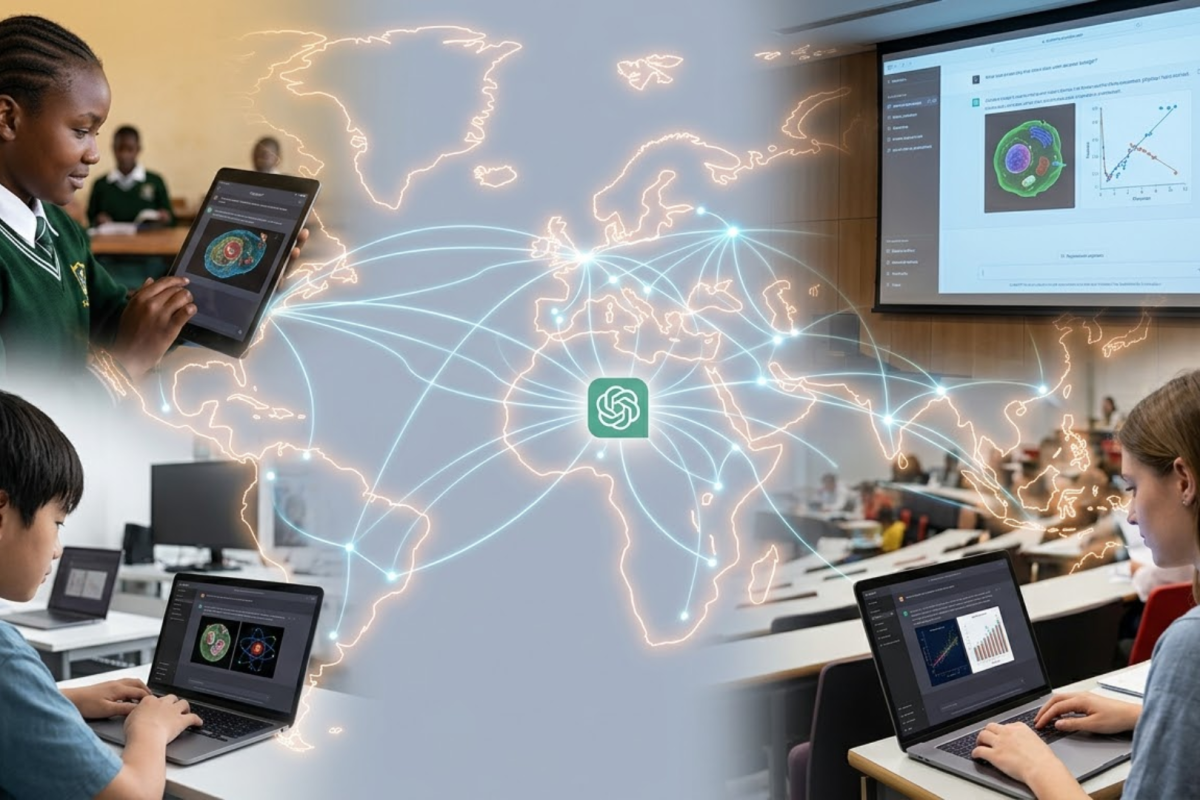
The integration of advanced AI tools into the global education ecosystem is a key aspect of OpenAI's initiative. These new features in ChatGPT are not just about helping students with their homework; they are about transforming the way we teach and learn on a global scale. By providing access to sophisticated interactive tools, OpenAI is democratizing high-quality STEM education and making it more accessible to students around the world, regardless of their background or resources.
Furthermore, these tools are designed to complement, not replace, traditional teaching methods. Educators can use these tools to enhance their lesson plans, create interactive demonstrations, and provide students with personalized learning experiences. The data generated by student interactions with these tools can also provide valuable insights into student understanding, allowing teachers to tailor their instruction to address specific learning gaps.
Conclusion: A Catalyst for Educational Evolution
OpenAI's introduction of interactive visual tools within ChatGPT marks a significant milestone in the evolution of educational technology. By transforming abstract formulas into tangible concepts, fostering deep conceptual understanding, and integrating advanced AI into the global education ecosystem, this initiative has the potential to fundamentally change how students learn math and science. While these tools are still in their early stages, their potential to empower students, support educators, and create a more equitable educational landscape is undeniable. As AI continues to advance, we can expect to see even more innovative and effective educational tools emerge, further revolutionizing the way we learn and grow.