Why AI Loyalty Is Costing You Output Quality
Sticking to just one AI tool hurts your work quality because no single model does everything best. High-intelligence platforms like Claude excel at complex strategy, coding, and math, while fast tools like ChatGPT are best for quick emails, copy, and rapid tasks. To get the best results, stop being loyal to one platform and match the right AI to the specific job.
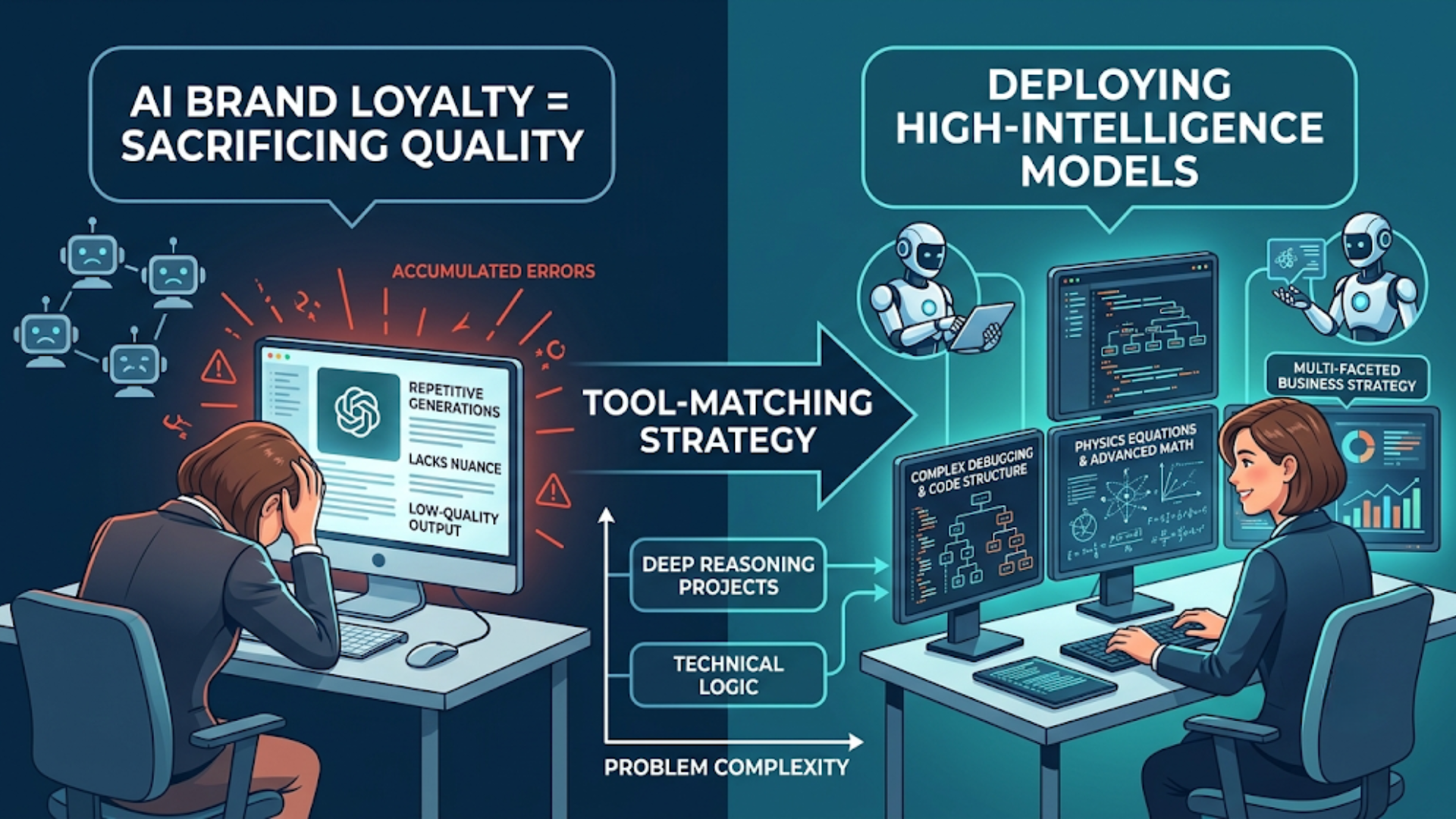
Relying exclusively on a single AI platform might seem convenient, but sticking to one tool for every task often comes at the expense of output quality. Modern artificial intelligence models are engineered with vastly different architectures, training priorities, and operational strengths. Treating these tools as interchangeable substitutes limits what you can achieve. To produce higher-quality results in less time, top-performing professionals and teams are abandoning brand loyalty and adopting a tool-matching strategy.
Deploying High-Intelligence Tools for Complex Tasks
When a project demands deep analytical reasoning, structural precision, or complex technical logic, high-intelligence models are essential. Platforms like Claude AI excel at handling intricate, high-stakes tasks that require multi-step reasoning.
Whether you are writing or debugging complex codebases, solving advanced mathematical and physics equations, or formulating multi-faceted business strategies, high-intelligence models provide the necessary depth. These models excel at maintaining contextual nuance over long conversations and large document uploads, ensuring that technical outputs remain coherent and accurate rather than superficial. By assigning your most demanding cognitive challenges to intelligence-focused models, you significantly reduce structural errors and eliminate the need for constant re-prompting.
Leveraging Fast-Execution Tools for High-Velocity Workflows
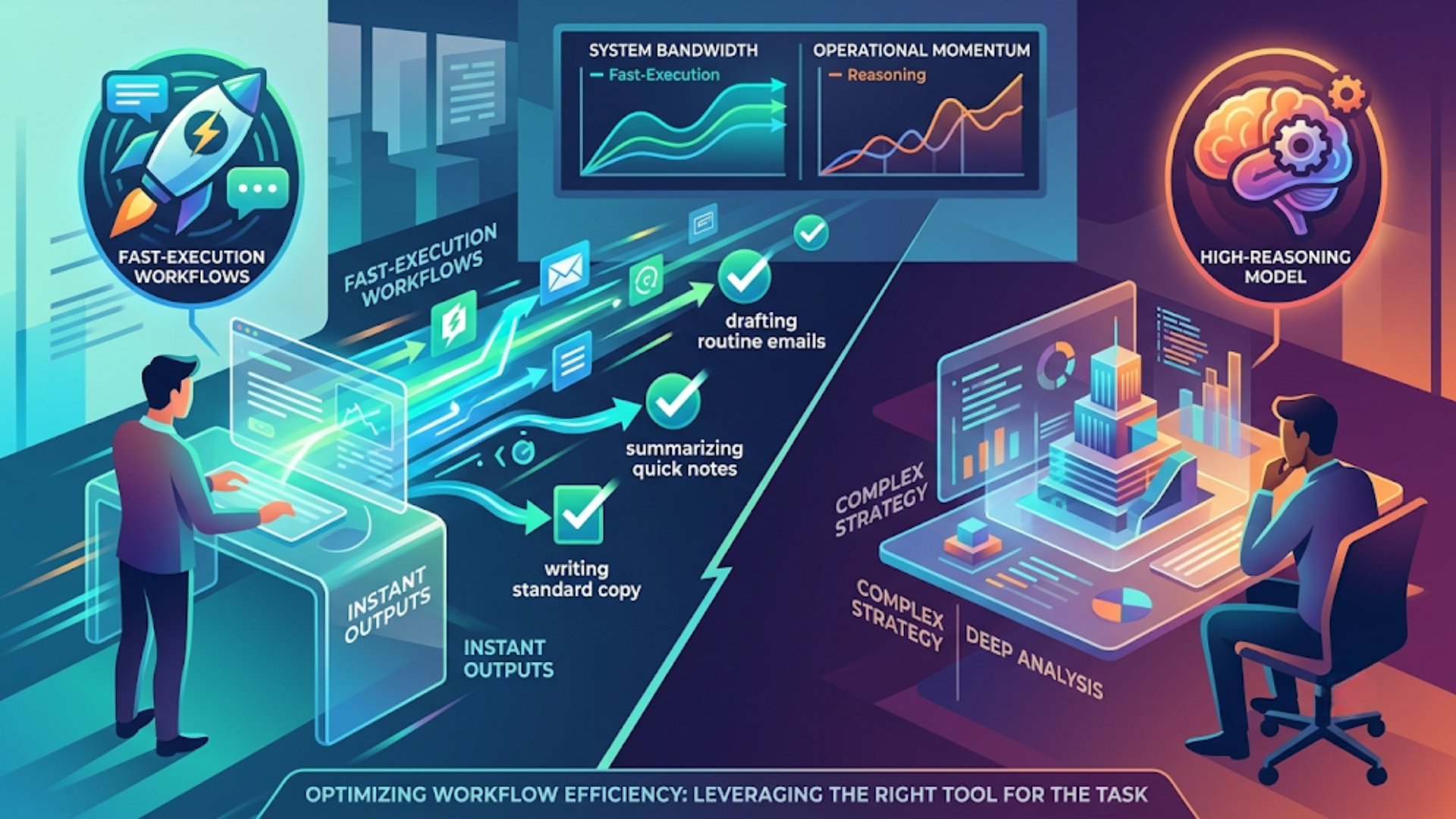
Not every task requires heavy cognitive processing, many daily operations prioritize speed, iteration, and rapid execution. Standardizing every minor task on a high-reasoning model can slow down your workflow and waste valuable system bandwidth.
Tools like ChatGPT excel in high-velocity scenarios where quick generation and multi-modal versatility are key. They are ideal for drafting routine emails, summarizing quick notes, writing standard copy, generating instant visuals, or rapidly brainstorming concepts. Leveraging fast-execution tools for lightweight, time-sensitive tasks keeps your operational momentum going without creating artificial bottlenecks in your day-to-day work.
Matching the Tool to the Function
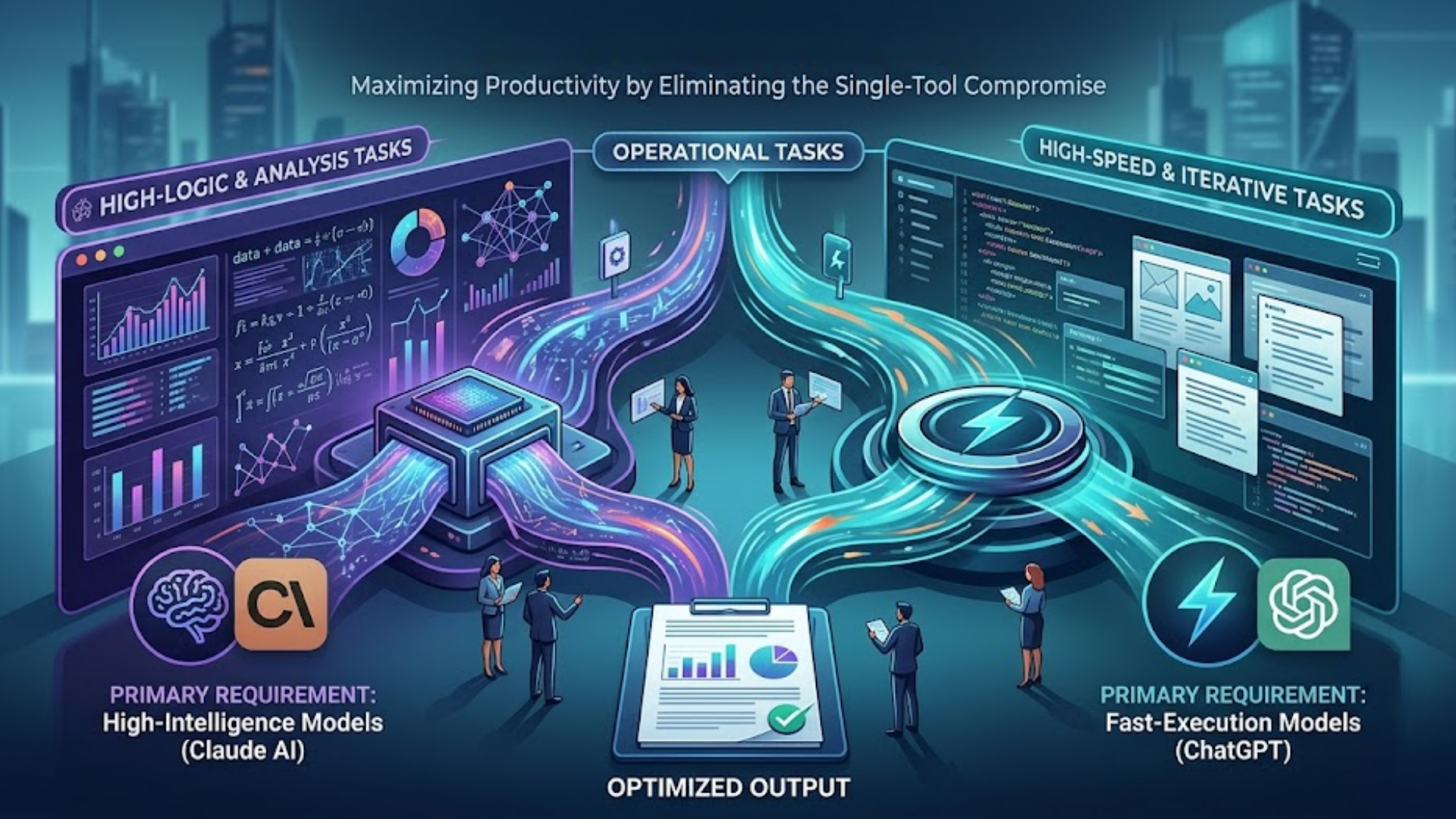
The key to maximizing productivity lies in matching the specific AI tool to the specific function, rather than relying on a single platform to handle everything. The most common pitfall for modern professionals is treating AI selection as a debate over which tool is universally "better."
Instead of arguing over static model comparisons, high-performing teams map out their daily operations and assign tasks based on primary requirements:
-
High-Logic & Analysis Tasks : High-Intelligence Models (Claude AI)
-
High-Speed & Iterative Tasks : Fast-Execution Models (ChatGPT)
By developing a multi-AI workflow, you eliminate the single-tool compromise, ensuring that every task is processed by the model best equipped to handle it.
Conclusion: Shift from Platform Loyalty to Strategic Execution
There is no single "best" AI tool, only the right AI tool for a particular job. Moving away from platform loyalty allows you to leverage the unique advantages of multiple AI models simultaneously, combining technical precision with high-speed execution. By intentionally matching your tools to the task at hand, you transform AI from a basic conversational assistant into an optimized productivity engine that consistently delivers superior results.
Watch the full video on LinkedIn 👉
https://www.linkedin.com/feed/update/urn:li:activity:7491048523702902784