Weekly Tech & AI Roundup: 7 Game-Changing Breakthroughs
 ITO — Input The Output
· 5 min read
ITO — Input The Output
· 5 min read

Recent tech advances feature specialized robotics like centaur rescue bots and magnetic medical slime alongside autonomous AI capable of generating full 3D games, designing microchips, and creating 30-second videos. To bypass web data polluted by synthetic text, developers are scanning physical books, while generative tools like 3D anatomy apps are modernizing education.
Interactive Education: ChatGPT-Powered 3D Anatomy App
-
Key Points:
-
Innovation: Interactive 3D Anatomy App built using ChatGPT logic and spatial frameworks.
-
User Experience: Allows students to explore 3D organ models, track system placement, and interact with clickable hotspots.
-
Education Shift: Replaces static textbook diagrams with spatial, real-time interactive learning.
-
Details: By leveraging LLM logic to drive interactive UI components, a creator built a dynamic human anatomy viewer. Students can select specific organs (such as the heart, brain, or kidneys), view them in full 3D within the human body frame, and click on interactive hotspots to reveal real-time explanations, clinical notes, and functional diagrams tailored to their learning speed.
-
Why It Matters: Interactive tools illustrate how generative models can move beyond simple text assistance to create adaptive educational software. Replacing static learning materials with interactive 3D environments increases engagement and retention in medical and STEM education.
Bio-Robotics: Magnetic Slime Robot for Non-Invasive Procedures
-
Key Points:
-
Innovation: Soft, self-healing magnetic slime capable of shape-shifting and navigating narrow spaces.
-
Functionality: Controlled via external magnetic fields to squeeze through narrow channels, grasp objects, and repair broken circuits.
-
Primary Target: Non-surgical extraction of swallowed objects from inside the human body.
-
Details: Made from polyvinyl alcohol, borax, and neodymium magnet particles, this custard-like fluid can form various shapes, self-heal when cut in two, and traverse passages as narrow as 1.5 mm. To render the material safe for internal medical use, researchers encased the magnetic particles in a protective silicon dioxide layer, enabling the slime to safely trap or wrap around foreign objects, such as accidentally swallowed button batteries, inside the digestive system.
-
Why It Matters: Accidentally ingesting toxic or sharp objects usually requires invasive endoscopic or surgical procedures. A controllable, soft-bodied material that can navigate internal organs without causing tissue damage offers a safer, non-surgical solution for medical emergencies.
Autonomous AI Development: Single-Prompt Video Game Generation
-
Key Points:
-
Achievement: Built an entire, fully playable 3D video game using a single long-running prompt.
-
Tech Stack: Powered by Claude Opus 5 paired with a looping agent workflow.
-
Resource Usage: Processed 690 million tokens at a total computation cost of $423.
-
Details: A creator demonstrated the capability of long-horizon AI agents by generating a functional 3D water racing game complete with physics, asset rendering, controls, and game logic. Rather than writing code manually over several months, the creator initiated a single continuous prompt loop where the model systematically planned, wrote, debugged, and refined the game code autonomously.
-
Why It Matters: Game development traditionally requires large studios with teams of programmers, designers, and testers working over long timelines. Achieving a playable title for under $500 using an autonomous agent workflow highlights how AI agents are lowering barriers in software engineering and creative production.
Open-Source AI: Alibaba Launches Qwen 3.8-Max
-
Key Points:
-
Model Release: Qwen 3.8-Max, a massive open-source AI model designed to compete directly with GPT and Claude series models.
-
Efficiency: Costs up to 88% less to run than competing commercial models.
-
Autonomous Capability: Successfully operated continuously for 12 hours straight to design microchips without human intervention.
-
Details: Featuring a 2.4-trillion-parameter Mixture-of-Experts architecture, Qwen 3.8-Max provides multi-modal capabilities alongside a 1-million-token context window. To demonstrate its real-world problem-solving stamina, Alibaba set the model loose to perform microchip design continuously for 12 hours straight, executing tasks ranging from code generation to automated verification without stopping.
-
Why It Matters: The launch of ultra-large, highly capable open-source models reduces reliance on proprietary APIs. Furthermore, long-running execution tests demonstrate that AI models are moving beyond simple Q&A tools into fully autonomous, shift-working digital employees capable of complex technical labor.
Model Training Data: AI Companies Turn to Physical Book Destruction
-
Key Points:
-
Trend: AI organizations are purchasing physical printed books in bulk to scan for model training.
-
Process: Slicing off book spines with hydraulic cutters, scanning pages via high-speed systems, and recycling the pulp.
-
Driver: The open internet is increasingly saturated with low-quality, synthetic AI-generated text.
-
Details: To train next-generation foundation models, developers require vast amounts of high-quality, human-written text. Because online data streams are now polluted with low-effort AI copy, companies are turning to physical libraries and out-of-print books. Heavy machinery cuts off the bindings, feeds pages into high-speed optical character recognition (OCR) scanners, and immediately recycles the remaining paper to digitize millions of pages of human prose.
-
Why It Matters: This practice underscores the critical shortage of clean human data facing the AI industry, often referred to as "data wall." Physical books represent centuries of curated, high-density human knowledge that remains unaffected by AI synthetic loops.
Generative Video: ByteDance Releases SeeDance 2.5
-
Key Points:
-
Product: SeeDance 2.5 by ByteDance.
-
Capability: Generates continuous 30-second video clips from a single text prompt.
-
Output Quality: Produces production-ready commercial assets, including exploded 3D product animations, close-ups, and brand integration.
-
Details: SeeDance 2.5 marks a step forward for AI video generation, moving past short 4-second loops to deliver coherent, half-minute sequences. Demonstrations show the model generating fully stylized, high-end product commercials, such as mechanical keyboard advertisements featuring camera pans, exploded component views, labeled callouts, and smooth lighting transitions, from text alone.
-
Why It Matters: High-end video advertising typically requires expensive production setups, 3D artists, and lengthy post-production cycles. Automated video models capable of generating polished commercial shots in seconds threaten to disrupt traditional digital marketing and visual effects workflows.
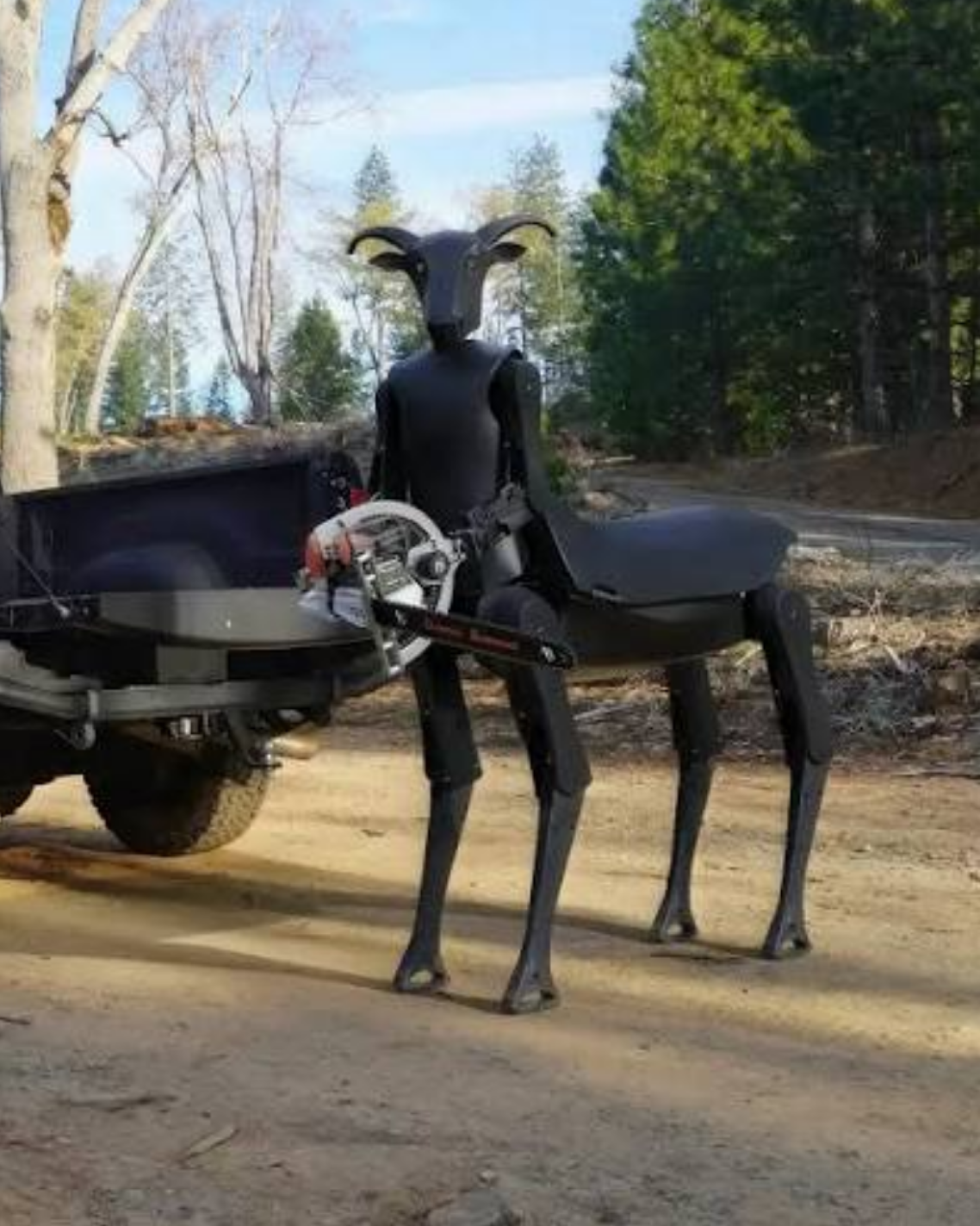
SatyRobotics: High-Risk Centaur Rescue Bot "Threehalves"
-
Key Points:
-
Entity: Developed by California startup Satyress Robotics.
-
Specs: Measures 7 feet tall and weighs 240 pounds.
-
Design: Combines a stable four-legged base for rugged terrain with a humanoid torso for tool operation.
-
Details: Designed specifically for high-risk disaster zones like wildfires, mudslides, and collapsed buildings, "Threehalves" bridges the gap between quadrupeds and humanoid systems. Its four-legged chassis ensures balance on uneven ground, while its humanoid arms allow it to operate heavy-duty machinery, such as chainsaws and impact tools, using a quick-connect system instead of delicate fingers.
-
Why It Matters: Disaster environments are often too unstable or dangerous for human emergency crews. By deploying a teleoperated centaur robot, rescue teams can execute heavy physical labor and clear pathways without placing human lives in immediate danger.