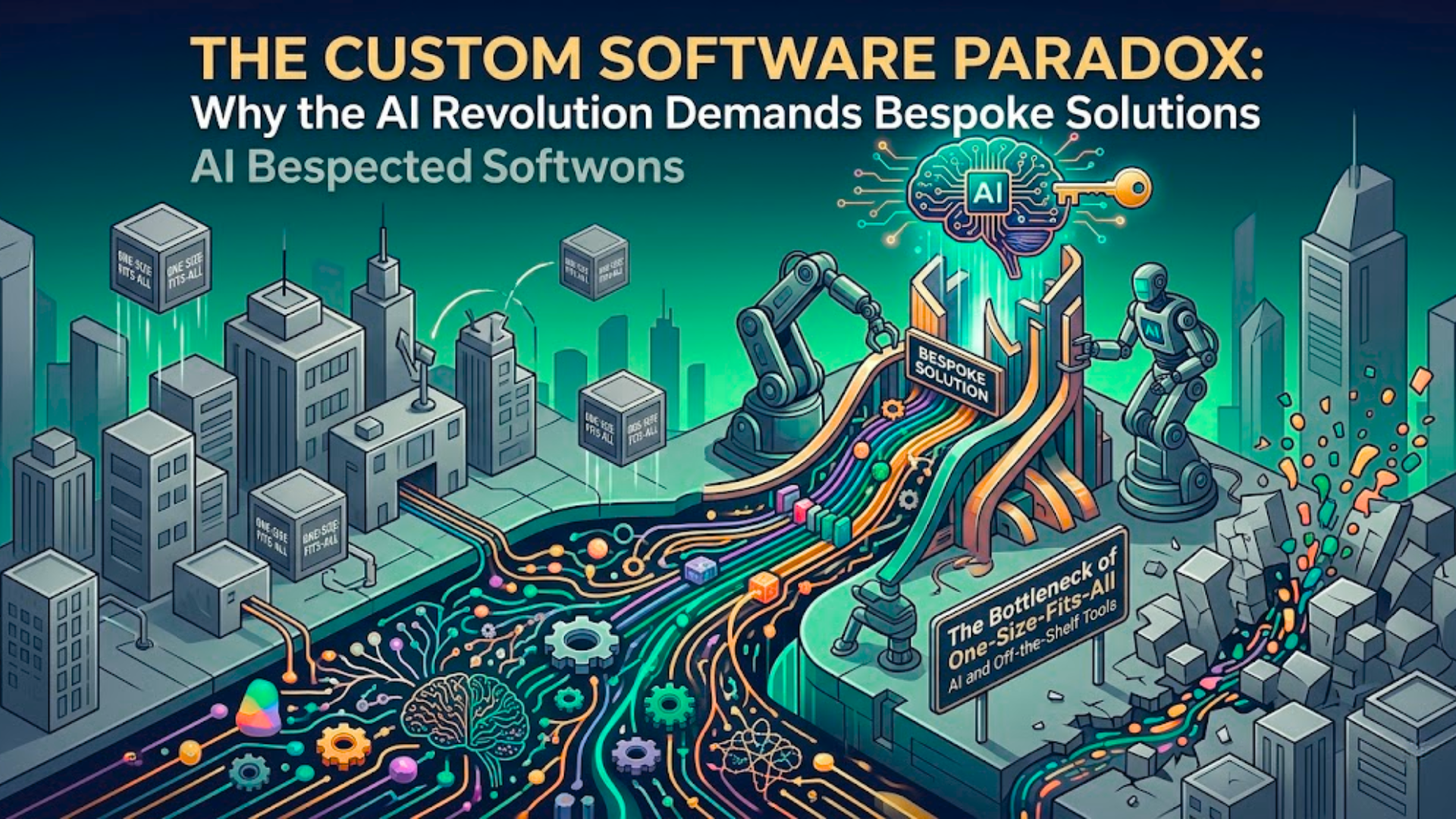
The Custom Software Paradox: Why the AI Revolution Demands Bespoke Solutions
While generic AI tools handle standard tasks well, they fall short when businesses need specialized workflows or custom data structures. Rather than replacing custom software, AI accelerates its development by automating repetitive coding tasks, making bespoke applications far faster and cheaper to build. This democratizes custom software, allowing businesses of all sizes to ditch rigid pre-built tools and invest in tailored technology built for their specific needs.
In an era dominated by rapid artificial intelligence breakthroughs and instant off-the-shelf automation tools, it is easy to assume that building custom software from scratch is a relic of the past. If a pre-built AI model can draft contracts, organize spreadsheets, and generate schedules in seconds, investing time and capital into bespoke development seems counterintuitive. Yet across the tech landscape, the exact opposite is happening: the demand for tailored software solutions is surging. Rather than making custom development obsolete, AI is revealing the strict limitations of off-the-shelf platforms while simultaneously making the creation of tailored software faster, smarter, and more accessible than ever before.
The Bottleneck of One-Size-Fits-All AI and Off-the-Shelf Tools
Off-the-shelf software platforms and plug-and-play AI assistants excel at general-purpose tasks, but they hit a rigid ceiling the moment they encounter complex operational realities. Every business that scales develops unique competitive advantages, whether that is a proprietary scheduling workflow, a specialized multi-tiered approval system, or a distinct data catalog built around precise regulatory demands. Generic platforms force organizations to alter their processes to fit the software's hardcoded constraints, introducing operational friction and inefficiency. When out-of-the-box AI tools are layered on top of these generic systems, they often hallucinate or fail because they lack deep integration with the organization’s exact data structure and business logic.
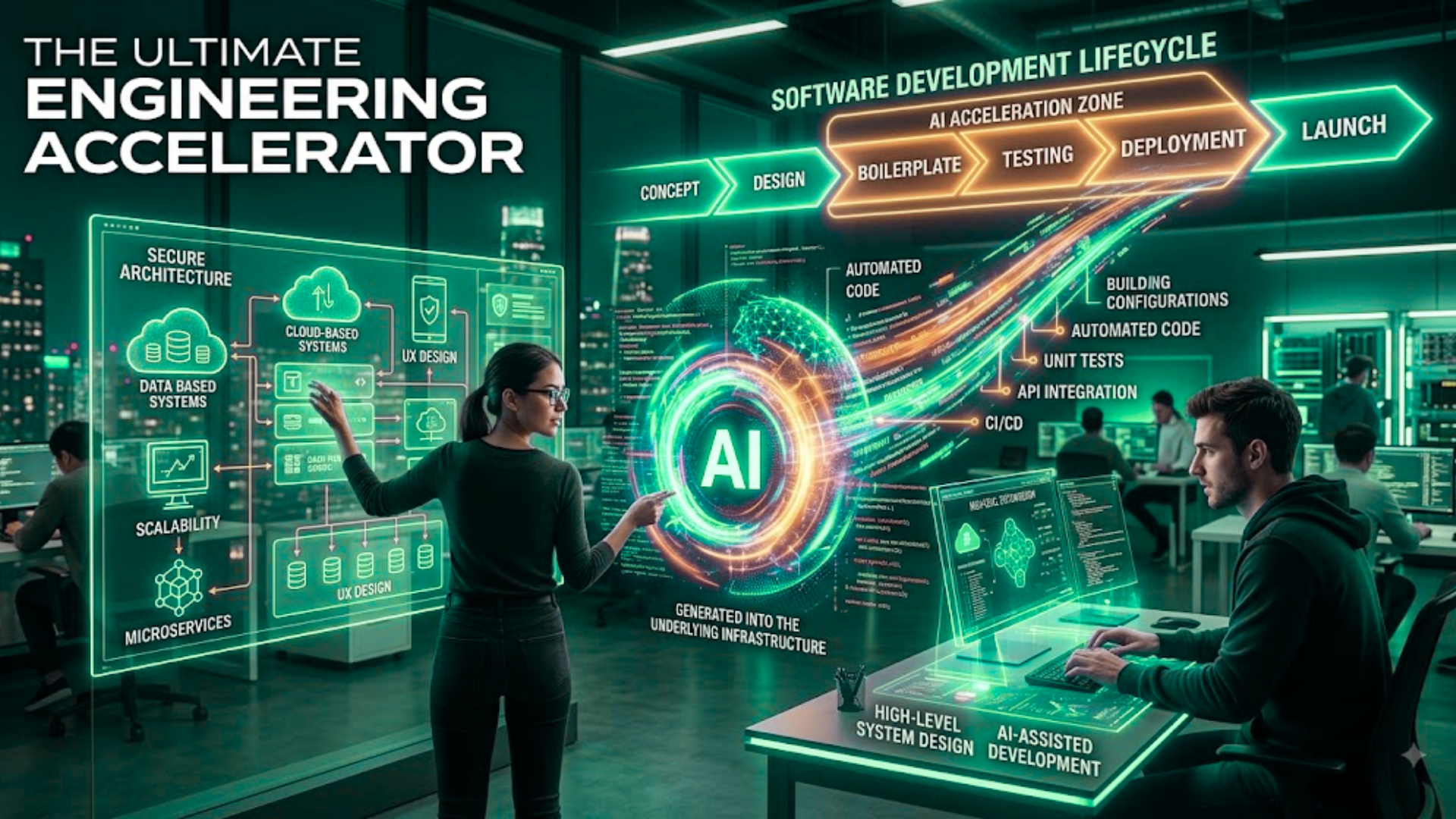
AI as the Ultimate Engineering Accelerator
Far from replacing human developers, modern AI tools have become the engine driving a new paradigm in software engineering. Engineering teams now use advanced AI coding assistants, automated test generators, and intelligent debugging tools to eliminate repetitive overhead. AI handles the time-consuming boilerplate code, API orchestration, and foundational architecture setup, allowing developers to focus entirely on high-level architecture, security, and specialized user experience. By shifting the workload from manual line-by-line coding to high-level system design, AI significantly compresses the software development lifecycle, allowing bespoke applications to be designed, tested, and deployed in a fraction of the traditional timeline.
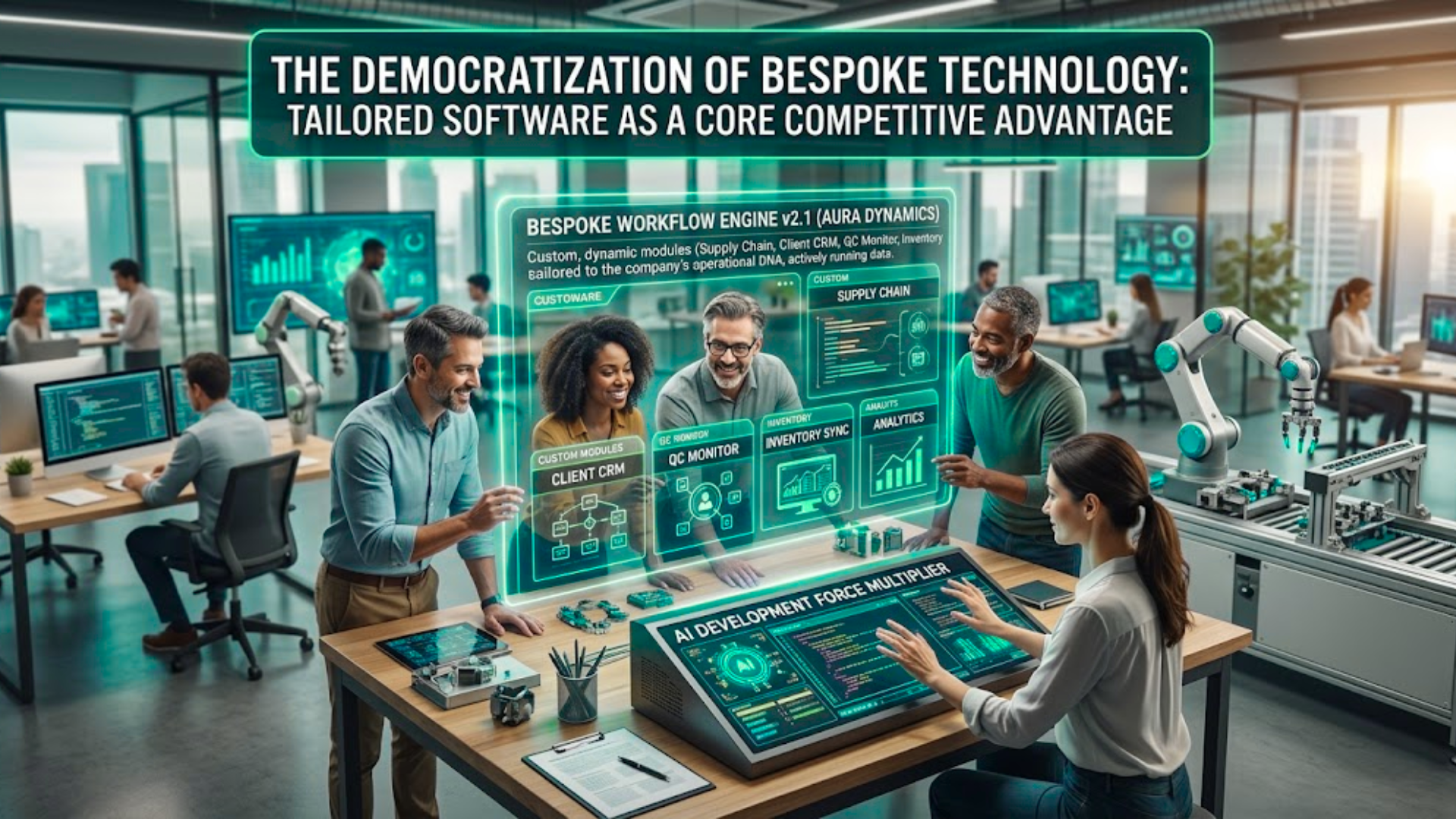
The Democratization of Bespoke Technology
Historically, custom software was a luxury reserved exclusively for enterprise corporations with massive IT budgets. The traditional trade-offs of software development, balancing cost, speed, and quality, kept small-to-midsize businesses trapped in rigid SaaS subscriptions. Because AI drastically reduces the billable hours required to build custom applications, it has effectively democratized bespoke software development. Today, mid-market companies can afford high-quality, fully customized systems tailored specifically to their operational DNA. Instead of paying continuous licensing fees for bloated software where they only use a fraction of the features, businesses can invest in lean, owned assets that solve their exact challenges.
Conclusion: Tailored Software as a Core Competitive Advantage
The narrative that AI renders custom software unnecessary fundamentally misunderstands how modern businesses create value. AI has not eliminated the need for custom applications; it has eliminated the historical cost and time barriers that kept businesses from building them properly. While generic AI tools will continue to handle standard daily tasks, long-term competitive differentiation belongs to companies that build software around their specific workflows. By leveraging AI as a development force multiplier, organizations can stop adapting their operations to fit software templates and start building technology designed exclusively to power their unique growth.
Watch the full video on LinkedIn 👉
https://www.linkedin.com/feed/update/urn:li:activity:7493641597063045121