The Agentic Takeover: Everything Google Announced at Input/output 2026
Google I/O 2026 marked a shift from passive chatbots to proactive "Agentic AI," introducing ultra-fast models (Gemini 3.5 Flash and Omni), 24/7 personal cloud assistants (Gemini Spark), and a historic, link-free redesign of Google Search.
A decade ago, Google committed to becoming an "AI-first" company. At this year's I/O conference, CEO Sundar Pichai marked that 10-year milestone by declaring the death of the standard, passive chatbot. Google is no longer just embedding AI features into existing apps, it is entirely rebuilding its ecosystem around Agentic Workflows, proactive AI systems that operate 24/7 to accomplish complex, multi-step goals on your behalf. Here is your definitive guide to the massive shift unveiled at I/O 2026.
The Next-Gen Engines: Gemini 3.5 Flash & Gemini Omni
At the core of this agentic revolution are two brand-new models designed to handle unprecedented computational demands and multimodal creativity.
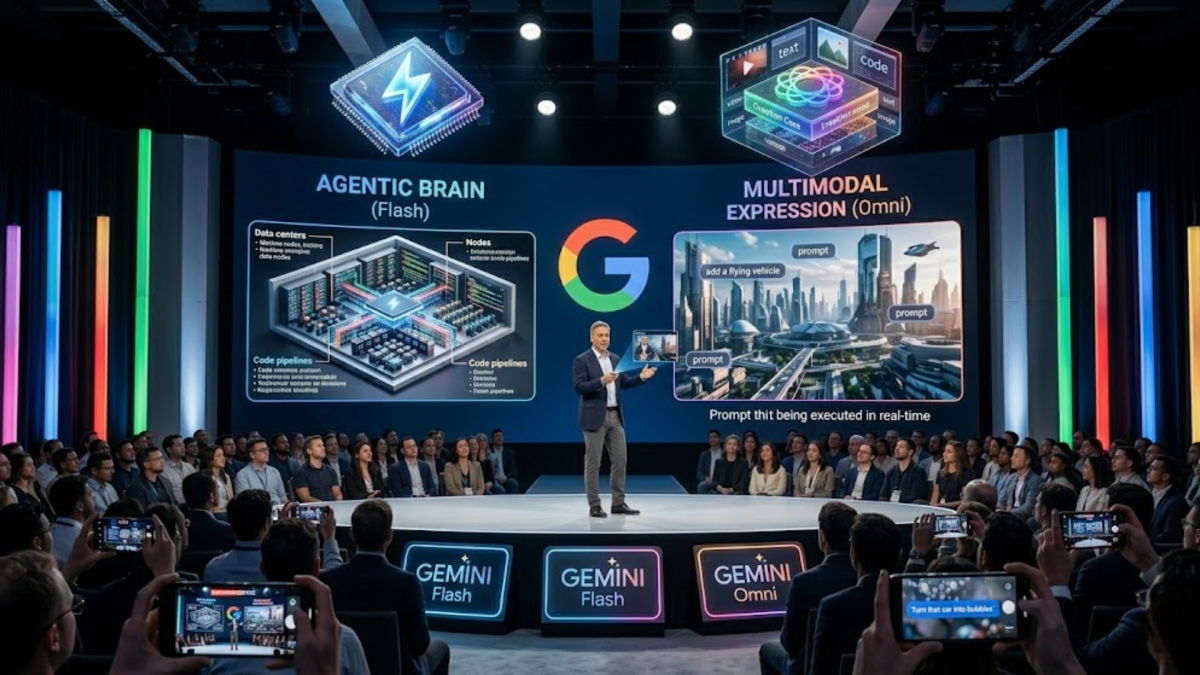
The new default brain of the ecosystem is Gemini 3.5 Flash. It runs four times faster than rival systems at less than half the cost, making it specifically optimized to power heavy background AI agents and complex, multi-step coding tasks without breaking a sweat.
Alongside it stands Gemini Omni, the undisputed star of the keynote. Billed as a "world model," Omni allows creators and editors to generate and manipulate cinematic-quality videos using natural language. During the live demos, presenters conversationalized complex edits in real-time, such as pointing at an object in a video and saying, "Turn that car into bubbles", while the AI flawlessly maintained physics and character consistency.
Reimagining the Daily Routine: Gemini Spark & Daily Brief
Google is bringing these advanced models into everyday consumer life through features that act less like software and more like dedicated personal assistants for professionals, students, and mobile users.
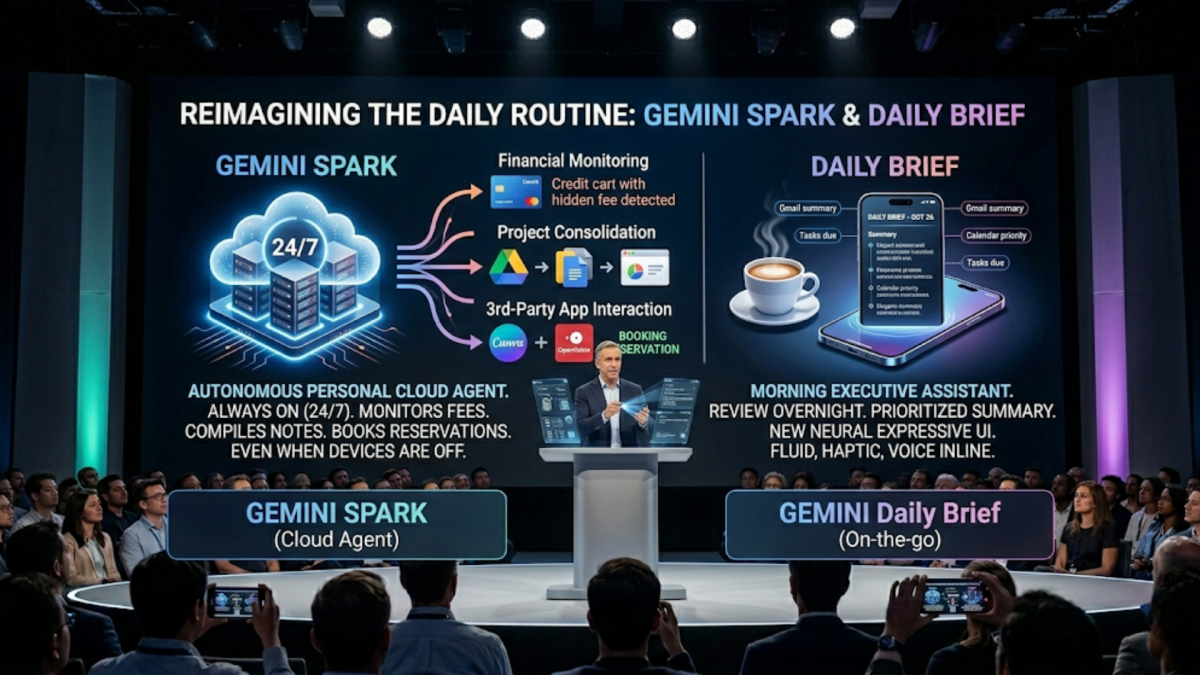
The standout feature is Gemini Spark, an always-on, 24/7 personal cloud agent that works even when your computer or phone is powered down. Spark can autonomously monitor your credit cards for hidden fees, compile scattered Google Drive notes into a single presentation, and interact with third-party apps like Canva or OpenTable to handle tasks like booking a dinner reservation.
For users on the go, the mobile Gemini app now features the Daily Brief. Acting as a morning executive assistant, it securely reviews your Gmail, Calendar, and Tasks overnight to hand you a perfectly prioritized summary of your day over your morning coffee. All of this is wrapped in a new Neural Expressive UI, featuring fluid animations, subtle haptic feedback, and a seamless, inline conversational voice mode.
The 25-Year Search Redesign: No More Blue Links
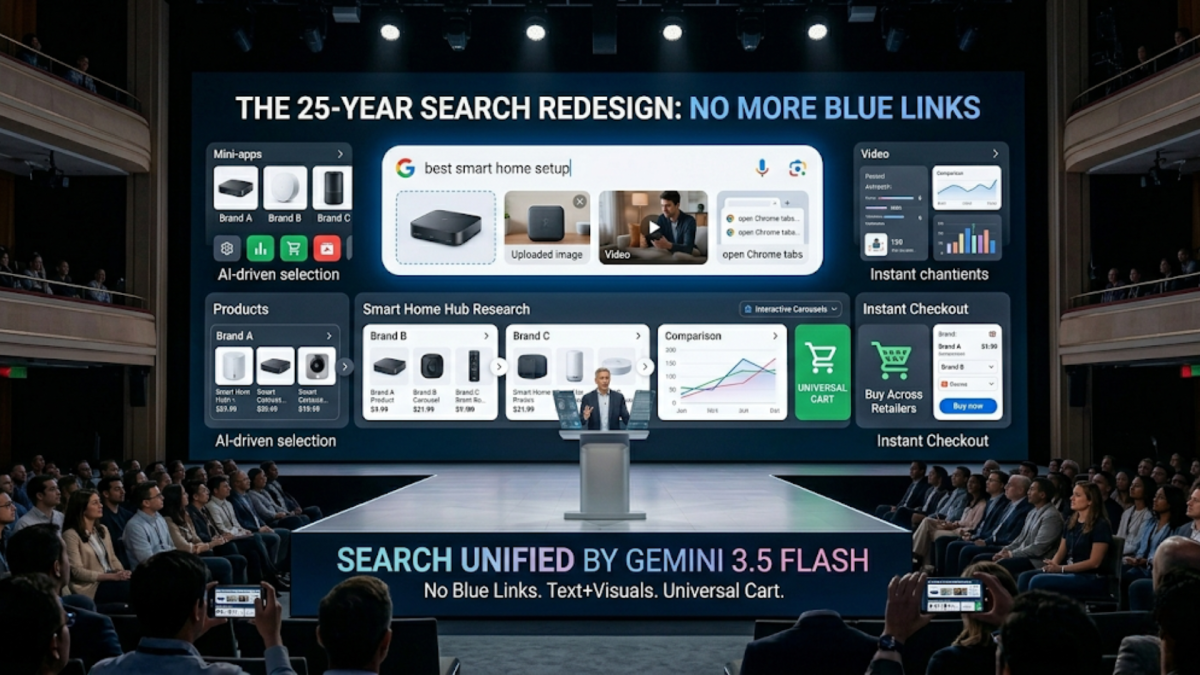
The biggest transformation in a quarter-century arrived with the total overhaul of Google Search. The traditional list of blue links is officially taking a backseat to an Intelligent Search Engine powered by Gemini 3.5 Flash, completely changing how online shoppers and everyday users interact with the web.
Users can now search using text, images, video clips, and open Chrome tabs simultaneously. Instead of sending you to external websites, Search now generates interactive dashboards and "mini-apps." With the introduction of the Universal Cart, an AI-driven automated purchasing tool, you can even research, select, and buy products across different retailers directly from the search page without ever leaving Google.
Conclusion: A Proactive Future on the Horizon
Google I/O 2026 made one thing abundantly clear: the tech giant is moving away from reactive AI and sprinting toward a proactive, ambient future. We saw this not just in consumer software, but in tools for developers and hardware enthusiasts alike. From Google Antigravity 2.0, which wowed developers by autonomously building a custom OS to run the video game Doom from scratch, to a sneak peek at Project Aura, the upcoming audio/XR smart glasses developed with Samsung, Google is preparing us for a world where AI is seamlessly woven into everything we see, do, and build. The era of asking AI for help is shifting; the era of letting AI execute for us has officially begun.