Stop Asking "What Is Our AI Strategy?": A Practical Playbook for Executive Leadership
Instead of chasing vague AI strategies or buying tools prematurely, business leaders should focus on solving real operational friction. By identifying which specific tasks consume the most employee hours, calculating the lost time, and ranking them by impact, organizations can targetedly deploy technology to fix proven bottlenecks and deliver actual ROI.
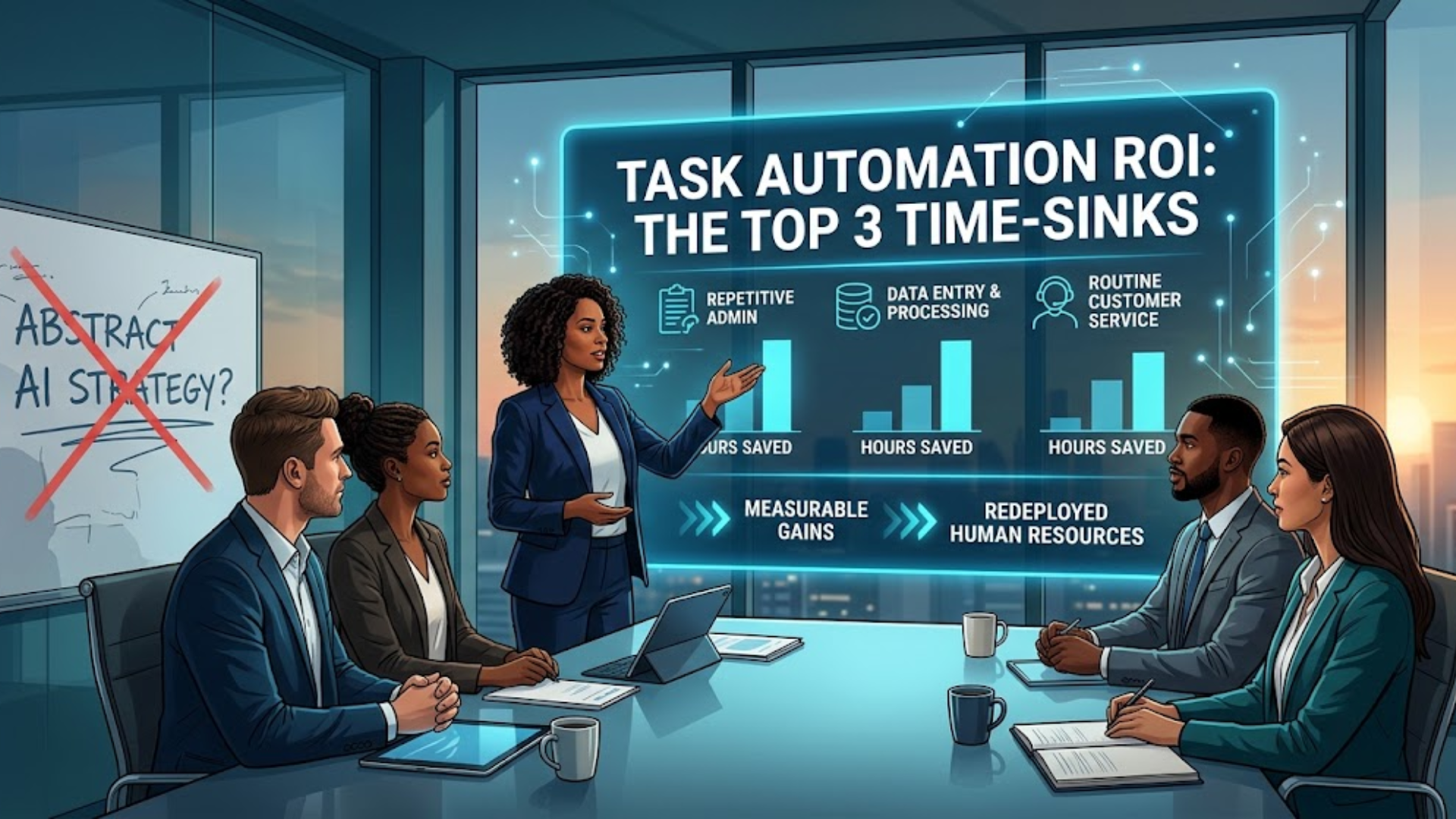
Many executive teams find themselves trapped in boardroom discussions repeating vague statements like "We should probably do something with AI". If this scenario sounds familiar, your organization is not falling behind, you are simply standing at the crucial threshold right before the most important, actionable questions get asked. True digital transformation is rarely driven by high-level mandates, it is built on solving everyday operational friction.
Shift from Abstract Strategy to Real Operational Bottlenecks
Asking "What is our AI strategy?" often leads to overwhelming, theoretical discussions that rarely turn into practical results. These high-level conversations tend to stall in committee, producing lengthy whitepapers rather than actual productivity gains.
Effective leadership requires pivoting away from abstract tech jargon toward a far more practical query: "Which three tasks eat the most hours?" By shifting your team's attention to measurable operational time-sinks, you immediately ground your technology initiatives in genuine business needs, ensuring every project targets clear time-savings and ROI.
The 3-Step Execution: Identify, Quantify, and Rank
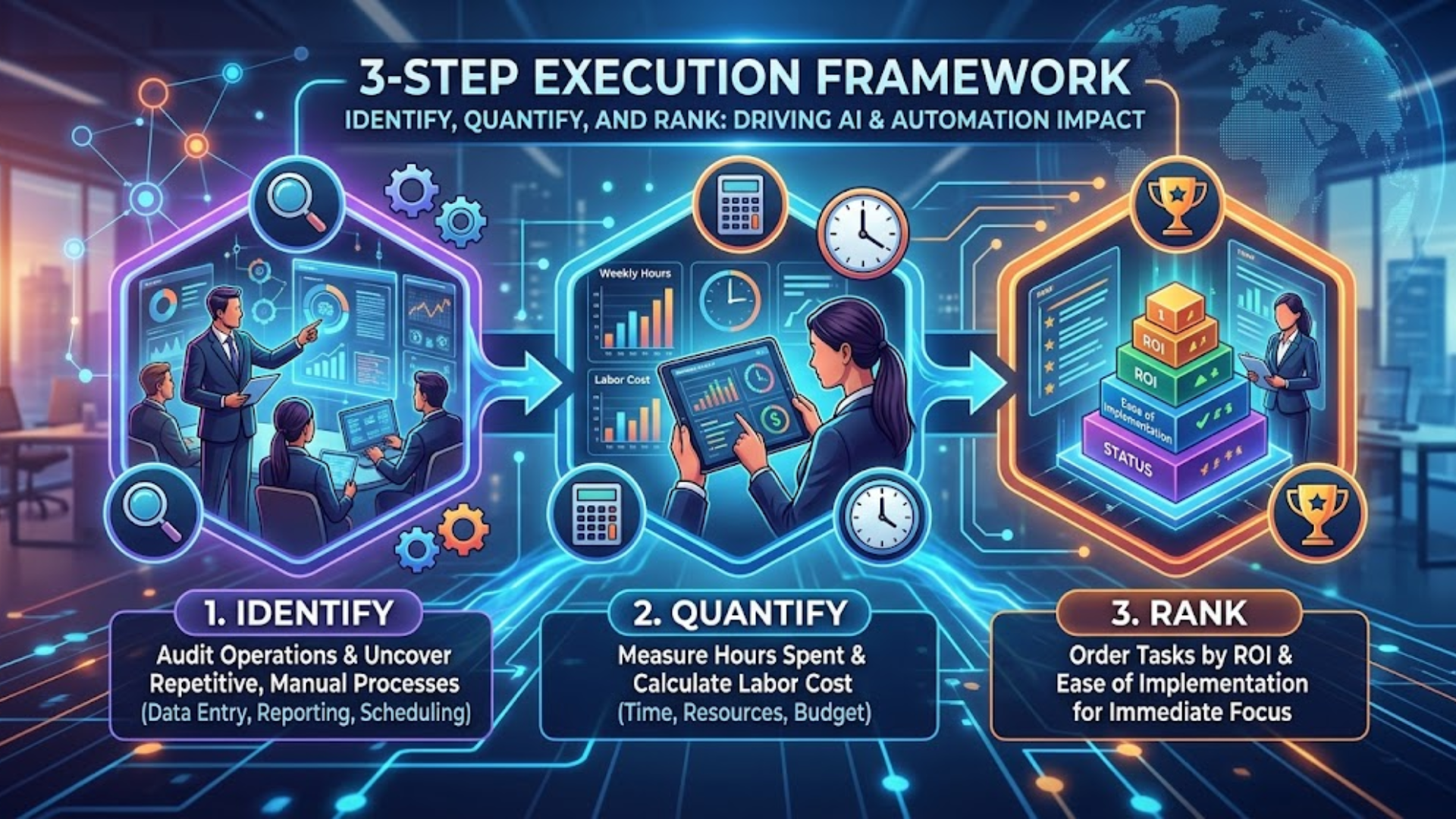
Before jumping into implementation, leadership teams need a clear, structured exercise to evaluate their workflows objectively. Following a simple three-step framework brings clarity to where automation and AI assistance will have the greatest impact:
-
Identify: Audit daily operations across departments to uncover repetitive, manual processes, such as data entry, report synthesis, or calendar management, that drain employee energy.
-
Quantify: Measure the precise number of hours spent on these tasks across your workforce each week to calculate the actual labor cost.
-
Rank: Order the identified tasks based on their potential return on investment and ease of implementation, selecting the top candidates for immediate focus.
Select the Tool After the Task, Not Before
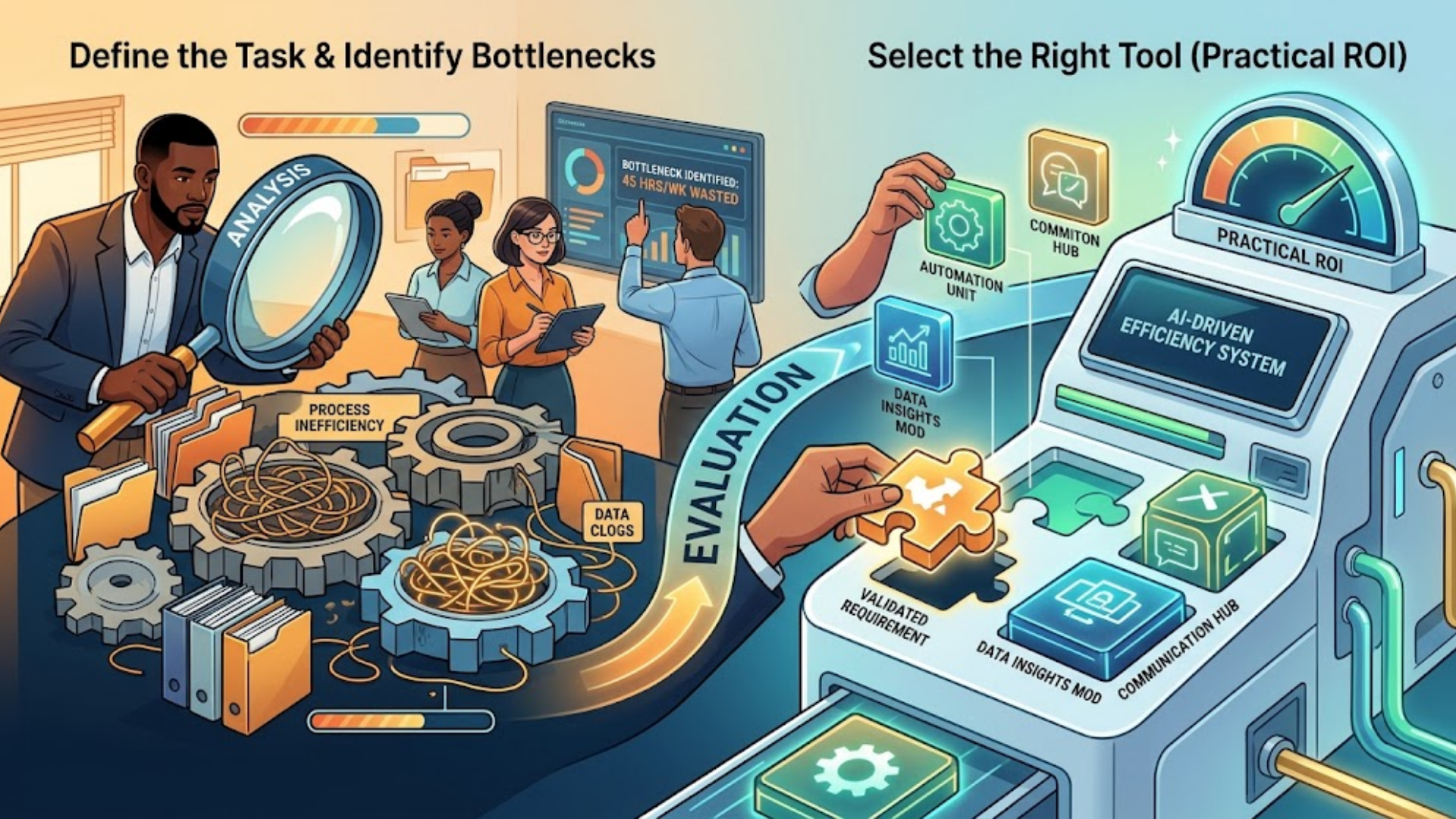
A common mistake in corporate tech adoption is purchasing expensive software licenses or adopting trend-driven tools before defining a clear use case. This top-down approach leads to low adoption rates, wasted budgets, and frustration among staff.
When you run an exercise to pinpoint high-volume bottlenecks first, choosing the right tool becomes simple. Technology selection should always be the final step of the process, ensuring tools serve specific, validated business requirements rather than forcing employees to adapt to software they do not need.
Conclusion: Focus on Practical ROI to Drive Lasting Impact
Building an AI-driven company does not require complex, over-engineered grand plans. It begins by identifying friction points, understanding where team resources are actually spent, and applying targeted technology to solve proven problems. Stop chasing vague strategy buzzwords, focus on where your hours go, and let practical ROI drive your organization's digital evolution.
Watch the full video on LinkedIn 👉
https://www.linkedin.com/feed/update/urn:li:activity:7495396939174359041