Linus Torvalds Slams Anti-AI Toxicity in Open Source
Linux creator Linus Torvalds has told open-source purists to accept AI-assisted code or "fork off." While acknowledging that AI has flooded maintainers with messy bug reports, he argues it is now an undeniably useful tool that shouldn't be banned. Instead, Linux will accept AI code under strict rules emphasizing human accountability and technical merit, with Torvalds sharply reminding critics that human-written code is rarely perfect either.
For the past year, the developer community has been locked in a bitter ideological war over "vibe coding." Purists have frequently harassed and attacked contributors who submit code written with the help of AI agents like Claude Code or Codex. Now, Linux creator Linus Torvalds has officially put his foot down. In a viral mailing list message, Torvalds slammed the gatekeeping, stating unequivocally that the Linux kernel will not tolerate anti-AI crusades.
"Linux is not one of those anti-AI projects," Torvalds wrote, delivering a swift ultimatum to the community, "and if somebody has issues with that, they can do the open-source thing and fork it. Or just walk away."
From "Marketing Hype" to "Clearly Useful Tool"
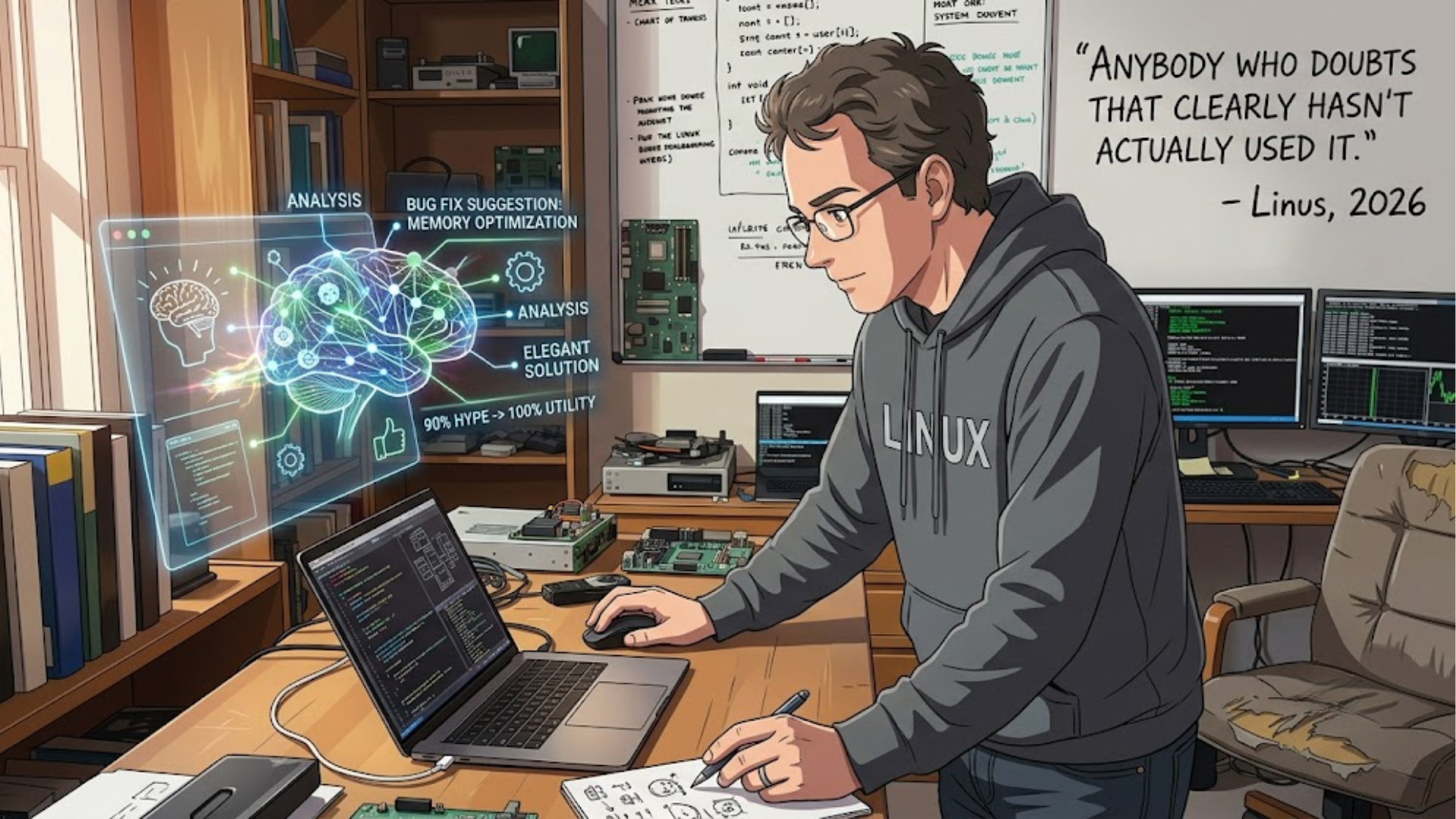
Linus Torvalds’ personal evolution on artificial intelligence represents a massive paradigm shift for the software industry. Back in late 2024, Torvalds famously dismissed 90% of the AI industry as "marketing hype." Yet, less than two years later, his tone has completely changed.
Torvalds noted that while the utility of AI might have been debatable a year ago, it is completely undeniable today, bluntly writing:
"Anybody who doubts that clearly hasn't actually used it."
True to form, Torvalds’ acceptance of AI is driven entirely by pragmatism over philosophy. He evaluates everything based on technical merit, not a fear of new tools. If an AI tool produces a clean, elegant fix for the operating system, Linux will accept it, no matter who (or what) typed it.
Navigating the Painful Reality of AI Bug Floods
While Torvalds is defending the technology, he isn't blind to why open-source developers are angry. Earlier in 2026, the kernel's private security mailing lists were completely flooded by hundreds of amateur, AI-generated bug reports, creating an unmanageable amount of copy-paste duplicate submissions and pushing maintainers toward burnout.
Torvalds openly admitted that AI can be a "somewhat painful tool" because it actively scans the kernel and exposes long-hidden, embarrassing human-written bugs. Despite the extra triage workload, however, Linus firmly rejected banning the technology.
"The solution is not to put your head in the sand and sing 'La La La, I can't hear you' at the top of your voice like some people seem to do," Linus argued. "The solution is to make sure those LLM tools help maintainers instead of just causing them pain."
To balance innovation with quality, the Linux community has established clear rules of engagement for contributions. First, there are no artificial bans; you cannot reject a pull request purely because an AI helped write it. However, human accountability remains non-negotiable, an AI cannot legally sign off on a patch, meaning a human must review it, understand it, and take full responsibility. Furthermore, substantial AI contributions must openly declare the specific model and tools used via an "Assisted-By" tag. Ultimately, technical merit comes first. If the code introduces an architectural mess, it will be rejected, not because it's AI, but because it's bad.

"Look in the Mirror": Human Intelligence vs. AI
In one of the sharpest and funniest parts of his defense, Torvalds took a direct swing at human programmers who criticize AI code for not being flawless or for occasionally making mistakes.
Rather than coddling the critics, he delivered a classic, unfiltered retort:
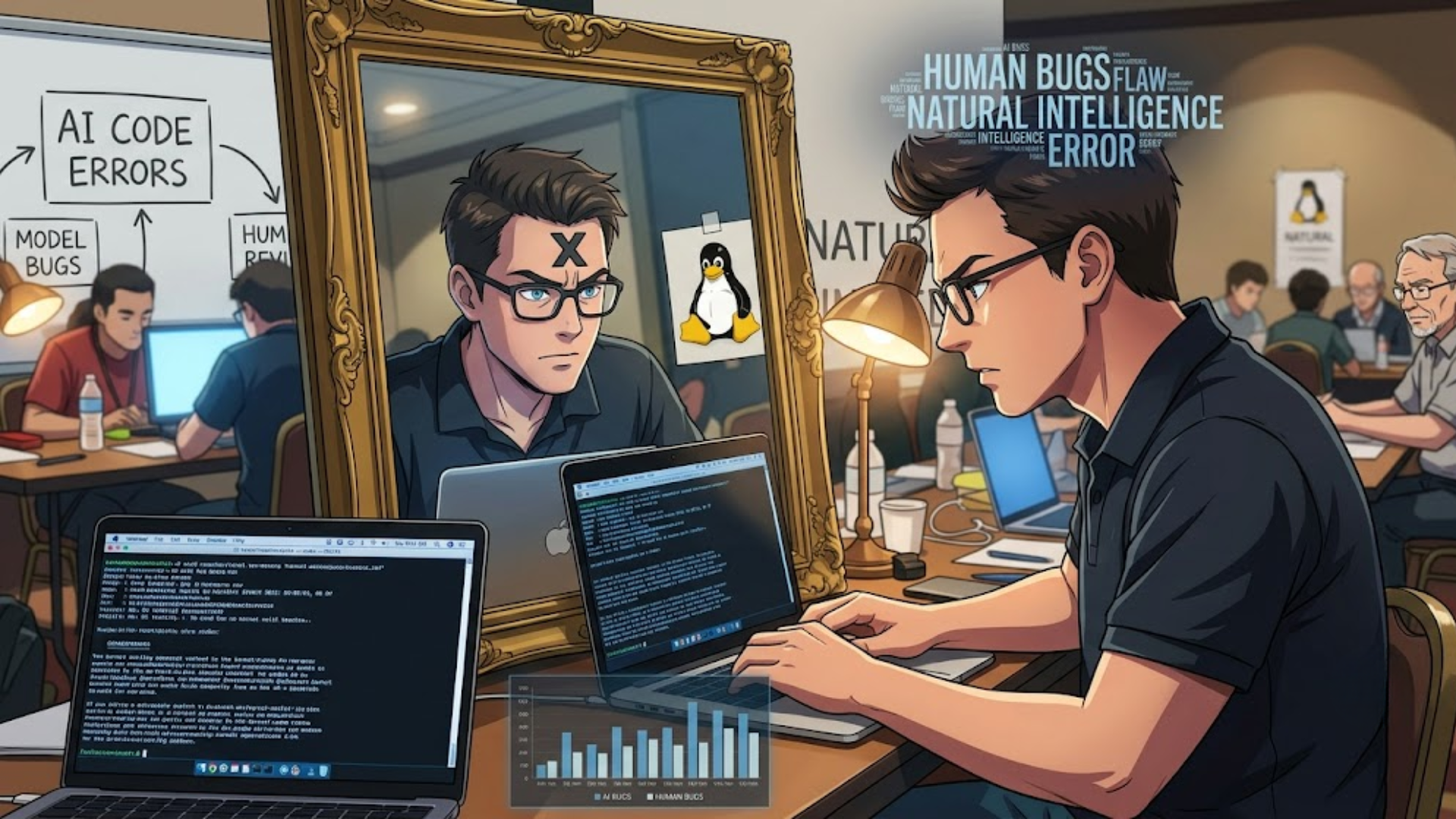
"AI isn't perfect. But Christ, anybody who points to the problems at AI had better be looking in the mirror and pointing at themselves at the same time. Because it's not like natural intelligence is always all that great either."
By shifting the mirror back onto human developers, Torvalds highlighted a double standard in the community: human programmers write buggy, imperfect code every single day, yet AI is uniquely vilified for doing the same.
Conclusion: Open Source is Tech, Not a Religion
Linus Torvalds has reminded the global software community of the core purpose of open source: it is an engineering project focused on making the best software possible, not a philosophical war or an ideological sandbox. By pledging to "very loudly ignore people who try to argue against other people from using it," Torvalds has officially cemented AI as an institutionalized, permanent pillar of modern software infrastructure. Open source has always been about evolution, and those who refuse to adapt are welcome to leave.