How Specialized AI Tools Are Transforming Daily Productivity
Combining specialized AI tools creates a far more efficient workflow than relying on a single general assistant. By using purpose-built platforms to instantly design presentations, conduct grounded research, communicate in local dialects, and extract actionable project tasks, raw ideas seamlessly transform into organized, real-world execution.
Artificial intelligence is no longer just a single, all-purpose chat box where you ask questions and receive plain text answers. Today, the landscape has evolved into an ecosystem of specialized AI platforms, each engineered to excel at a distinct phase of your modern workflow. Rather than relying on a single tool to handle every task, high-performing professionals build integrated toolkits, combining specialized visual generators, deep research assistants, localized communication platforms, and workspace project managers. Understanding how these tools complement one another is the secret to building an effortless, high-efficiency digital workflow.
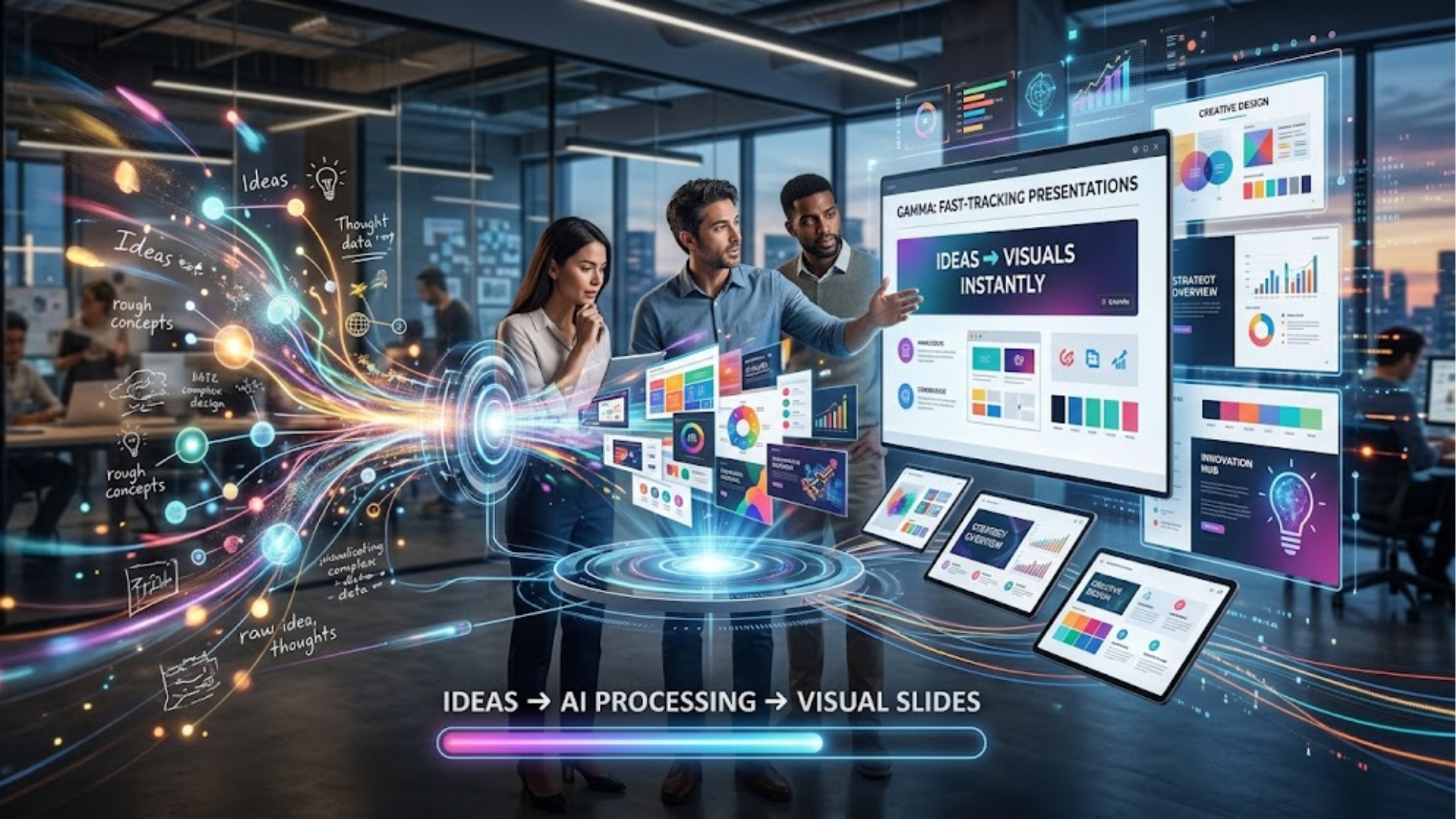
Transforming Ideas into Visual Presentations: Fast-Tracking Creative Design
The first phase of turning an idea into reality often requires communicating it visually to others. Tools like Gamma revolutionize this step by replacing hours of manual slide formatting with instant, automated design generation. Instead of starting with a blank canvas and spending time adjusting layouts or color palettes, you provide an outline or prompt, and the platform generates dynamic, professionally structured presentation decks. This allows professionals to focus on sharpening their core narrative and message while leaving the heavy visual design work to dedicated AI models.
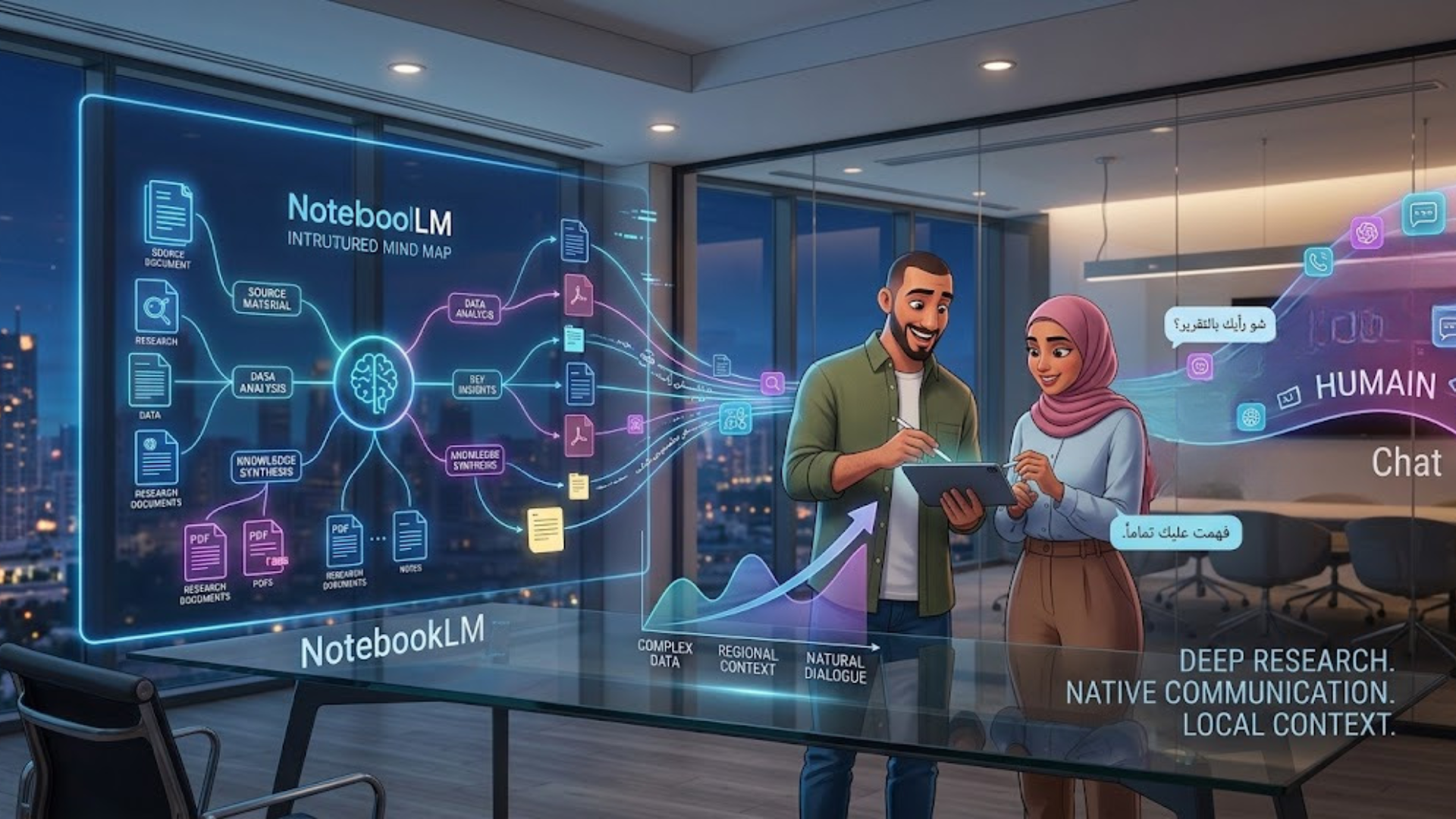
Deep Research and Native Communication: Processing Information and Local Context
Once the general concept is established, synthesizing information and communicating effectively becomes the priority. Tools like NotebookLM serve as intelligent research anchors, allowing you to upload extensive reference documents, PDFs, and notes to automatically generate structured mind maps and key insights strictly grounded in your sources. Simultaneously, specialized localized tools like HUMAIN Chat bridge the gap in regional communication by natively understanding local Arabic dialects (such as Lebanese spoken Arabic) with cultural accuracy. Together, these platforms ensure that whether you are analyzing complex technical data or collaborating across specific regional cultures, your research is accurate and your communication remains natural.
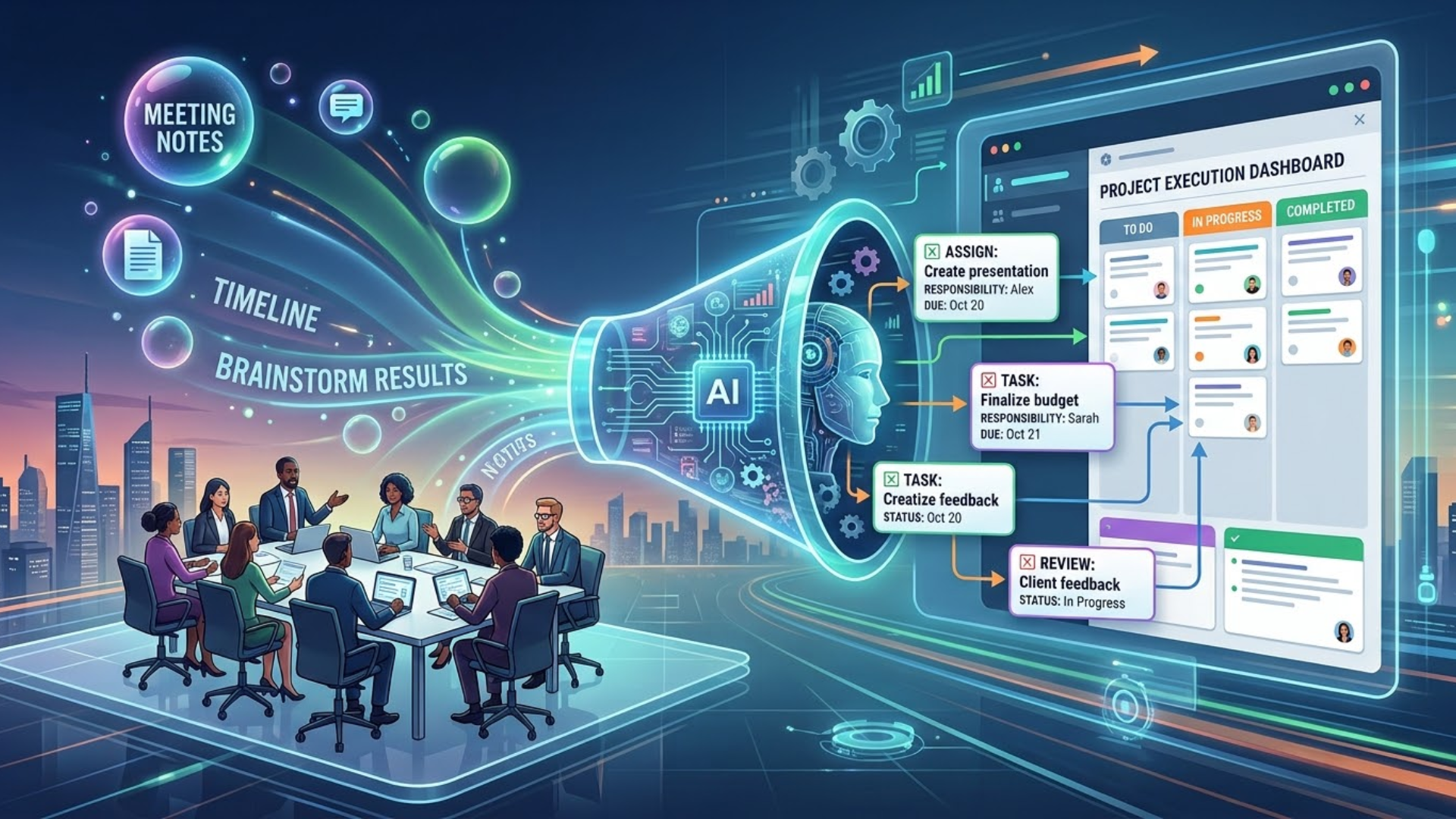
Automated Execution and Task Management: Converting Discussions into Action Items
A idea or meeting is only as good as its execution, which is where project integration platforms complete the ecosystem. Workspace AI engines, such as Notion AI, bridge the gap between ideation and real-world execution by automatically analyzing meeting notes, project briefs, and brainstorms to extract clear action items. Rather than manually combing through minutes to track assignments, the system automatically pulls pending tasks, assigns responsibilities, and organizes workflows directly within your existing dashboard. This transforms raw conversation into accountable, trackable steps that keep projects moving forward without administrative overhead.
Conclusion: Building Your Integrated AI Stack
The future of productivity belongs to those who learn to orchestrate purpose-built tools rather than expecting one application to do everything. By combining visual slide generators for pitch decks, grounded research platforms for deep analysis, culturally tuned assistants for nuanced communication, and automated workspace managers for execution, you create a seamless end-to-end pipeline. Modern efficiency is not about working harder or relying on a single AI model, it is about picking the right specialized tool for each phase of your work and letting them work together.