How Mastering AI Workflows Gives Professionals a 6-Month Edge
Nicole Hazzam, founder and owner of Input The Output (ITO), helps professionals gain a six-month market edge by mastering end-to-end AI workflows across text, image, and video content. Through hands-on training, users transform basic AI prompts into automated, multi-modal execution that delivers immediate, high-impact results.
In today’s fast-moving digital ecosystem, simply keeping up with technology is no longer enough. While many professionals have experimented with basic AI prompts, true competitive advantage comes from integrating artificial intelligence directly into end-to-end execution. Through practical workshops and real-world implementation, tech trainer Nicole Hazzam, founder of Input The Output (ITO) is redefining how creators and business leaders leverage AI to build scalable systems and stay months ahead of the market.
Moving Beyond Basics: Full-Spectrum Content Creation
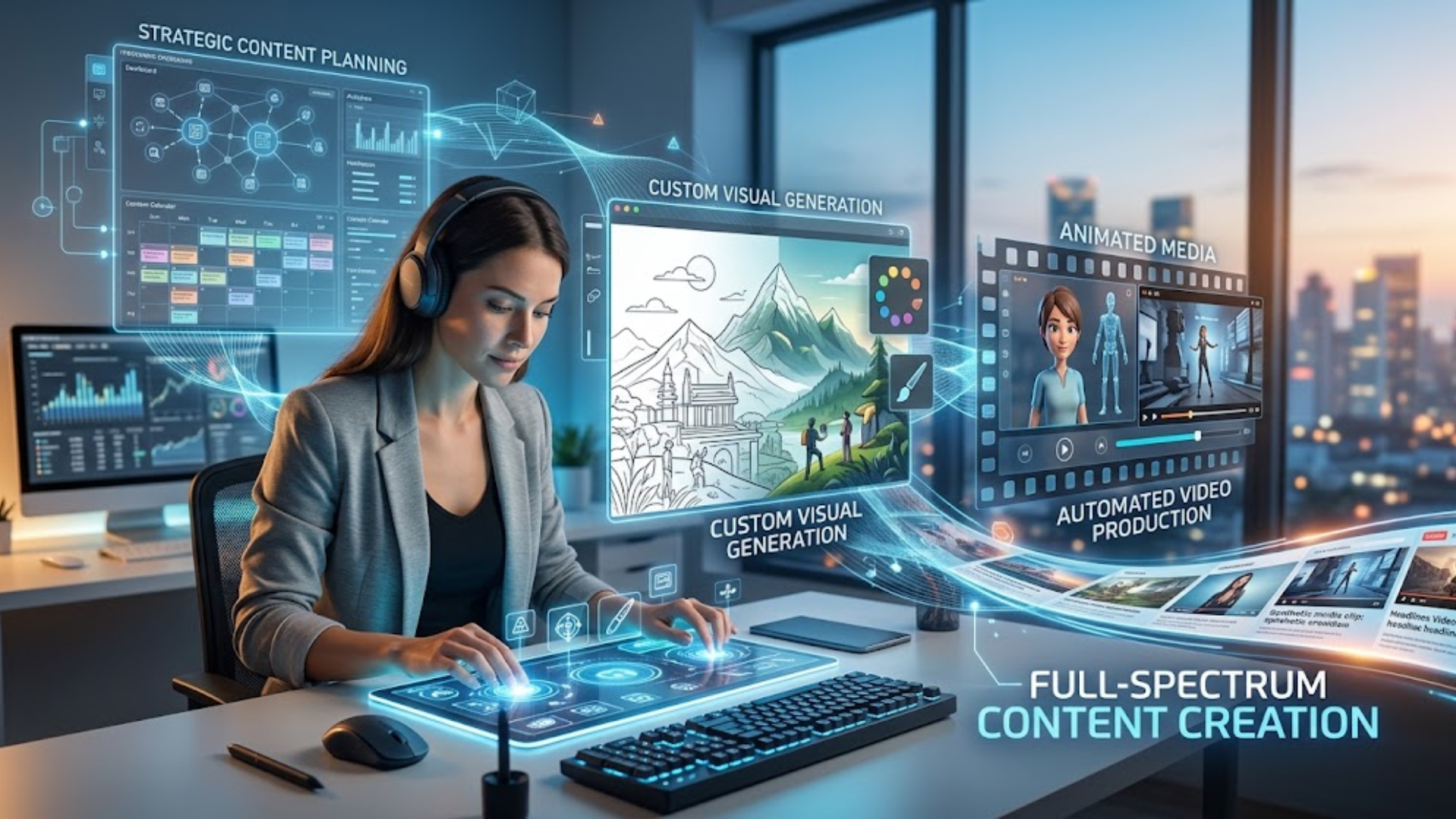
Most users treat AI as a basic search tool or text writer, missing out on its true potential. A modern AI workflow seamlessly connects multiple modalities into a single fluid process:
-
Strategic Content Planning: Turning overarching goals into structured, actionable content calendars.
-
Custom Visual Generation: Creating high-fidelity graphics and artwork on demand without design bottlenecks.
-
Automated Video Production: Harnessing synthetic media and digital visual tools to scale video creation efficiently.
When these elements are combined, multi-day creative projects can be executed in a fraction of the time.
Interactive Learning: Turning Theory into Immediate Output
The biggest gap in AI adoption isn't access to tools, it's knowing how to apply them effectively. Rather than focusing purely on theoretical concepts, effective training emphasizes hands-on, real-time application:
-
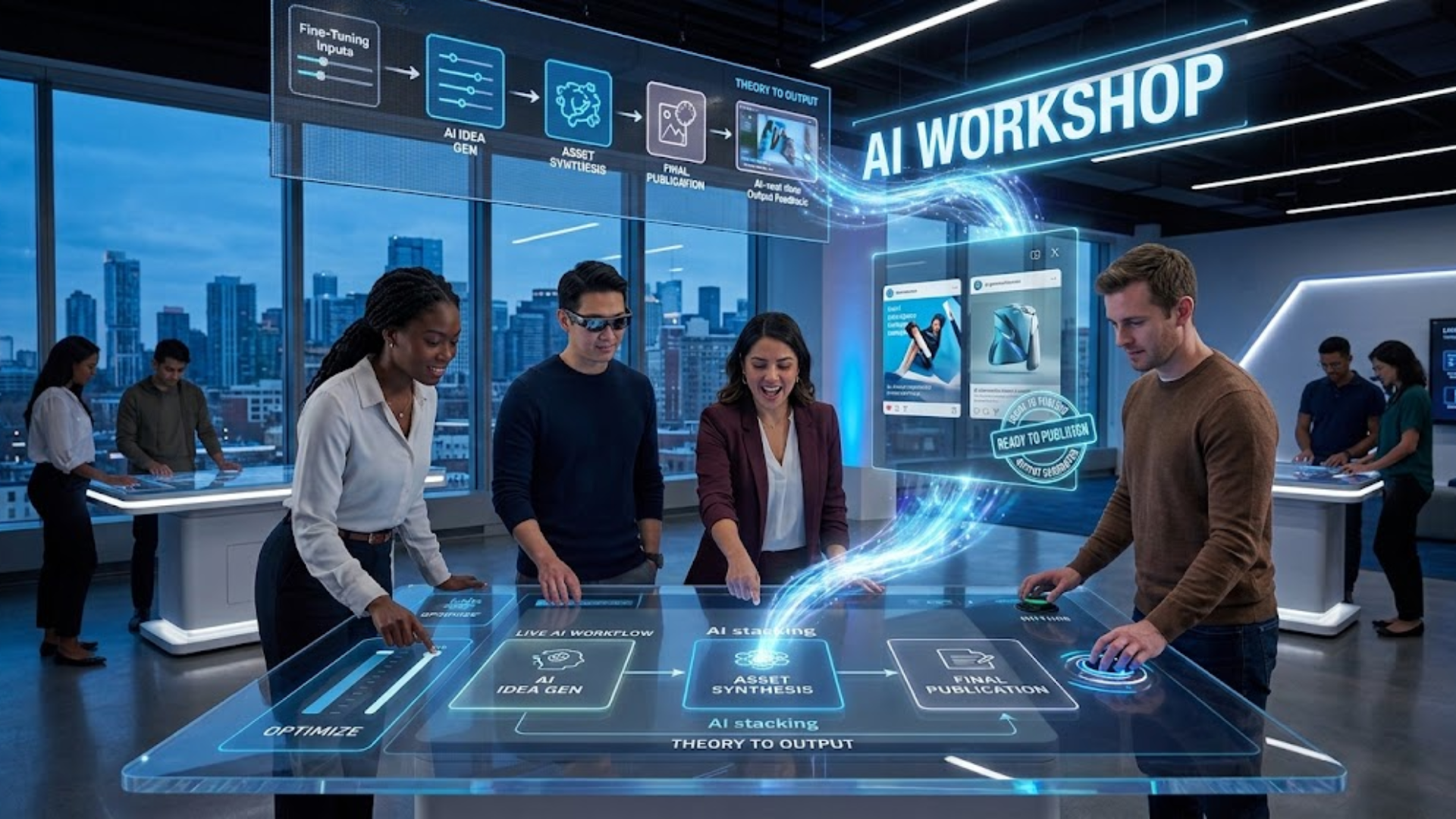
Live Stacking: Demonstrating how different AI platforms interact with each other in real-time.
-
Practical Execution: Leaving each session with finished, publication-ready assets rather than just ideas.
-
Workflow Optimization: Fine-tuning inputs to ensure consistent, high-quality output every single time.
This practical approach bridges the gap between knowing what AI can do and knowing how to make it work for your business.
Leading the Market Instead of Chasing Trends
As technology rapidly evolves, relying on surface-level trends leaves professionals constantly playing catch-up. Building a structured, AI-driven workflow creates a lasting advantage:
-
Time Efficiency: Saving hours every week on repetitive tasks to focus on higher-level strategy.
-
Agility: Adapting instantly to industry changes by rapidly testing and deploying new ideas.
-
Market Position: Staying up to six months ahead of competitors who still rely on traditional, slow-moving workflows.
By shifting from passive consumption to proactive workflow design, you stop chasing trends and start setting them.

Conclusion: The Power of Input and Output
The future of work isn't about being replaced by AI, it's about being empowered by it. As Nicole Hazzam highlights through Input The Output, the key to standing out lies in how thoughtfully you structure your processes. By mastering prompt architecture, tool integration, and practical execution, you ensure that every input leads to maximum impact, keeping you well ahead of the curve.
Watch the full video on Instagram 👉
https://www.instagram.com/reel/Dc1At9qN0OP/?stkn=MWxqYzZ3MG44MTBhZA==