Decoding the Next Era of Automation: From Workflows to Autonomous AI Agents
Modern digital workflows are evolving from rigid, rule-based traditional automation toward intelligent AI automation that processes unstructured data, and ultimately to autonomous AI agents capable of reasoning, adapting, and executing complex tasks end-to-end to build scalable operations.
As artificial intelligence rapidly transitions from simple text generation to active problem-solving, businesses and professionals are facing a fundamental shift in how work gets done. Understanding the distinction between basic automation, AI-enhanced automation, and autonomous AI agents is becoming essential for staying competitive in the modern digital landscape.
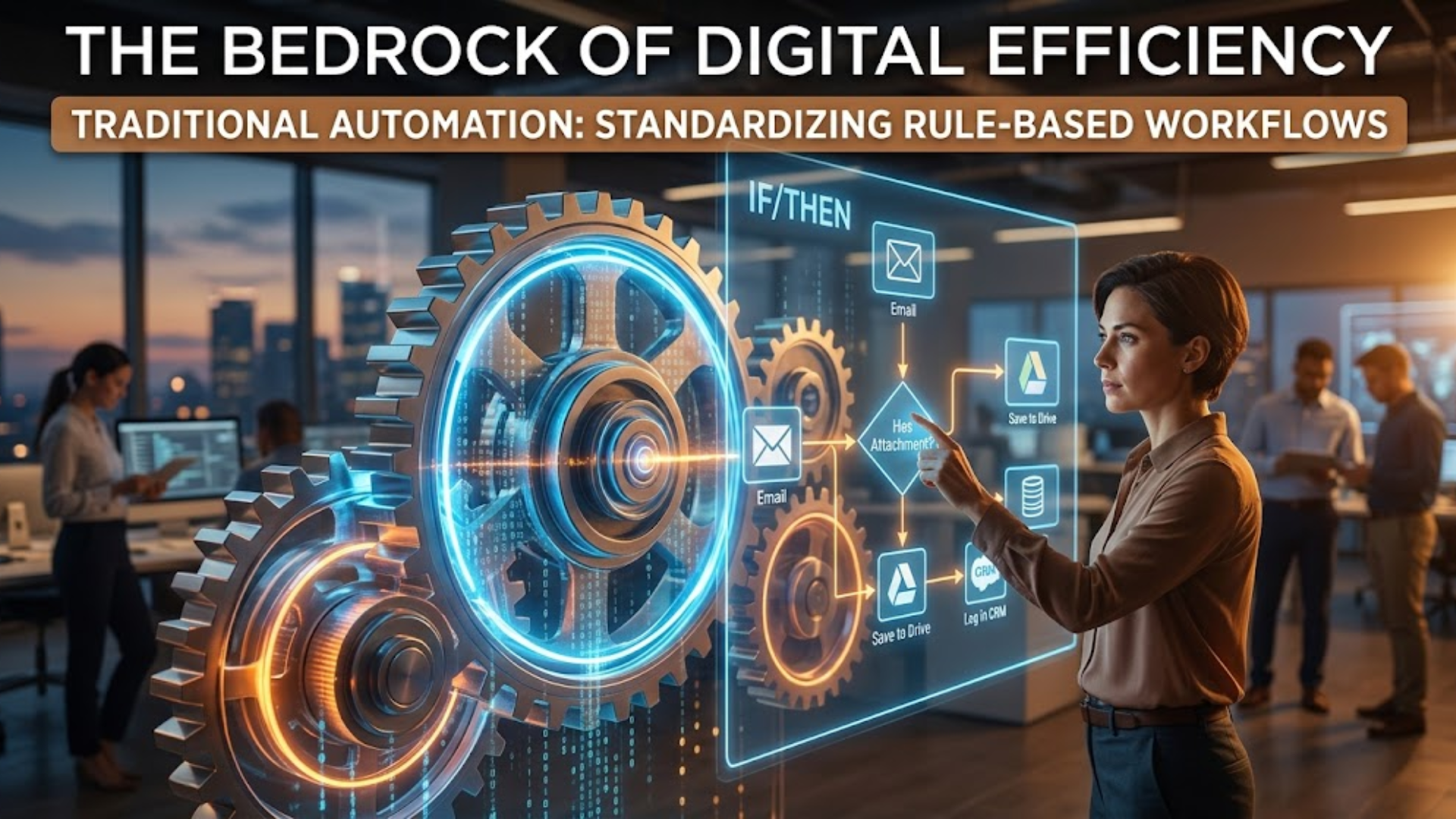
Traditional Automation: Standardizing Rule-Based Workflows
Traditional automation forms the bedrock of modern digital efficiency. It relies on strict, predefined "if-this-then-that" rules to execute repetitive, predictable tasks without human intervention. Common systems like Zapier or standard software scripts excel at linking digital platforms together, for instance, automatically saving an email attachment into a designated Google Drive folder or transferring new leads from a website form into a CRM system.
Because these workflows depend entirely on clear, static guidelines, they are exceptionally reliable and virtually eliminate human error for routine operational handoffs. However, their primary limitation is rigidity: if the input data format changes unexpectedly or encounters a scenario outside its programmed rules, the entire process breaks down and requires manual human troubleshooting.
AI Automation: Adding Contextual Intelligence
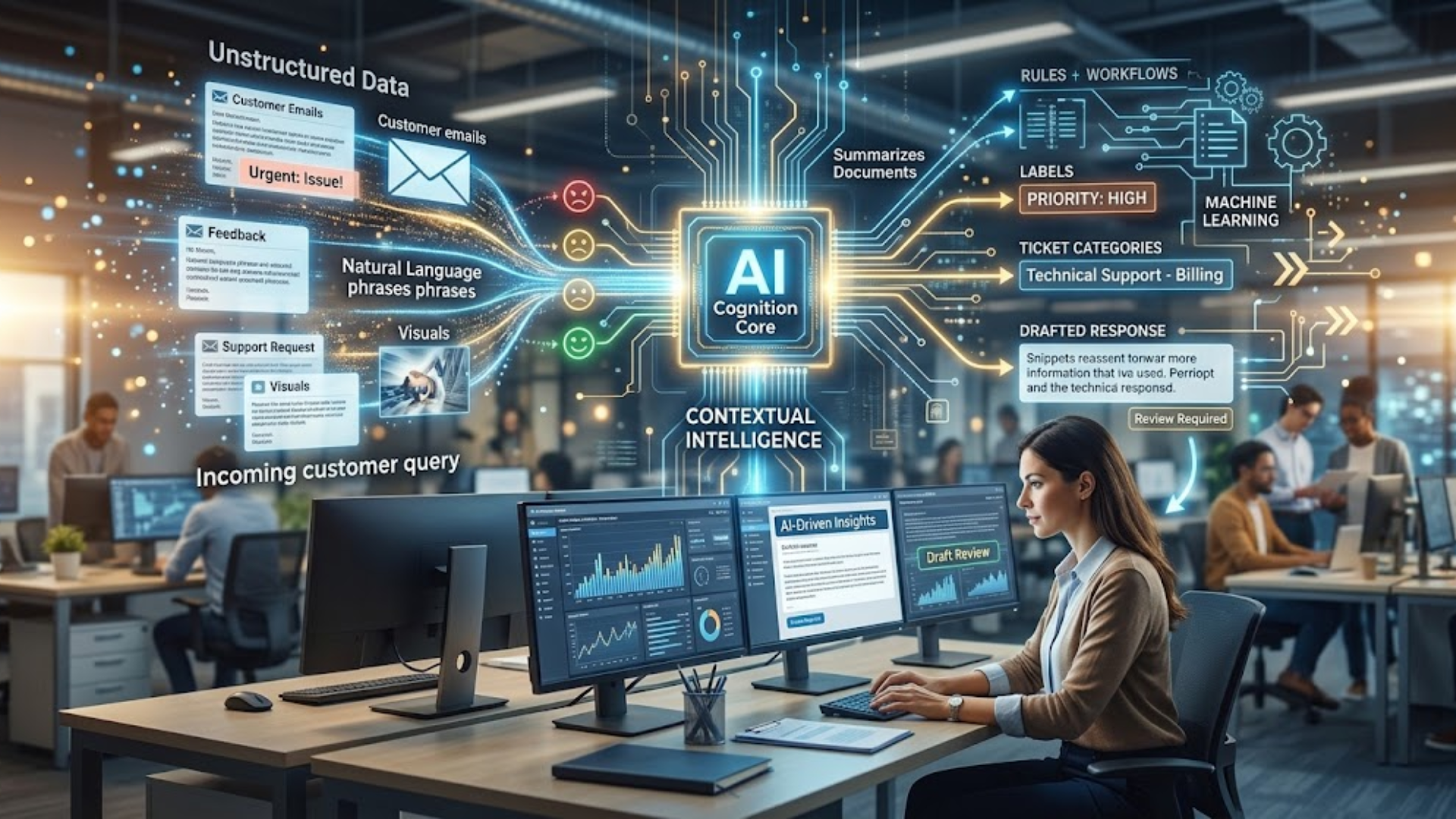
AI automation takes traditional workflows a step further by integrating machine learning and large language models (LLMs) directly into standard processes. Instead of merely following static, pre-programmed rules, AI-driven automation can process unstructured data, such as interpreting customer email sentiment, summarizing lengthy documents, or extracting key visual elements from media files.
By embedding AI into an existing workflow, systems gain a layer of cognitive capability. For example, rather than simply forwarding a customer support ticket to a generic inbox, an AI-automated system can read the incoming ticket, determine its priority based on customer tone, categorize the inquiry, and draft a tailored preliminary response for a team member to review. This level bridges the gap between rigid software logic and human-like contextual understanding, allowing organizations to scale handling complex data without scaling headcount proportionally.
AI Agents: Autonomous Decision-Making and Execution
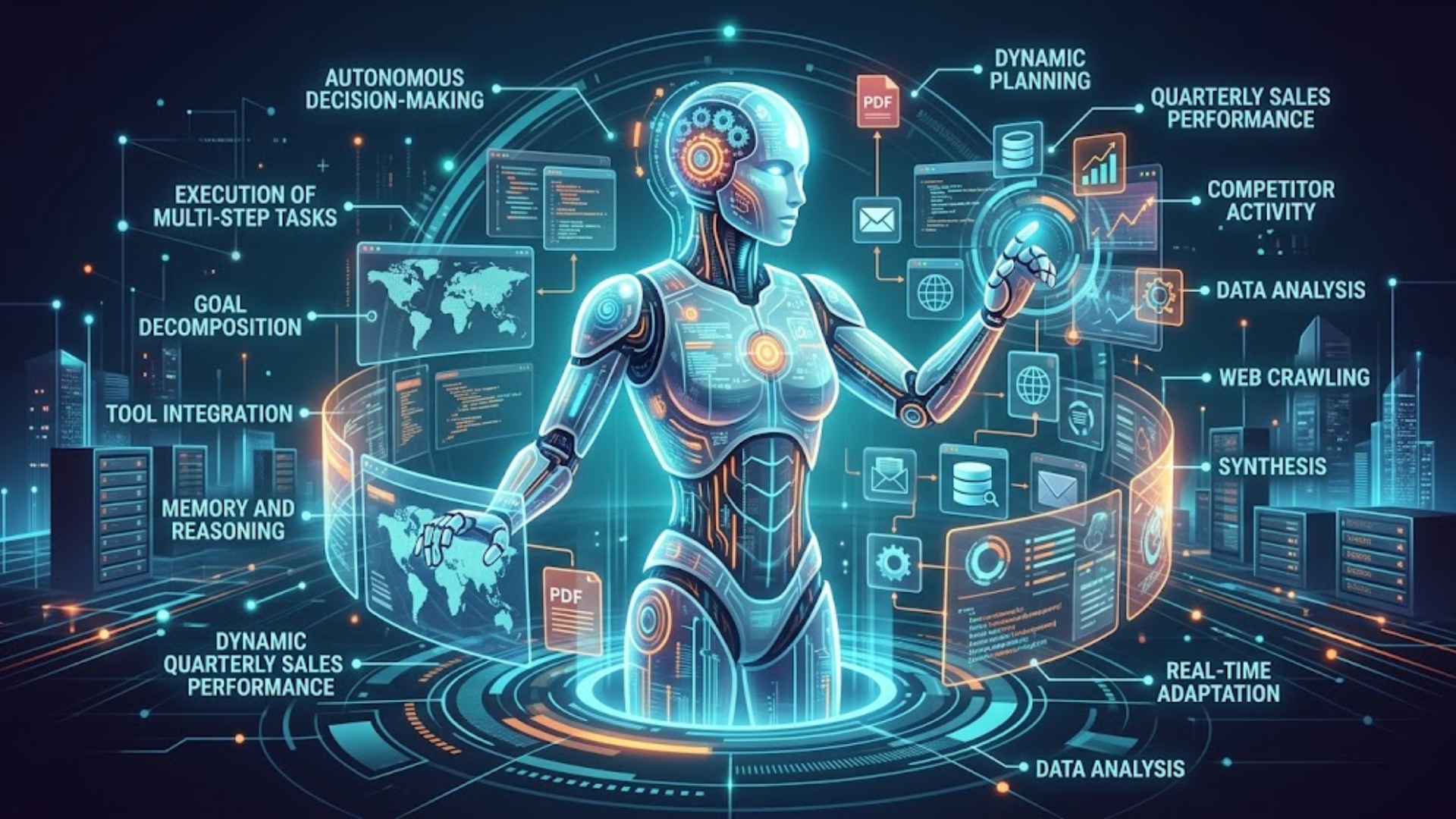
AI agents represent the most advanced stage of digital transformation. Unlike standard automation systems that require step-by-step instructions, an AI agent operates with high autonomy: it receives a broad goal, breaks it down into sub-tasks, selects the necessary digital tools, and executes decisions independently.
Equipped with dynamic planning capabilities, memory, and tool integration, an AI agent acts as a virtual worker. For instance, if tasked with "analyzing quarterly sales performance and competitor activity," an agent can query internal databases, crawl relevant web sources for market trends, synthesize key patterns, compile a formatted PDF report, and send it directly to stakeholders. If it encounters an unexpected error or missing data during execution, the agent can re-evaluate its plan, attempt alternative strategies, and adapt in real time without stopping the workflow, managing end-to-end operational processes from start to finish.
Conclusion: Navigating the Automation Spectrum
The evolution from static automation to intelligent AI agents marks a shift from tools that simply assist us to systems that actively execute on our behalf. Traditional automation delivers unmatched speed for predictable tasks, AI automation provides the cognitive nuance needed for complex data, and AI agents supply the autonomous reasoning required for end-to-end execution. Mastering how these three tiers fit together enables organizations and individuals to choose the right technology for the right task, maximizing operational efficiency while building scalable, future-ready workflows.
Watch the full video on Instagram 👉
https://www.instagram.com/reel/DcyclB8K8sE/?igsi=MTFoeWtrMHljZm5wZg==