Building Your Digital Twin: How to Create Your Own AI Agent
The shift from passive AI assistants to autonomous Digital Twins allows users to build "AI Agents" that execute real-world tasks rather than just generating text. Using no-code platforms like Lindy or Gumloop, you can construct an agent by defining its Persona, feeding it specific Knowledge via RAG, and connecting it to Tools like your email or calendar. While these agents offer massive productivity gains by acting on your behalf, the process requires a strong focus on data sovereignty to ensure your personal information remains secure.
The boundary between "using" a computer and "collaborating" with one has officially vanished. We have moved beyond simple chatbots that merely talk to us, we are now in the era of the Digital Twin. These AI Agents don't just suggest ideas, they execute them. Whether it’s managing your calendar, triaging your inbox, or conducting deep-dive research while you sleep, creating your own autonomous agent is the ultimate productivity cheat code for the modern age.
From Thinking to Doing: Defining the Modern AI Agent
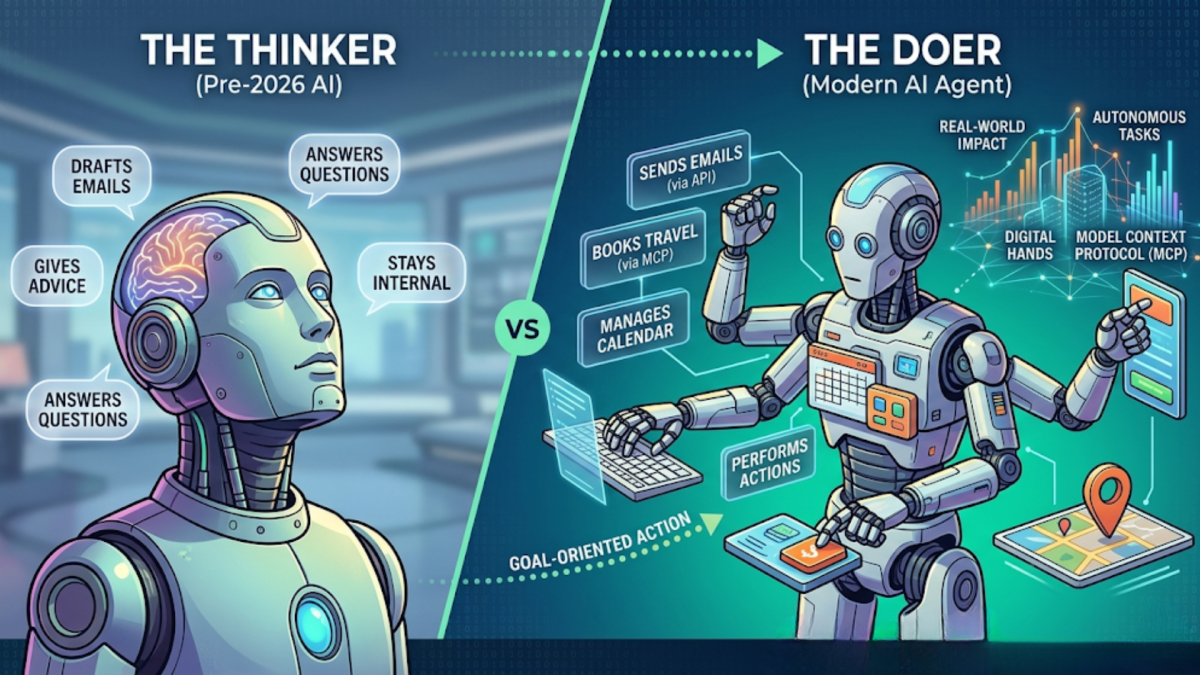
To build a digital twin, you first have to understand the evolution from Assistant to Agent. For years, we relied on "The Thinker", AI like the early versions of ChatGPT or Claude that could draft an email but couldn't send it.
The 2026 AI Agent is "The Doer." It possesses "digital hands" through Model Context Protocol (MCP) and API integrations. While an assistant waits for your next prompt, an agent is goal-oriented and autonomous. If you tell an agent, "Plan my trip to Tokyo," it doesn't just give you a list of hotels; it checks your actual bank balance, cross-references your calendar for conflicts, finds a flight with your preferred window seat, and places the booking. It operates in the background, transforming your instructions into tangible results.
The Architect’s Blueprint: Choosing Your Platform
You no longer need a computer science degree to build a sophisticated agent. The landscape offers a spectrum of tools tailored to your technical comfort zone:
-
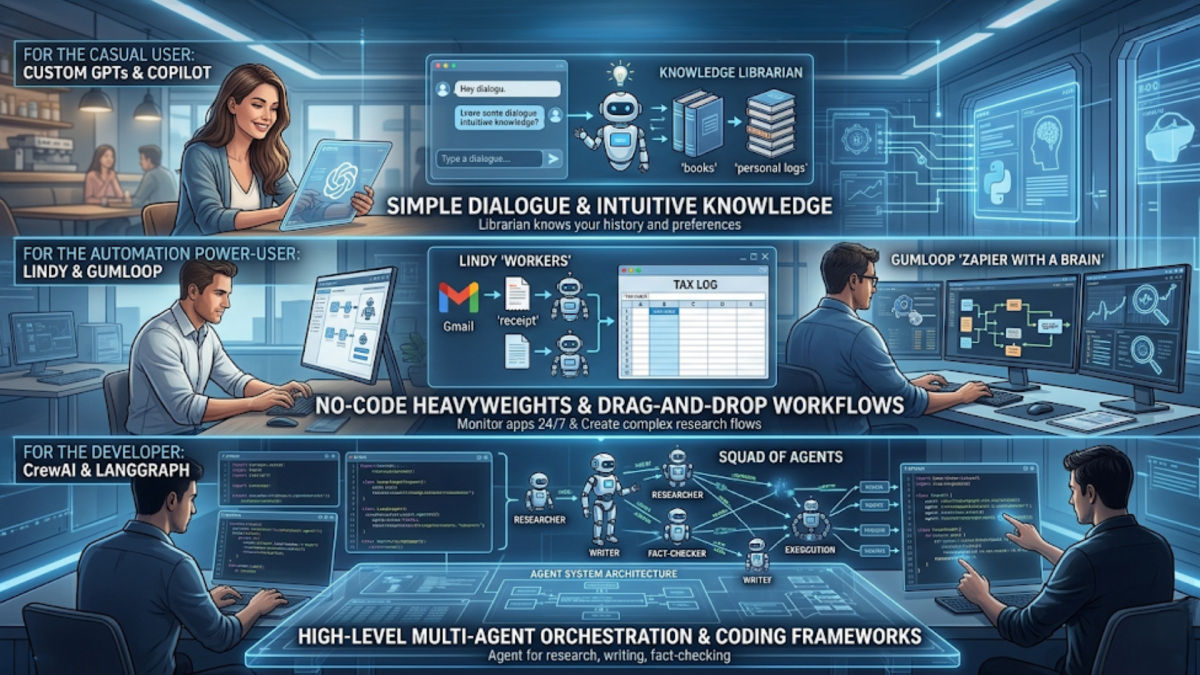
For the Casual User (Custom GPTs & Copilot): If you can write a paragraph, you can build an agent. These platforms allow you to upload personal journals or PDFs to create a "Knowledge Librarian" that knows your history and preferences intimately.
-
For the Automation Power-User (Lindy & Gumloop): These are the "no-code" heavyweights. Lindy allows you to create 24/7 "workers" that monitor your apps. For example, a Lindy agent can watch your Gmail for receipts and automatically log them into a tax spreadsheet. Gumloop offers a visual "drag-and-drop" interface, often called "Zapier with a brain", perfect for creating complex research workflows.
-
For the Developer (CrewAI & LangGraph): If you want a "squad" of agents, one for research, one for writing, and one for fact-checking, these coding frameworks allow for high-level multi-agent orchestration.
The 3-Layer Build: Persona, Knowledge, and Tools
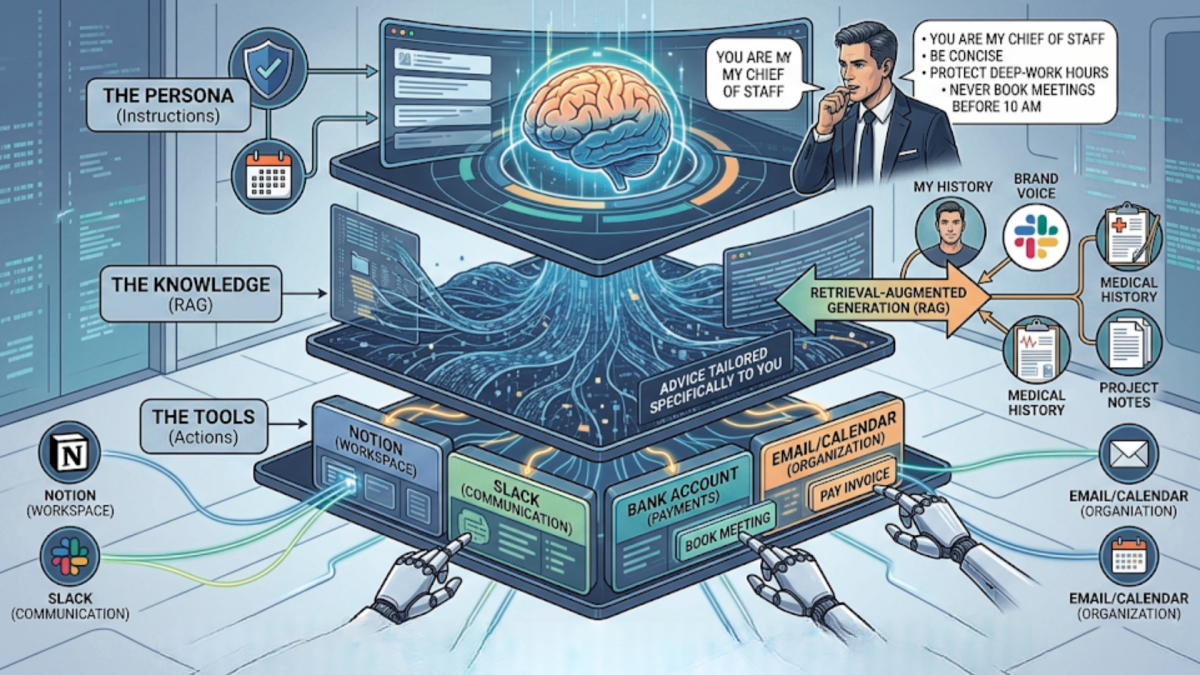
Building your twin is a structured process consisting of three essential layers that give the AI its "soul" and its "utility":
-
The Persona (Instructions): This is the system prompt. You define the rules of engagement. “You are my Executive Chief of Staff. You are concise, protective of my deep-work hours, and never book meetings before 10 AM.”
-
The Knowledge (RAG): Using Retrieval-Augmented Generation (RAG), you feed the agent your specific context. This includes your brand voice, medical history, or past project notes. This ensures the agent doesn't just give general advice, but advice tailored specifically to you.
-
The Tools (Actions): This is where you connect your agent to the world. By linking it to your "connectors" like Notion, Slack, or your bank account, you give the agent the power to move data across the web and act on your behalf.
Conclusion: The Responsibility of Autonomy
As we hand over the keys to our digital lives, the priority for 2026 is Data Sovereignty. Creating a digital twin means giving an AI access to your most private information. When building your agent, it is crucial to choose platforms that prioritize local processing, where your data is used to help you, but never to train a global model. Building an AI agent isn't just about saving time; it’s about designing a digital extension of yourself that reflects your values, respects your privacy, and amplifies your potential.