Beyond the Bot: The Rise of Agentic AI Automation
Agentic AI marks the end of "dumb bots" by replacing rigid scripts with goal-oriented reasoning. Unlike traditional automation that breaks under change, these adaptive agents handle messy data and self-heal to solve problems. By using tools like Lindy and Zapier, anyone can build a digital workforce to manage complex tasks like research or communication. This shift offloads repetitive grunt work, allowing humans to stop clicking buttons and start giving strategic directions.
The era of the "dumb bot" is officially over. For years, automation meant building rigid digital tracks for software to follow, if a single pebble moved, the train derailed. We have entered the age of Agentic AI. We are no longer just teaching computers how to work, we are teaching them how to think. This shift from following scripts to achieving goals is transforming how businesses operate and how individuals reclaim their time.
From Rigid Rules to Dynamic Goals
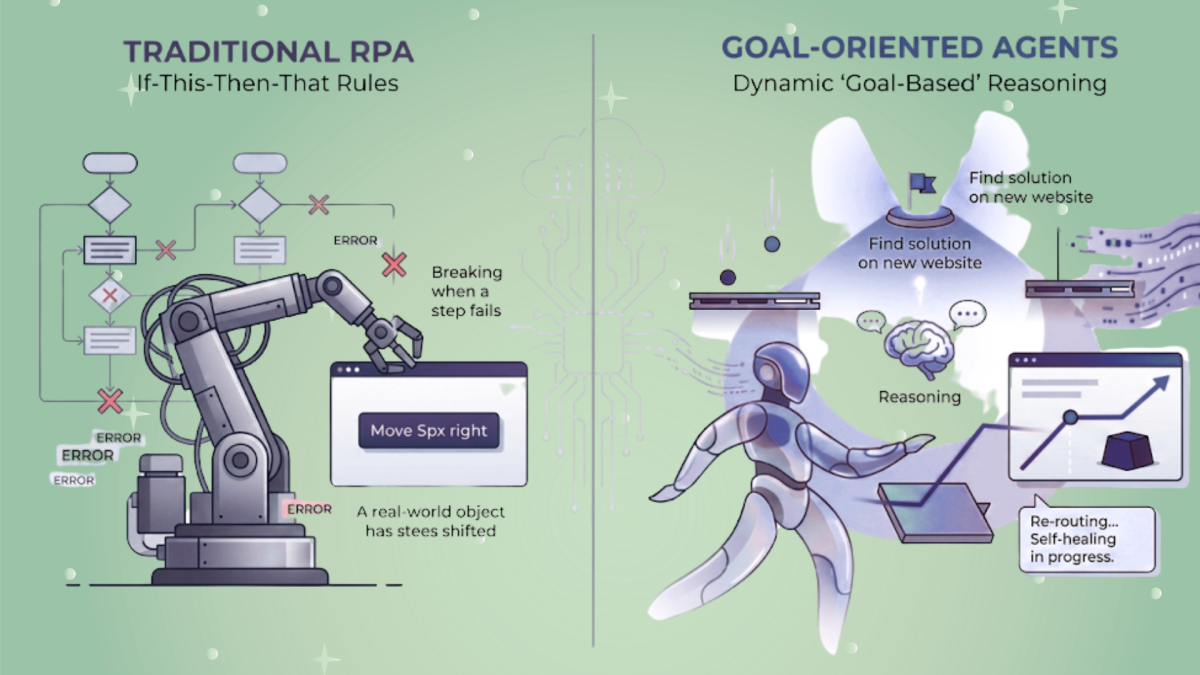
The fundamental shift is the transition from Robotic Process Automation (RPA) to Goal-Oriented Agents. Traditional automation was "brittle" because it relied on strict instructions that couldn't handle surprises. Agentic AI, however, uses reasoning to navigate obstacles.
-
Logic Style: Traditional RPA uses "If-This-Then-That" rules. Agentic AI uses "Goal-Based" reasoning to figure out the "How" on its own.
-
Adaptability: While old bots would break if a website button moved or a format changed, Agentic AI "self-heals" by analyzing the new environment to find a solution.
-
Data Handling: Old systems needed clean spreadsheets. Modern agents can process "unstructured" data like messy emails, voice notes, and even raw video footage.
-
Maintenance: Instead of needing constant manual updates from a programmer, Agentic AI learns over time, requiring significantly less upkeep.
The Power Players: Tools Shaping the Workforce
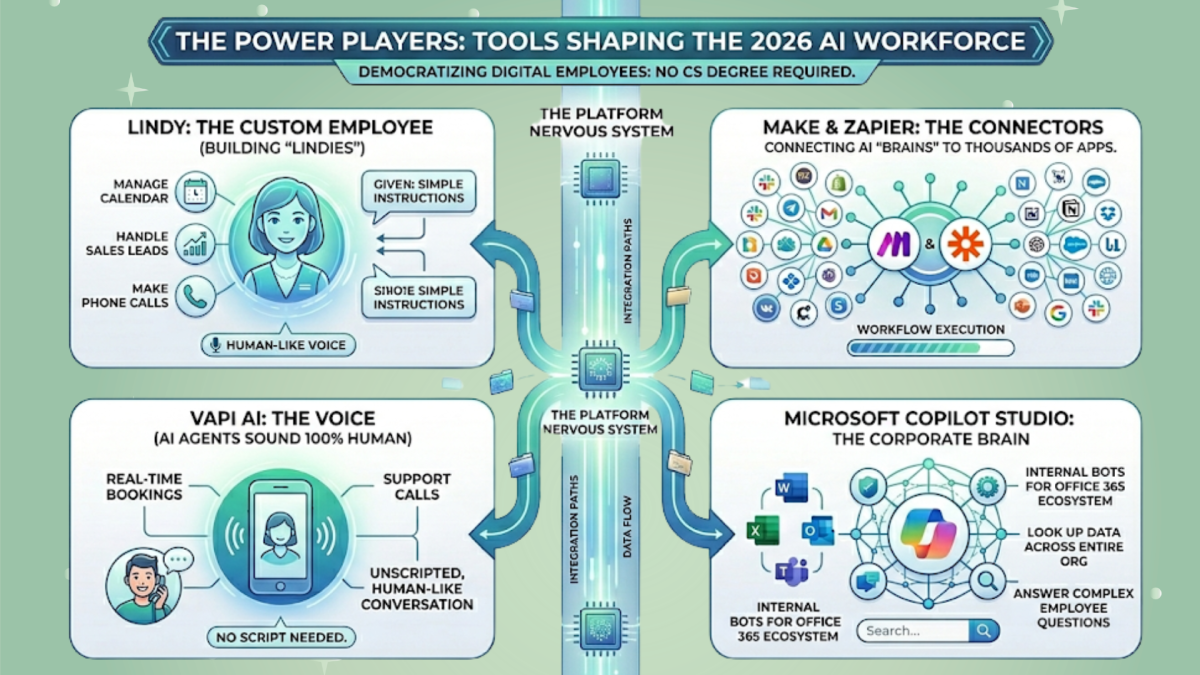
Building an AI workforce doesn't require a computer science degree. A suite of sophisticated platforms has democratized the ability to create custom digital employees.
-
Lindy (The Custom Employee): A standout tool that allows you to build "Lindies". These are specialized agents that can manage your calendar, handle sales leads, or even make phone calls with a human-like voice.
-
Make and Zapier (The Connectors): These platforms act as the nervous system of your automation. They connect your AI "brain" to thousands of apps like Slack, Shopify, and Gmail to execute complex workflows.
-
Vapi AI (The Voice): For businesses needing a phone presence, Vapi creates AI agents that sound 100% human, capable of taking real-time bookings or handling support calls without a script.
-
Microsoft Copilot Studio (The Corporate Brain): Designed for the Office 365 ecosystem, this allows companies to build internal bots that can look up data across the entire organization to answer complex employee questions.
Real-World Impact: The "Hands-Off" Workflow
Agentic AI is moving beyond simple tasks into complex, creative, and administrative roles that previously required hours of human labor.
-
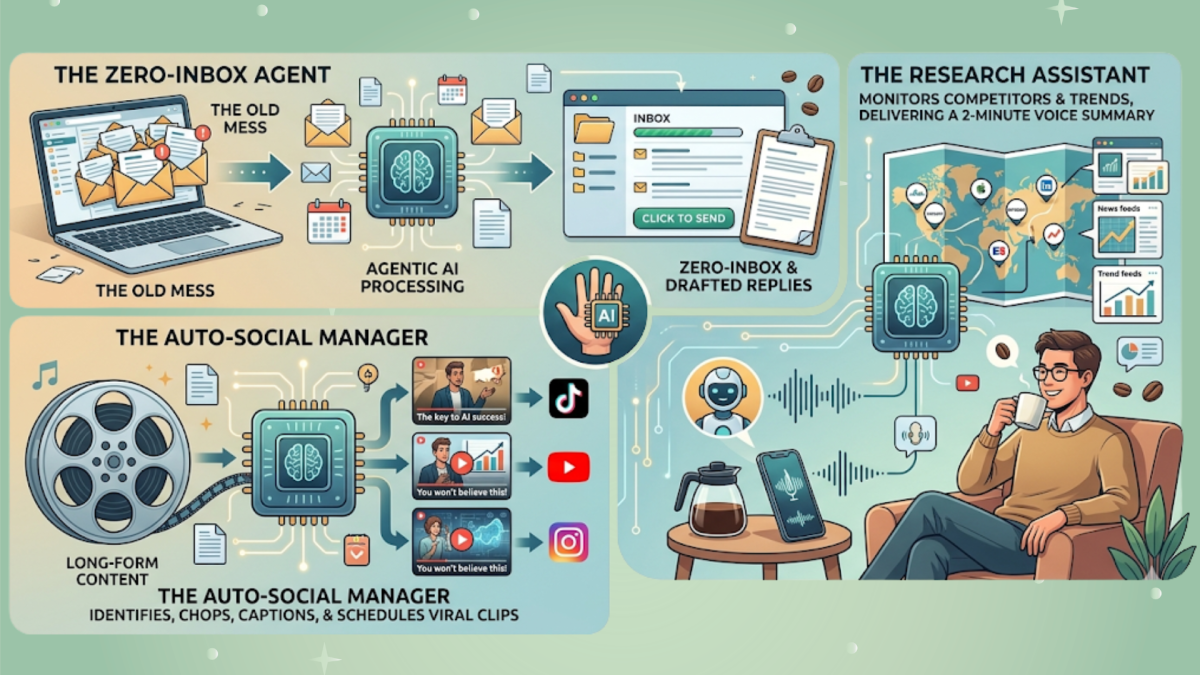
The Zero-Inbox Agent: This agent doesn't just archive spam, it reads your incoming mail, categorizes it by importance, and drafts thoughtful replies for you to review and send with one click.
-
The Auto-Social Manager: A game-changer for creators. This agent can take a long-form video, identify the most viral segments, chop them for TikTok, write engaging captions, and schedule them across all platforms.
-
The Research Assistant: Instead of you scrolling through news, this agent monitors competitors and industry trends every morning, sending you a concise 2-minute voice summary while you drink your coffee.
Conclusion: Starting Your AI Journey
The transition to agentic automation is not about replacing human workers; it is about offloading the "grunt work" so we can focus on high-level strategy and creativity. To get started, you simply need to identify a repetitive "robotic" loop in your day, pick an AI model like Claude or GPT to act as the "brain," and use a tool like Make or Lindy to act as the "hands." By maintaining a Human-in-the-Loop approach, where the AI seeks approval before taking major actions, you can build a reliable, autonomous ecosystem that works for you 24/7. The future of work isn't about clicking buttons; it's about giving directions.