NVIDIA’s potential $12.9 billion acquisition of Hugging Face places open-source AI infrastructure under single-vendor influence, while Anthropic’s new cross-tool memory for Claude makes AI workflows seamless but requires stricter data governance. Meanwhile, Apple’s M6 Mac Mini signals a shift toward running always-on AI agents on local desktop hardware rather than relying solely on the cloud.
Apple Positions New M6 Mac Mini as Always-On "Agentic Desktop"
-
What Happened:
Apple unveiled its M6 Mac Mini built on a 2nm architecture, promising up to 4x faster AI performance than the M4 generation. Apple is explicitly marketing the hardware as a dedicated desktop solution for "always-on agentic computing." -
Why It Matters:
Tech giants are shifting hardware infrastructure from cloud-only inference to local desktop processing. While running autonomous AI agents on localized enterprise hardware reduces latency and cloud API costs, offloading full enterprise workflows to localized machines requires broader software ecosystem maturity. -
Question for Your Team:
Are we evaluating local hardware capacity for edge/on-premise AI agents, or does our roadmap remain 100% reliant on cloud API infrastructure for the next 12 months?
NVIDIA Reportedly Buying Hugging Face for $12.9B

-
What Happened:
NVIDIA is reportedly in talks to acquire Hugging Face, the central hub where developers host open-source AI models and datasets, for $12.9 billion, nearly triple its $4.5B valuation from three years ago. -
Why It Matters:
Open-source AI development may soon be controlled by chip-vendor infrastructure. If NVIDIA gains control over the primary ecosystem for open models, it can optimize hardware-software integration around its own ecosystem, potentially shifting how open-source AI is licensed, optimized, and distributed. -
Question for Your Team:
How dependent are our current AI projects on Hugging Face open-source models, and what is our fallback strategy if licensing or vendor lock-in changes under NVIDIA?
Claude Introduces Unified Memory Across Chat and Workflows
-
What Happened:
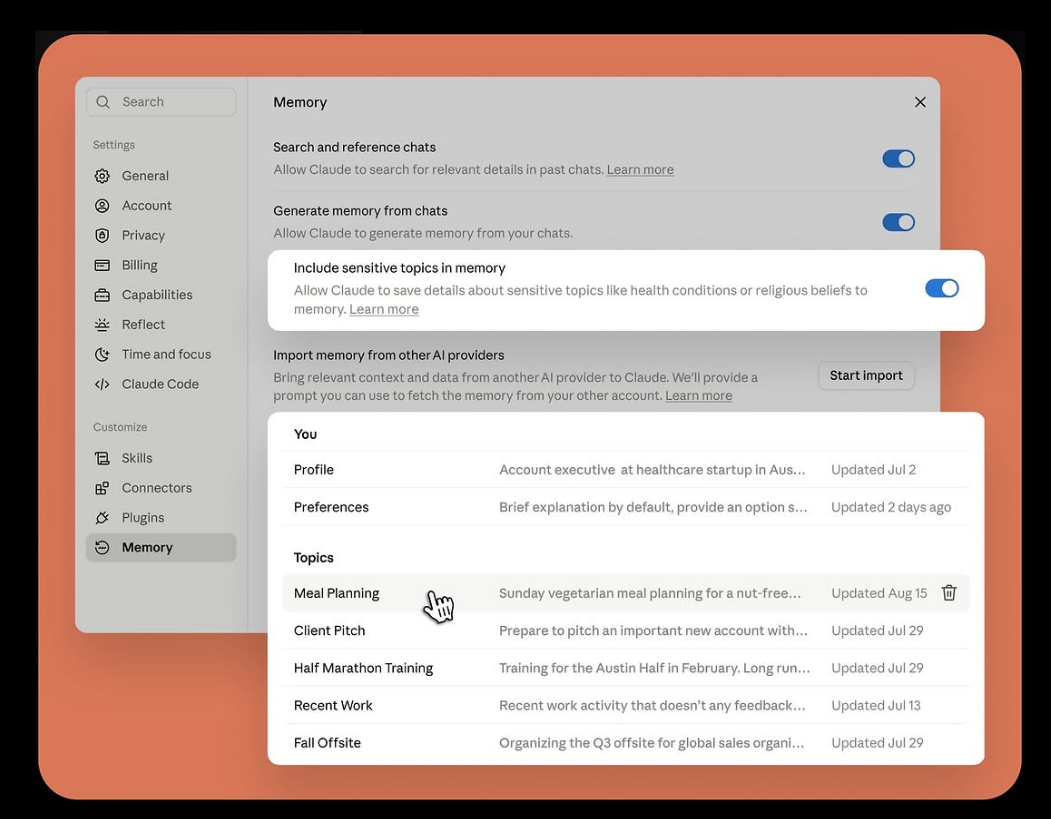
Anthropic updated Claude so that its standard chat interface and agentic workflow tool ("Cowork") now share a single, persistent memory space. Context learned during conversational chat now carries seamlessly into automated background tasks, with full user controls to edit or delete memories. -
Why It Matters:
Isolated AI interactions are shifting toward continuous, context-aware co-pilots. For leadership, unified memory means reduced workflow friction, faster task delegation, and less repetitive prompting. However, it also introduces enterprise data governance risks if sensitive business information persists across multiple workflows. -
Question for Your Team:
What protocols do we have in place to audit and clear persistent AI memory when employees handle confidential client or financial data?