When AI Assistance Becomes Public Embarrassment
A viral incident where Canadian politician Bill Oliver accidentally read a raw ChatGPT prompt during a legislative session highlights the dangers of relying on AI without human oversight. Bypassing the editing process leads to careless copy-pasting and leaves obvious AI artifacts, proving that while AI is great for drafting, final review and critical thought must always come from a human.
Artificial intelligence platforms like ChatGPT, Gemini, and Claude have seamlessly integrated into our daily routines, promising unprecedented speed for everything from organizing meeting notes to drafting high-stakes speeches. However, a viral clip of Canadian politician Bill Oliver accidentally reading a raw AI chatbot prompt aloud in parliament highlights a rapidly growing workplace hazard: adopting automated intelligence while abandoning critical human oversight.
The Hot-Mic Blunder: How an Unedited AI Prompt Went Viral
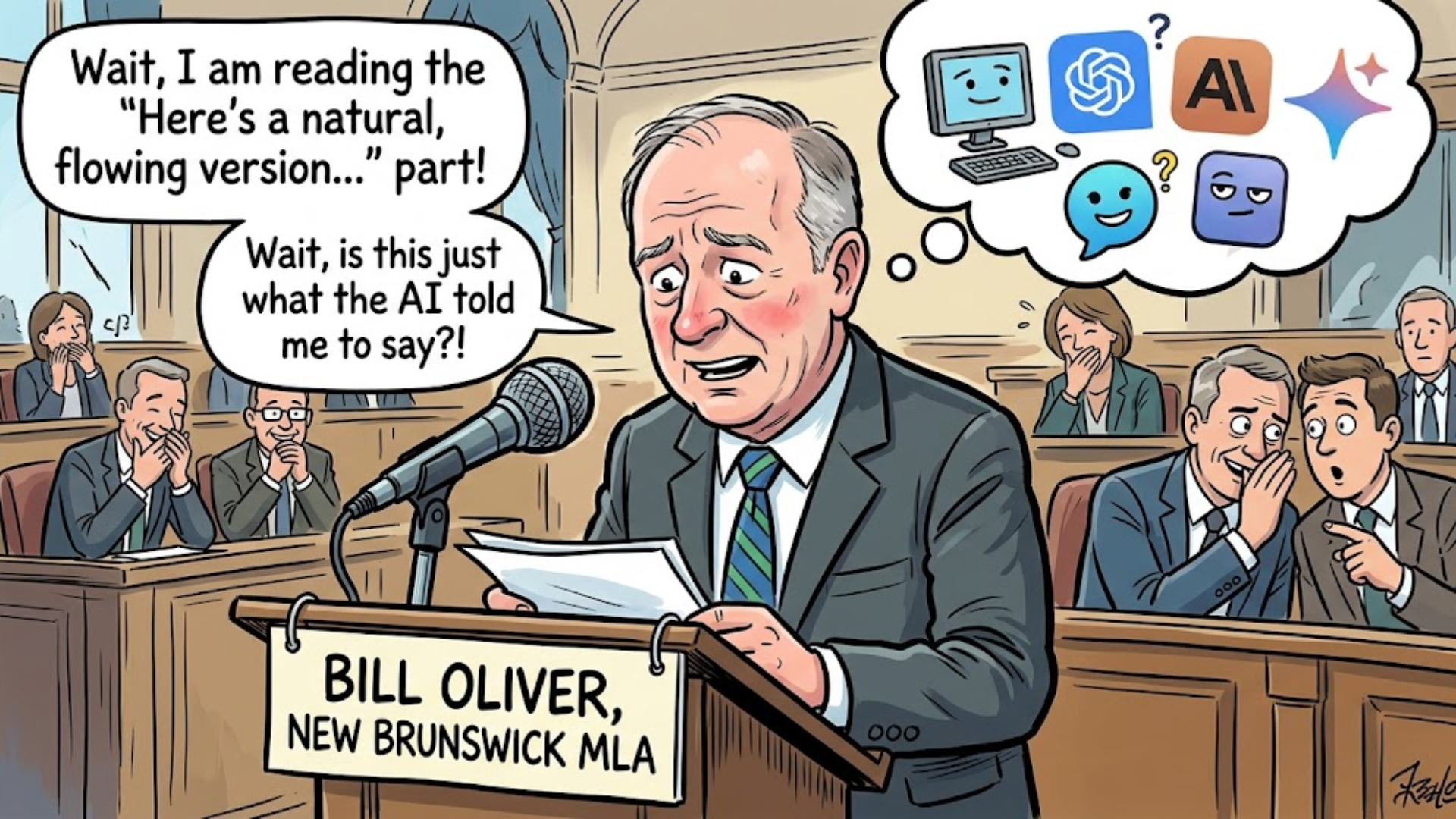
The risks of blind trust in technology became painfully obvious during a session of the New Brunswick Legislative Assembly. Canadian politician Bill Oliver stood before his colleagues to deliver remarks on an energy advocate position, only to read the chatbot's internal conversational wrapper straight into the official record: "Here's a more natural, flowing version of that section that reads like a legislative speech rather than a series of short points."
Oliver continued reading without catching the error, eventually uttering additional chatbot cues later in the address. The viral clip spread globally across social media platforms not merely because the mistake was humorous, but because it exposed a startling reality: official government policy notes had been generated by software, printed out, and read on the house floor without a single human eyes-on proofread.
The "Lazy Workflow" Epidemic and AI Residue
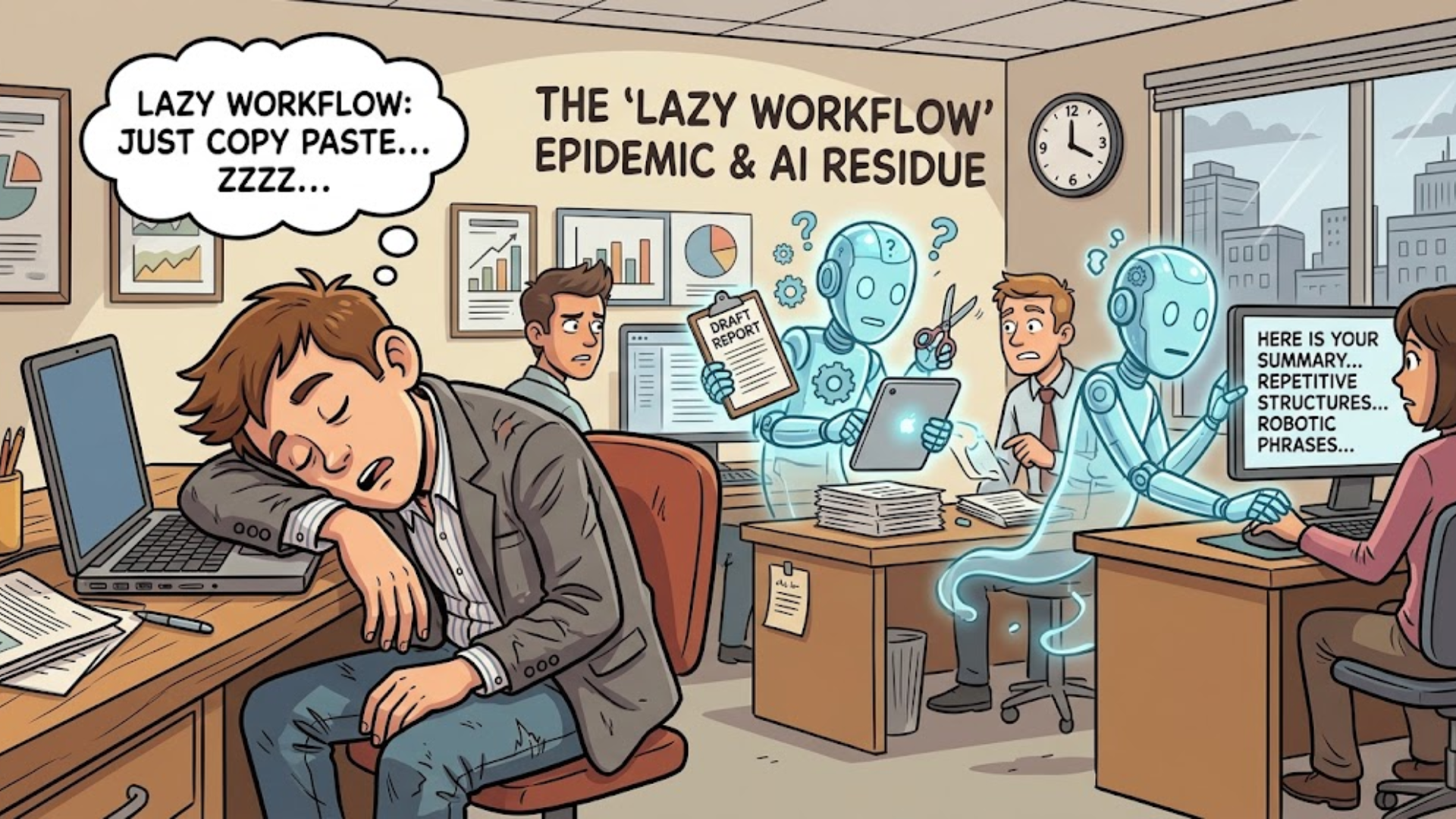
Oliver’s blunder is an extreme example of a broader, systemic trend occurring across professional sectors: the uncritical copy-paste routine. As workers face tighter deadlines, many rely on AI for instant drafts, copy the entire output blindly, and distribute it without evaluating the content.
Beyond missing obvious meta-prompts like "Here is your summary," unedited AI writing leaves subtle clues, often referred to as "AI residue". Generative models lean heavily on repetitive structural patterns, rigid section transitions, and robotic filler phrases. When these artifacts slip into public speeches, client proposals, or executive emails, they reveal that the creator bypassed their own judgment, instantly damaging their professional credibility and breaking public trust.
Tool VS Substitute: Protecting Human Judgment in an Automated Age
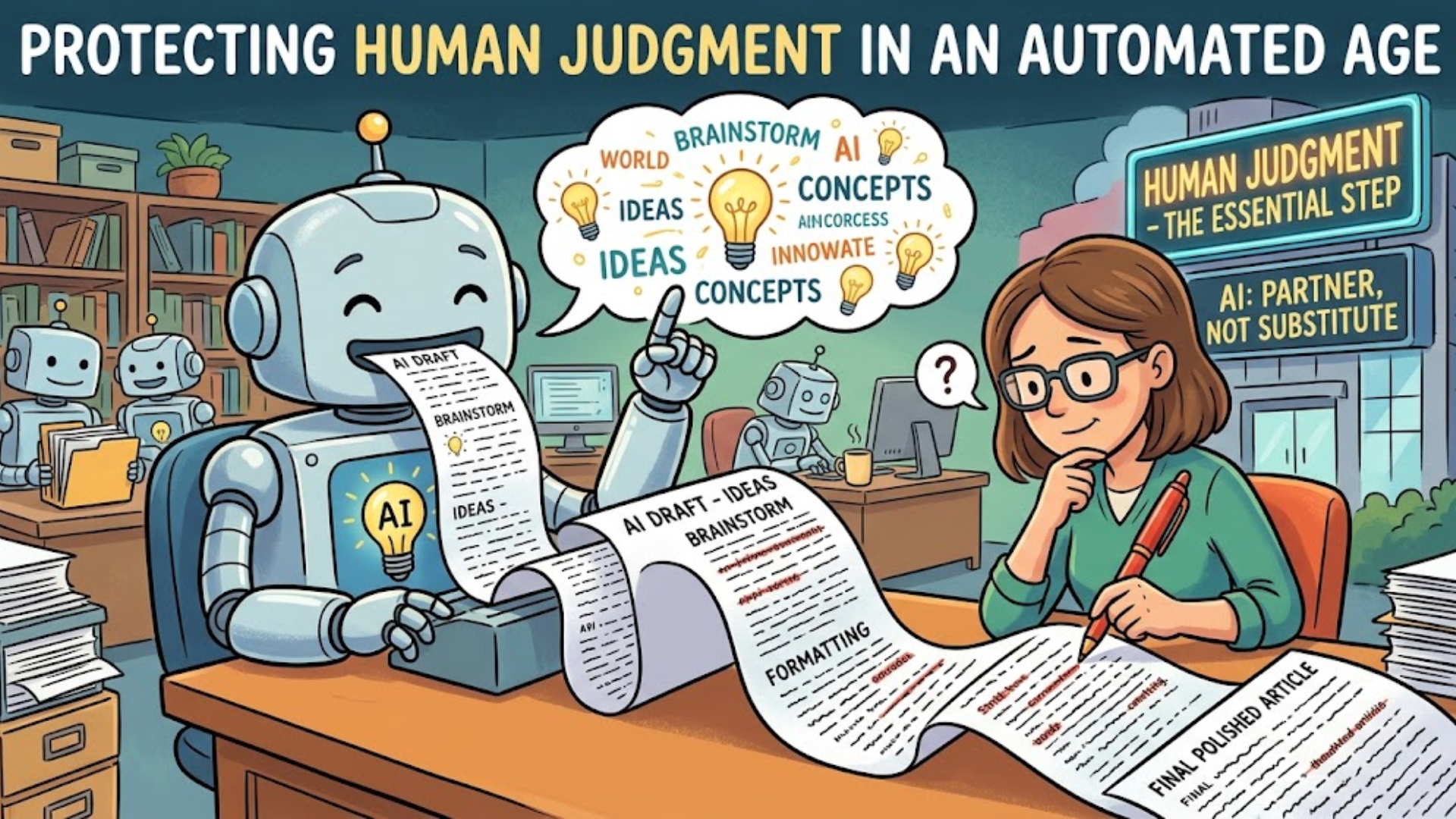
The core issue raised by this viral incident isn't that professionals are leveraging AI, it's how they choose to use it. Generative models excel as drafting assistants, brain-storming thought partners, and formatting engines. However, they possess no context, accountability, or actual understanding of what they generate.
When users treat AI as a direct substitute for critical thinking rather than an efficiency multiplier, the overall quality of thought degrades. Effective AI integration requires maintaining a strict human-in-the-loop rule: AI produces the initial scaffolding, but human writers must review, fact-check, refine, and take full ownership of the final message.
Conclusion: Why the Human Element Remains Irreplaceable
As AI tools become further woven into public and private life, the line separating productivity from sheer carelessness comes down to human effort. Software can generate thousands of words in seconds, but it cannot care about accuracy, context, or the audience receiving the message. Taking a brief moment to review, edit, and sanitize AI-generated content isn't an unnecessary bottleneck, it is the single essential step that ensures technology serves as a powerful partner rather than a source of public humiliation.
Watch the full video on Instagram 👉
https://www.instagram.com/reel/DcgcQTbqYFG/?igsi=Y3VtNWJoam9xbG8w