The Autonomous Day: Transforming Daily Workflows with Intelligent AI Co-Pilots
Integrating AI into a daily workflow eliminates routine administrative burnout through a simple three-part system. Smart algorithms handle morning email triage and priority filtering, execute background task tracking during peak work hours, and compile an evening performance wrap-up to prepare tomorrow's agenda. Delegating these everyday logistics frees up vital mental energy for creative, high-impact strategic work.
The shift toward incorporating Artificial Intelligence into everyday business operations is no longer an experimental trend reserved for technical specialists. Modern professionals are increasingly treating AI systems not merely as conversational search engines, but as proactive virtual assistants designed to streamline cognitive overload and reclaim hours of focus. By establishing a structured, time-based pipeline, individuals can offload repetitive administrative tasks, ensure seamless team communication, and focus energy on strategic decision-making.
Morning Inbox Triaging and Smart Prioritization
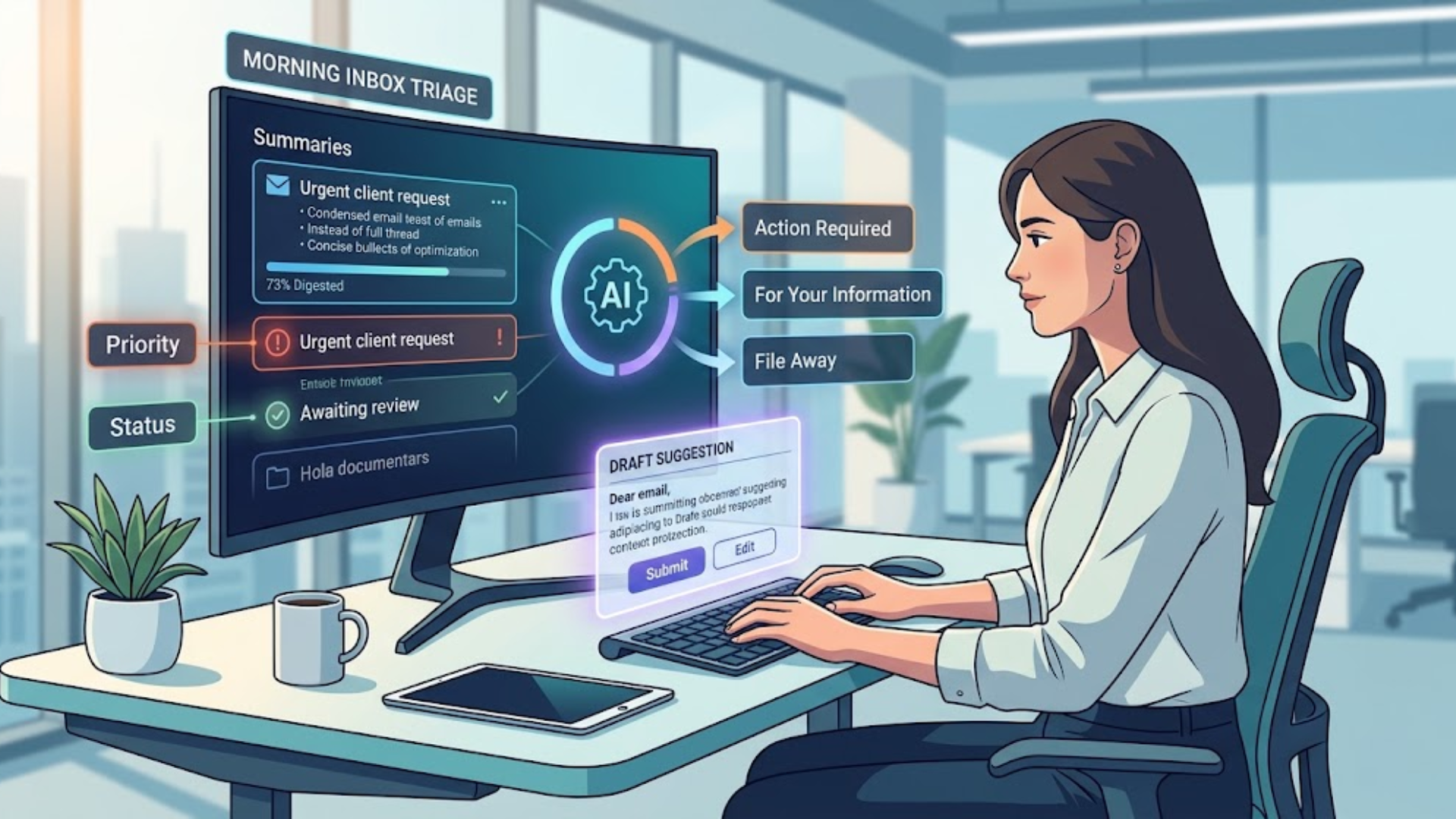
The start of a typical workday often begins with digital fatigue, wading through dozens of unread emails, direct messages, and system notifications. Deploying an AI-driven triage system as a first-step morning routine fundamentally changes how time is managed.
-
Automated Email Summarization: Rather than reading lengthy threads line by line, AI models parse incoming messages, extract key points, and present a digest of essential updates.
-
Dynamic Priority Classification: Incoming messages are evaluated based on urgency and context. High-priority client demands or urgent technical escalations are flagged instantly, while routine newsletters and automated receipts are filed away.
-
Contextual Response Drafting: AI systems can draft preliminary response templates based on previous conversation history, allowing users to review, edit, and send replies in seconds rather than writing them from scratch.
Real-Time Automation During Core Work Hours
During peak business hours, peak efficiency relies on keeping human attention focused on high-value strategy, client interactions, and creative execution. By leveraging autonomous agents and background tools, complex multi-step workflows run concurrently without requiring active manual input.
-
Background Task Execution: Specialized AI agents monitor shared cloud drives, automatically logging updates, summarizing new documentation, and generating scheduled status reports.
-
Meeting Preparation and Data Synthesis: Before entering strategic team sessions, AI tools aggregate relevant project history, past notes, and key metrics into a unified brief.
-
Human-Centered Focus: Delegating tedious tracking and documentation allows managers and individual contributors to participate fully in team discussions and direct problem-solving without administrative friction.

End-of-Day Closure and Next-Day Agenda Preparation
A primary cause of workplace burn-out is the inability to cleanly disconnect at the end of the day due to loose ends or lingering tasks. Implementing an automated evening wrap-up process ensures that all daily operations are properly closed out and documented.
-
Audit of Unanswered Communications: The AI system scans all communication channels to highlight missed messages or pending follow-ups that require attention before logging off.
-
Automated Daily Summaries: An end-of-day report is compiled automatically, mapping out completed milestones, ongoing deliverables, and key changes made across active projects.
-
Next-Day Calendar Prepping: By evaluating upcoming deadlines and scheduled meetings, the tool generates a prioritized task list for the following morning, ensuring a clear starting point without morning guesswork.
Conclusi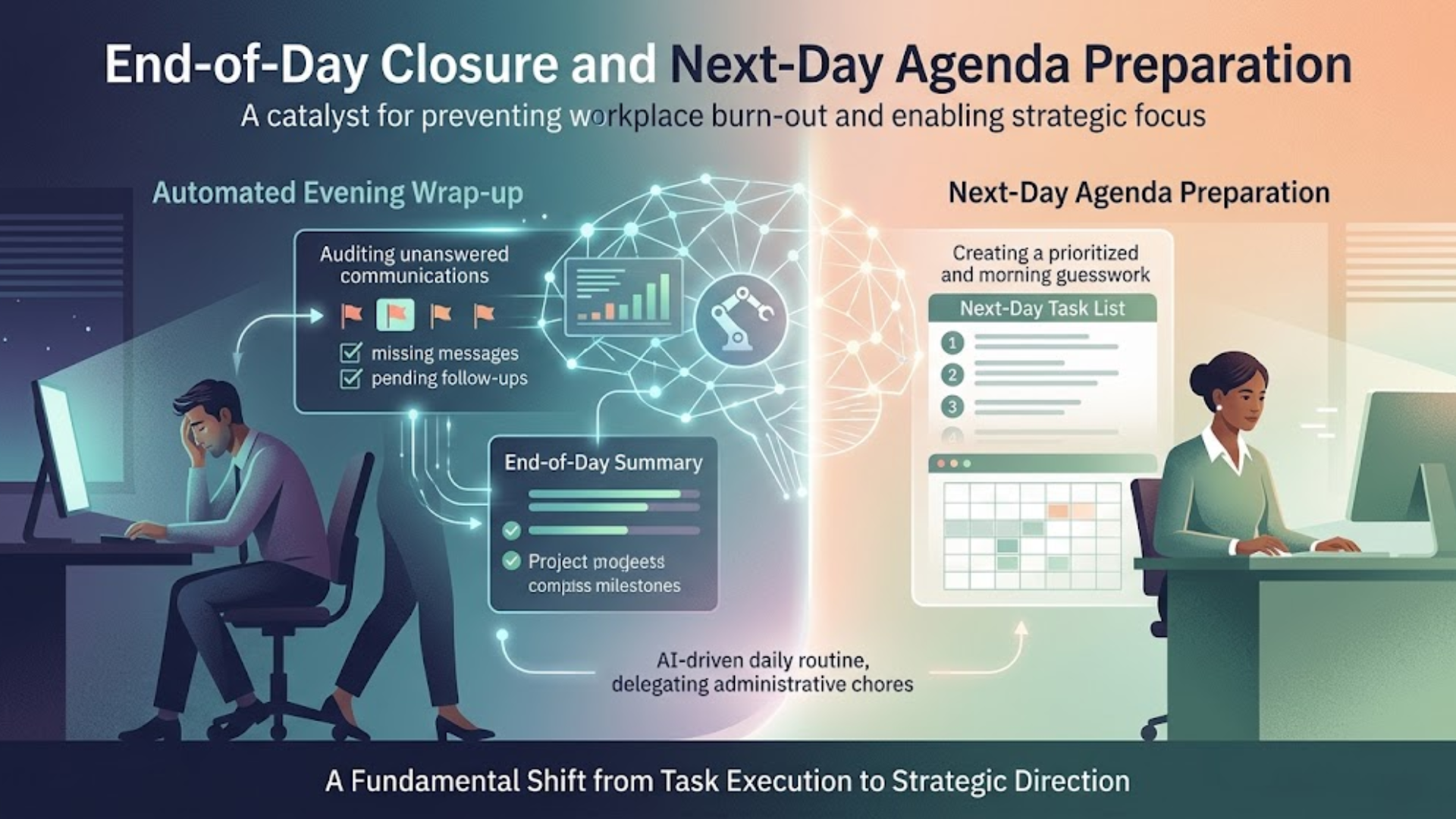 on: A Fundamental Shift from Task Execution to Strategic Direction
Adopting an AI-driven daily routine goes beyond saving a few minutes on administrative chores; it represents a fundamental shift in how professionals allocate their mental energy. By delegating morning email triage, midday execution tracking, and evening routine wrap-ups to intelligent software, workers can eliminate cognitive friction. The result is a more organized, deliberate, and highly productive work environment where human intelligence is reserved for innovation, collaboration, and high-impact decision-making.