Mastering AI Communication: The 4-Step Prompt Engineering Guide
This article explains how to get precise AI results using a four-step prompt engineering framework: setting a Role, providing Context, defining the Task, and specifying the Output format. Mastering this structured approach eliminates vague answers and transforms AI into a reliable, high-value workspace collaborator.
Artificial intelligence has rapidly evolved from a novel technical experiment into an indispensable daily workspace collaborator. Yet, a vast majority of users still experience wildly inconsistent results, often receiving generic, shallow, or entirely mismatched answers to their queries. The difference between a frustrating interaction and a groundbreaking result rarely lies within the capability of the AI itself, rather, it hinges entirely on how human intent is structured. Prompt engineering serves as the foundational bridge across this gap. By mastering a structured, four-part framework, you can consistently transform vague AI responses into precise, expert-level outputs tailored to your exact professional and personal needs.
Persona and Context: Setting the Stage
The foundation of any high-performing prompt begins long before you state your actual request. It starts by establishing the Role and supplying the necessary Context.
-
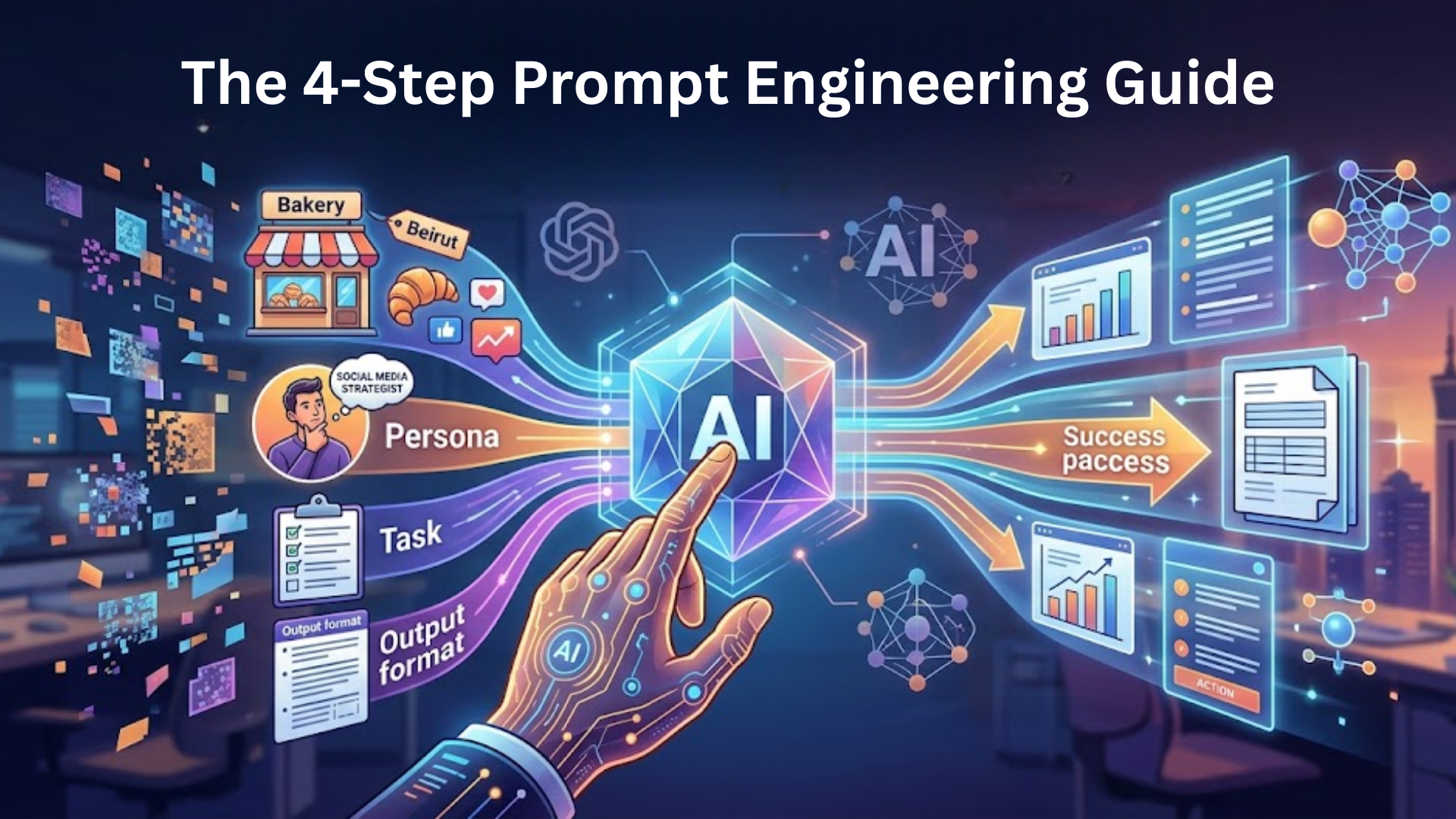
Defining the Role: Large language models contain vast oceans of broad information. Assigning a specific persona (such as "Act as a senior social media strategist") instantly forces the model to filter its knowledge base. It adopts the tone, professional standards, vocabulary, and analytical approach of that specific field.
-
Providing Context: Context grounds the AI in your real-world reality. Without background details, an AI can only guess at your parameters, leading to broad recommendations. Explaining your specific environment, such as "I run a boutique bakery in Beirut with 2,000 followers looking to scale local engagement", gives the model the crucial baseline parameters it needs to tailor every subsequent insight to your actual situation.
Task and Output: Directing the Execution
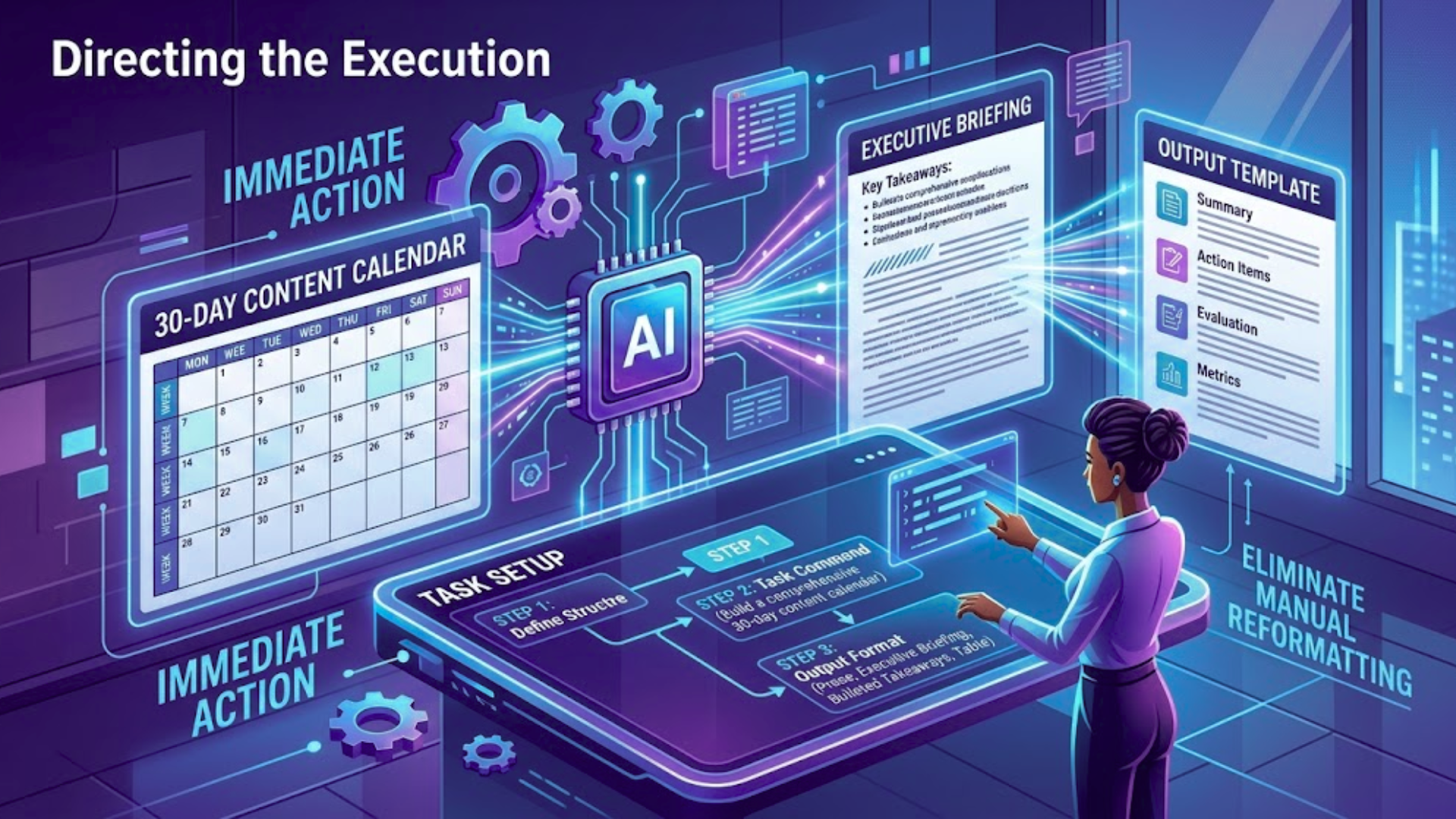
Once the structural setup is established, the next critical phase involves defining the Task and specifying the precise Output format.
-
Structuring the Task: The task is your direct command, detailing exactly what actions you require the AI to take. Vague directives like "help me with marketing" yield disorganized, high-level ideas. Instead, a targeted command like "build a comprehensive 30-day content calendar" gives the machine a clear, executable goal.
-
Formatting the Output: The final step, and the one most frequently overlooked, is shaping the output structure. Never leave the delivery format to chance. Explicitly tell the AI whether you require a prose paragraph, an executive briefing, bulleted key takeaways, or a structured week-by-week table. Dictating the layout up front eliminates tedious manual reformatting and ensures the final result is immediately actionable.
The Power of Prompt Engineering
Synthesizing these four components, Role + Context + Task + Output, formulates the core engine of prompt engineering. This approach fundamentally shifts your relationship with AI from passive web searching to active co-creation.
Consider the stark contrast between standard and structured prompting:
-
Generic Prompt: "Give me social media ideas for my bakery."
-
Engineered Prompt: "Act as a social media expert [Role]. I run a small bakery in Beirut with 2,000 followers [Context]. Build me a 30-day content plan [Task]. Format the response as a week-by-week table [Output]."
By explicitly constructing your prompts with this four-part structure, you eliminate ambiguity, prevent repetitive back-and-forth edits, and reliably extract hyper-relevant, high-value content every single time.

Conclusion: Transform Your AI Workflow
Prompt engineering is far more than a technical trick; it is the vital skill of effectively communicating human intent to machine intelligence. By systematically defining who the AI should act as, providing deep background context, stating a clear directive, and specifying the expected structural output, you turn an unpredictable text generator into a highly specialized digital partner. Integrating this four-step framework into your daily operations will dramatically elevate the quality of your outputs, streamline your productivity, and unlock the true potential of modern AI models.