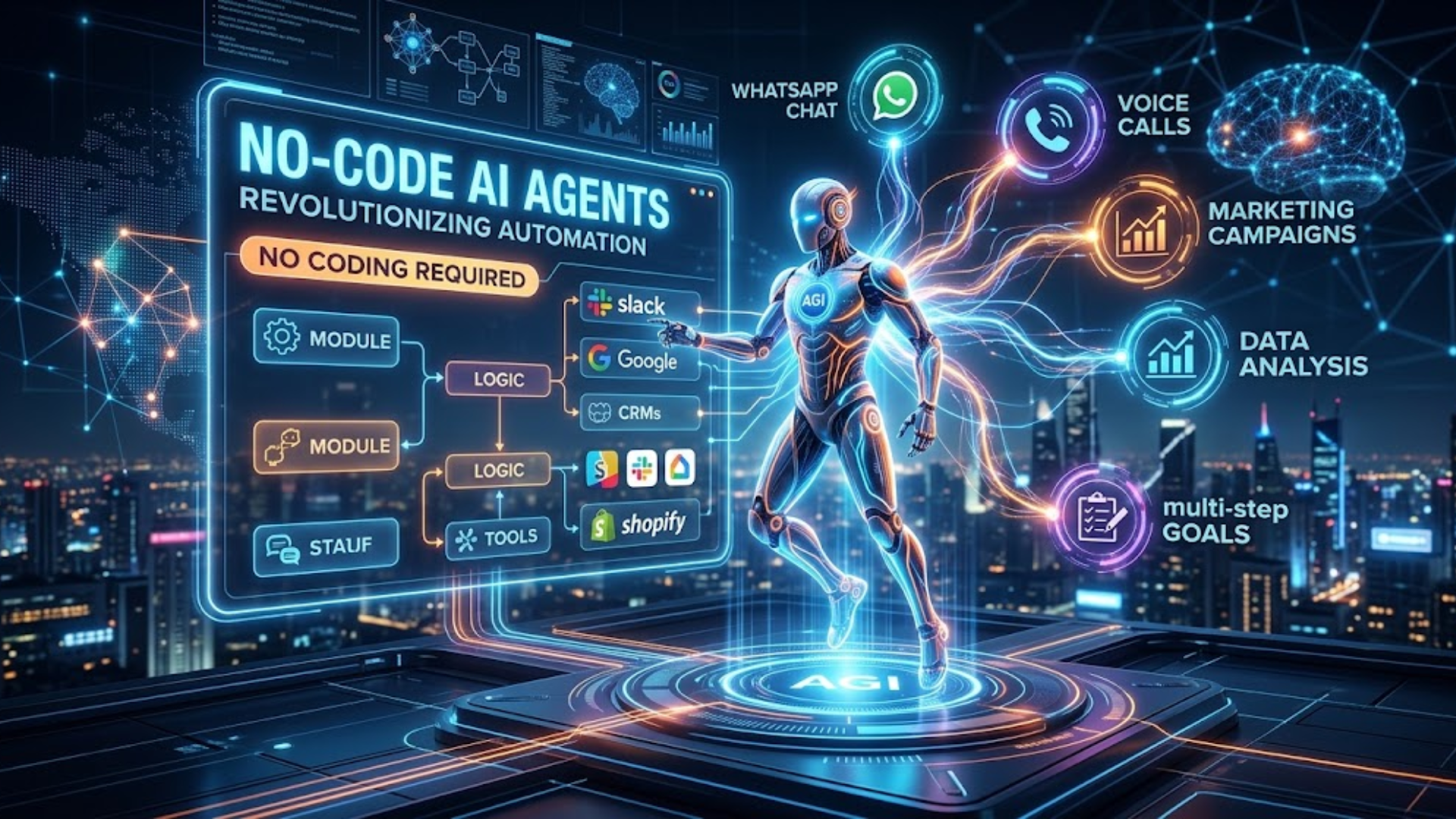
How No-Code AI Agents Are Revolutionizing Automation
This article highlights how non-technical users can build autonomous AI agents without writing code, comparing simple automations to intelligent agents that handle tasks like messaging and marketing. It shows how instructor-led training helps professionals easily create and deploy cost-effective, custom AI workflows.
Artificial Intelligence is rapidly evolving from basic conversational chatbots into autonomous AI agents capable of performing complex business operations. As these technologies mature, professionals and business owners no-doubt recognize the immense potential of intelligent automation, yet many feel sidelined by a perceived requirement for technical programming skills. Fortunately, the landscape has shifted: creating powerful, personalized AI agents is now completely accessible without writing a single line of code.
Understanding the Shift: Automation vs. AI Agents
To leverage modern AI tools effectively, it is essential to understand how different levels of technology operate. Traditional automation relies on strict, rule-based triggers ("if this, then that") to perform predictable, repetitive tasks without any reasoning involved. AI automation introduces machine learning to handle data processing or text generation within those fixed workflows. Autonomous AI agents, however, take a major leap forward by making decisions, using external tools, remembering previous interactions, and carrying out multi-step goals independently, such as taking phone calls, responding directly on WhatsApp, or generating complete marketing campaigns.
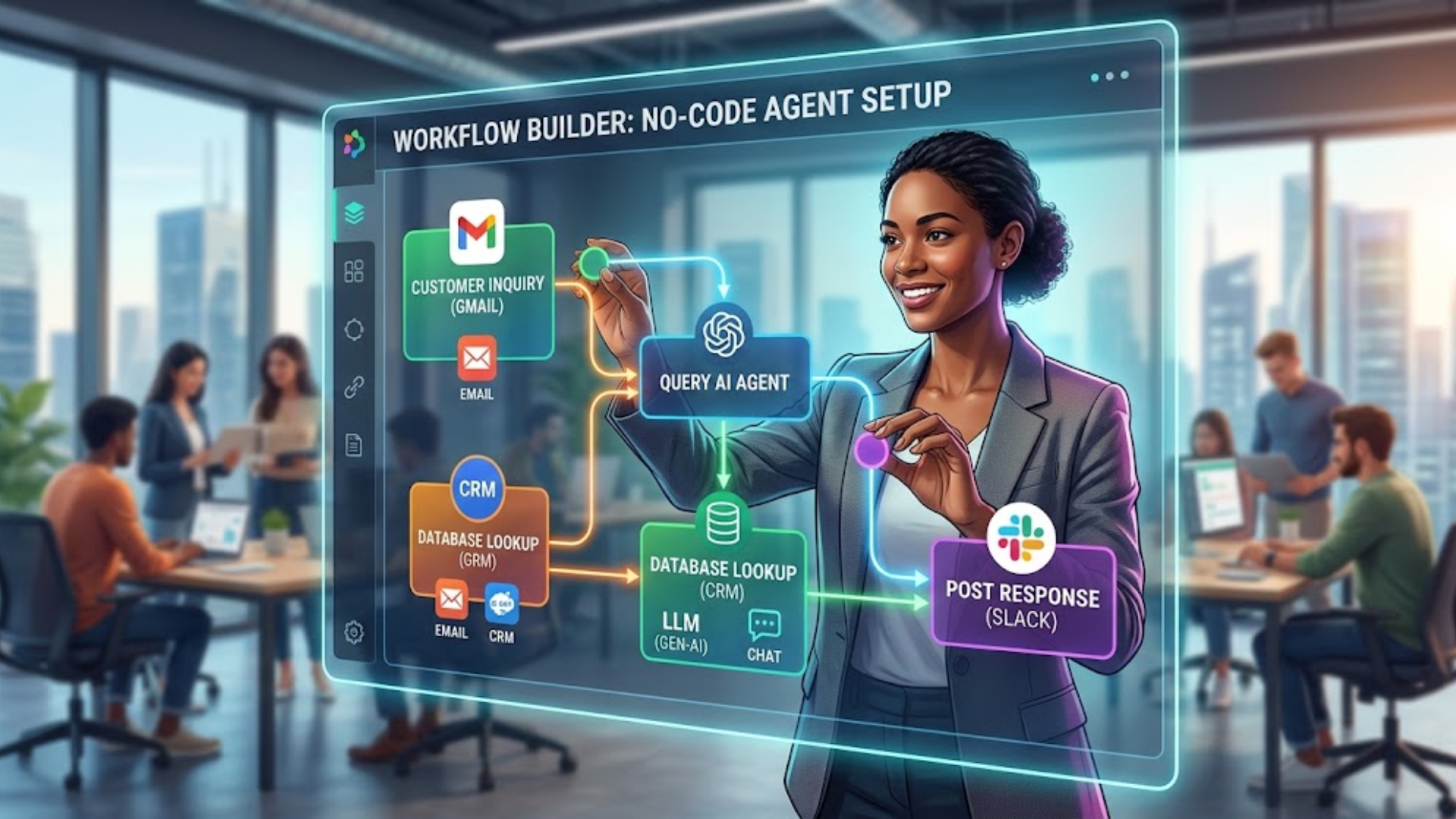
Building Powerful Workflows Without Writing Code
The most transformative aspect of today's agentic AI tools is accessibility. In the past, connecting advanced artificial intelligence to company infrastructure required extensive backend software engineering. Modern visual workflow builders and agent frameworks allow users to connect platforms, integrate language models, and assign custom tool libraries through intuitive drag-and-drop interfaces. This enables team members across departments, from marketing to customer support, to design and deploy custom agents tailored specifically to their daily operations without relying on engineering teams.
Practical Applications and Implementation Costs
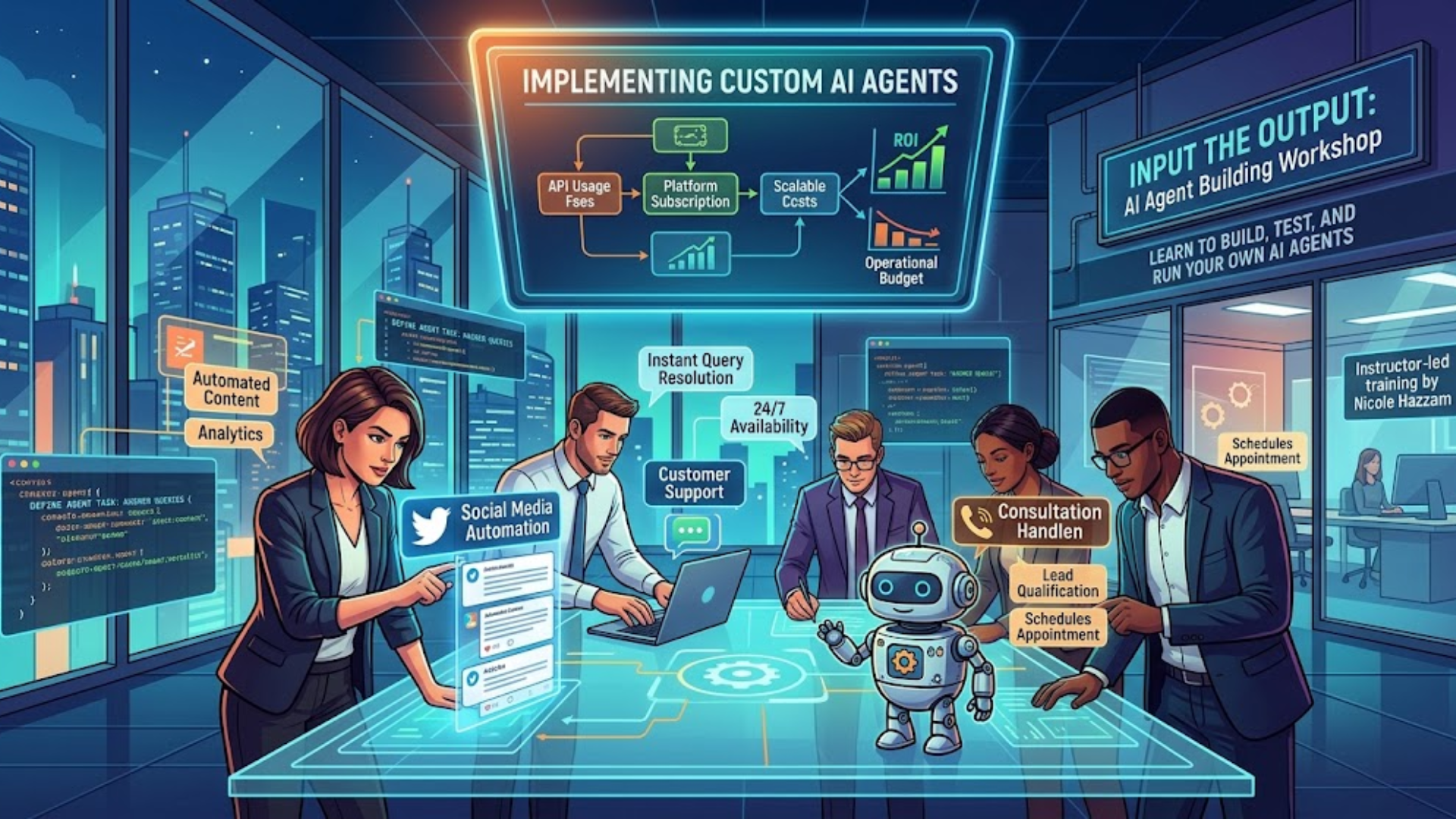
Deploying AI agents into real-world business scenarios yields immediate practical benefits across operational areas. Agents can be assigned to continuously answer user queries on messaging channels, automatically generate and post targeted social media content, or handle initial phone consultations. When evaluating implementation, businesses must consider factors such as API usage fees, platform subscription costs, and setup complexity. Understanding how each agent is built, where it operates, and how its costs scale allows organizations to maximize return on investment while maintaining lean operational budgets.
Conclusion: Embracing the Future of Agentic Workflows
The era of manual, repetitive tasks is swiftly giving way to autonomous system design where human creativity guides intelligent AI execution. By taking advantage of hands-on, instructor-led training platforms like "Input the Output" hosted by tech trainer Nicole Hazzam, individuals and companies can gain the exact skills required to build, test, and run custom AI agents independently. Stepping into this non-technical automation landscape empowers professionals to unlock unprecedented efficiency and stay ahead in a rapidly changing digital world.